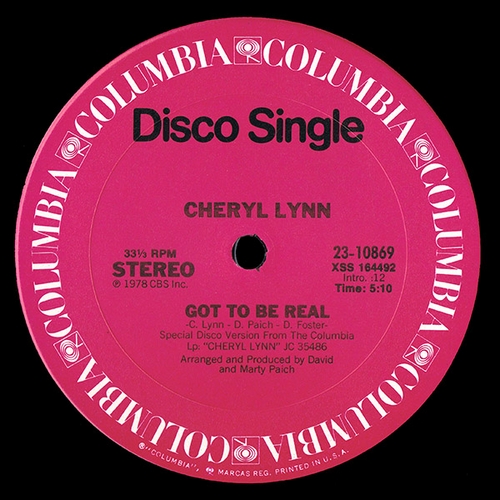
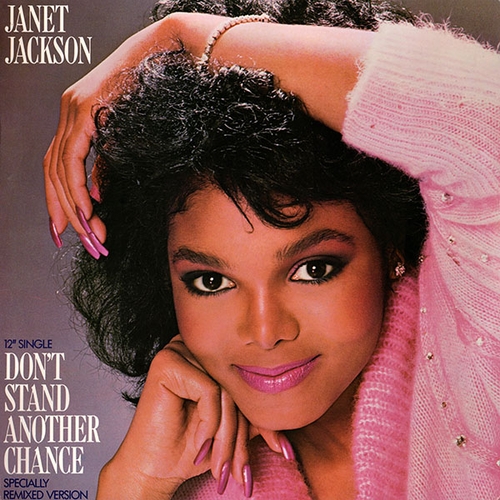
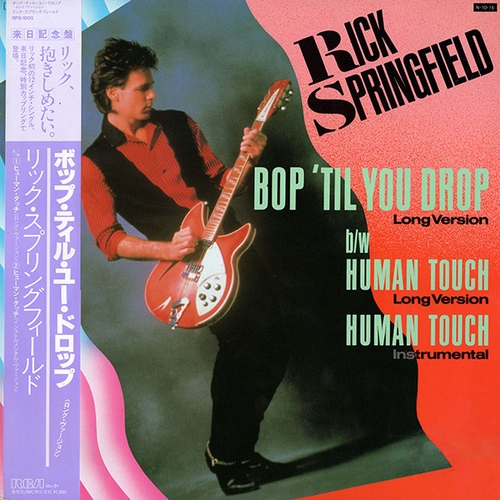
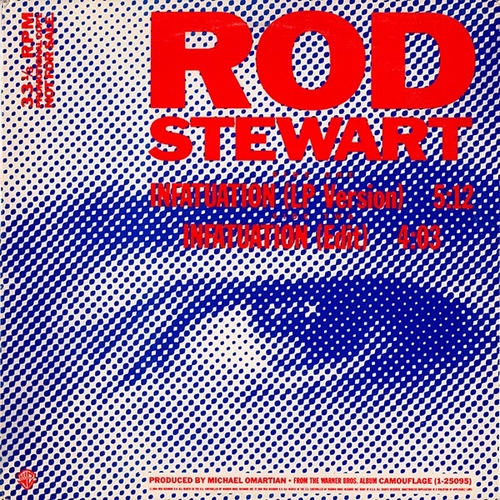
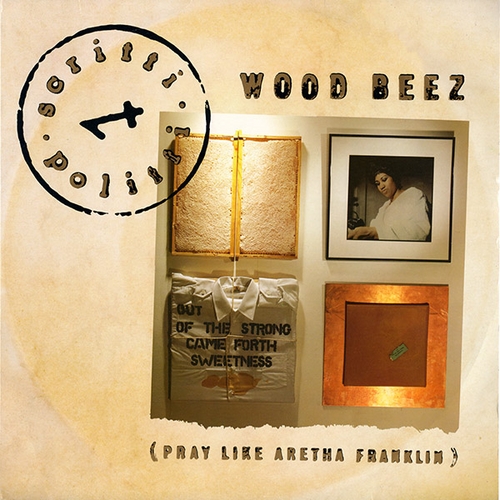
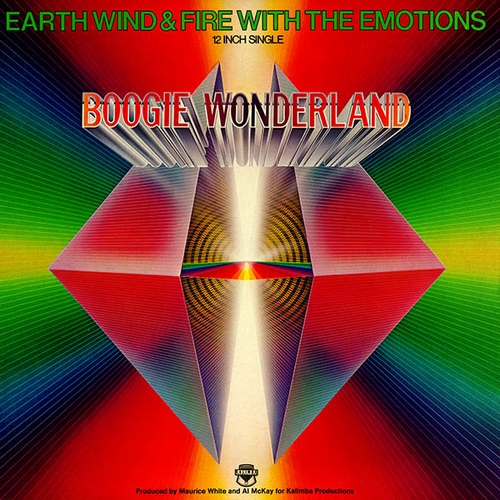
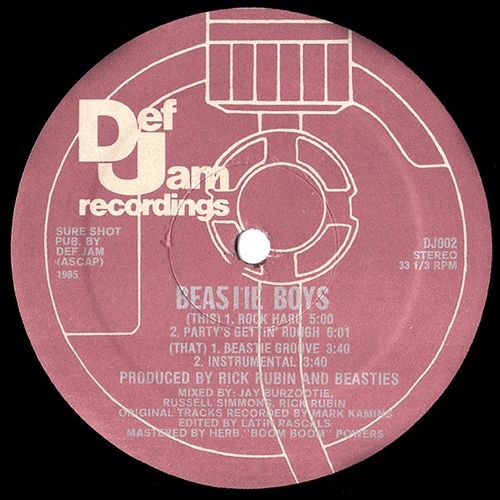
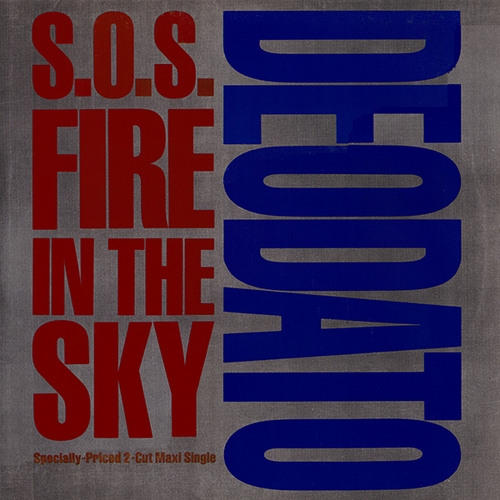
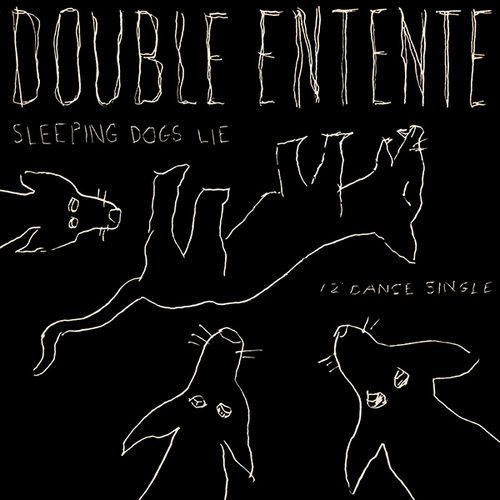
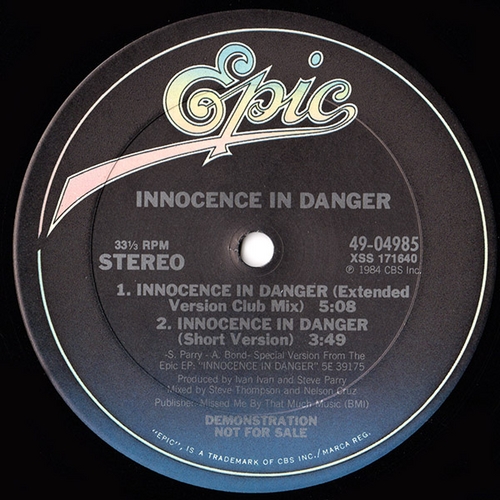
Tracklist: 01.Cheryl Lynn - Got To Be Real (5:07) 02.Cheryl Lynn - Star Love (7:24) The Harlem drag ball scene — described by the social activist and writer Langston Hughes as “the strangest and gaudiest of all Harlem’s spectacles in the 1920s” — fragmented along racial lines in the early 1960s when Black queens became tired of having to “whiten up” if they wanted to have a chance of winning any in-house beauty contest. By the early 1970s, Black drag houses started to multiply and soon outstripped their white counterparts in terms of glamour, style and popularity. As contests expanded, categories multiplied and competition intensified, with prizes awarded to entrants whose drag was the most believable, the most real. Released in 1978, Cheryl Lynn’s feisty, upbeat disco track “Got to Be Real” became an instant ballroom classic. In 2020 The Bew York Times named "Got To Be Real" one of the 15 Songs That Shook New York’s Queer Dance Floors in the 1970s and ’80s. "Got to Be Real" is the debut single by American singer Cheryl Lynn. Written by Lynn, David Paich and David Foster, and produced by Paich and Marty Paich, the song was recorded for Lynn's 1978 self-titled debut studio album. Columbia Records released the song as the album's lead single in August 1978. For the recording, David Shields played bass, David Paich played keyboards, James Gadson played drums and Ray Parker Jr. was the session guitarist. In the United States, "Got to Be Real" peaked at position number 12 on the Billboard Hot 100 and topped the Hot Soul Singles chart in early 1979. Along with the album cuts "Star Love" and "You Saved My Day", "Got to Be Real" peaked at number 11 on the National Disco Action Top 40 chart. In the United Kingdom, "Got to Be Real" did not chart upon its original release – it was used for a TV advertising campaign for Marks & Spencer in 2010 and it entered the main charts for the first time at position number 78 for the week ending April 4, the next week peaking at number 70. "Star love" was released as the second single fron Lynn's self-titled debut album reaching a peak position of number 62 on the Billboard Hot 100, and number 16 on the R&B chart in the spring of 1979.
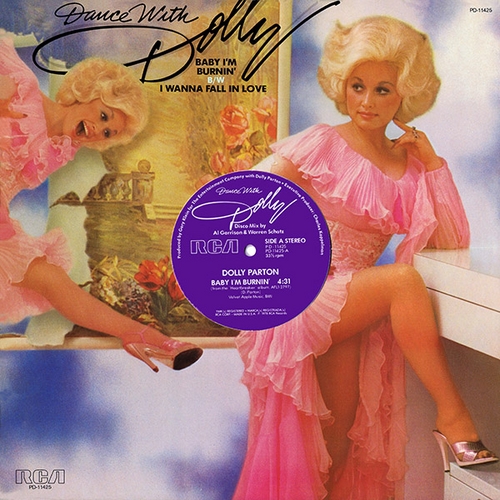
Tracklist: 01.Dolly Parton - Baby I’m Burnin’ (Disco Mix) (4:32) 02.Dolly Parton - I Wanna Fall In Love (Disco Mix) (5:17) "Dance With Dolly" is a 1978 12" single by country music legend Dolly Parton released on hot pink vinyl by RCA Records. The 12" features two disco mixes of tracks from Dolly's twentieth solo studio album Heartbreaker. The release was Parton's first ever 12" single, and Disco hit. "Baby I'm Burnin'" was written by Parton who also produced the track with Gary Klein and Charles Koppelman who served as executive producer. The song was first released on Parton's twentieth solo studio album Heartbreaker in July 1978. "Baby I'm Burnin'" was released as the first single from the album on November 6, 1978 by RCA Victor. Billboard reviewed the single and called it "a high-energy change of pace for Parton." The review went on to say Parton's vocals "punch against the cooking groove of a track" which is "highlighted by horns and syn drums."[1] Billboard reviewed the single again the following week, this time calling the song "a fiery rocker" and said that it had "a disco edge at times." They added that "Parton's crispy, high pitched vocals add to the rockish feel. "Baby I'm Burnin'" peaked at number 25 on the Billboard Hot 100, number 48 on the Billboard Hot Country Songs chart, and number 11 on the Billboard Adult Contemporary chart. The disco remix peaked at number 15 on the Billboard Dance Club Songs chart her first ever entry on that chart. The 12" single was backed with the album track "I Wanna Fall In Love" extending the two minute track to a sweltering five minute Disco anthem.
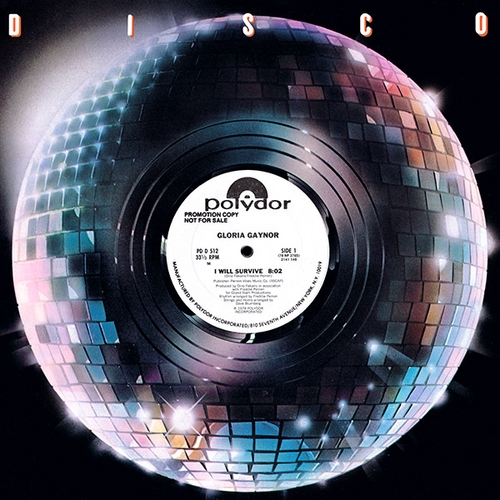
Tracklist: 01.Gloria Gayneor - I Will Survive (8:02) 02.Gloria Gayneor - Yo Vivire (Spanish Version) (7:52) The song that really fought to find its audience, I Will Survive first surfaced as the B-side to a long-forgotten single before eventually becoming a Studio 54 anthem. Its status as one of the best LGBTQ+ Pride songs is tinged with sadness – arguably a last stand against the backlash of homophobia that would secure disco’s first demise and add so much extra suffering to the HIV/AIDS epidemic, then just around the corner. This transatlantic chart-topper would overwhelm Gaynor’s career but, as defining moments go, it’s in a class of its own. "I Will Survive" is a song by American singer Gloria Gaynor, released in October 1978 as the second single from her sixth album, Love Tracks (1978). It was written by Freddie Perren and Dino Fekaris. A top-selling song, it is a popular disco anthem, as well as being certified Platinum by the Recording Industry Association of America (RIAA). Originally released as the B-side to a cover version of the Righteous Brothers song “Substitute”, “I Will Survive” became a worldwide hit for Gaynor when disc jockeys played that side of the record instead. New copies of the record were eventually pressed with “I Will Survive” as the A-side (“Substitute” itself peaked at number 7 on the Billboard Bubbling Under Hot 100 Singles chart, equaling to number 107 on the Billboard Hot 100 chart). As a disco number, the song was unique for its time by virtue of Gaynor’s having no background singers. And, unlike her first disco hits, the track was not pitched up to make it faster and to render Gaynor’s recorded voice in a higher register than that in which she actually sang. Most disco hits at the time were heavily produced, with multiple voices, overdubs, and adjustments to pitch and speed. “I Will Survive” had a much more spare and “clean” sound. Had it been originally planned and released as an A-side, it would almost certainly have undergone a substantially more heavy-handed remix. The song received the first-ever Grammy Award for Best Disco Recording in 1980, the only year the award was given. It is ranked #492 on Rolling Stone magazine’s list of “the 500 Greatest Songs of All Time”, and ranked at #97 on Billboard magazine’s “All-Time Hot 100”. In 2000, the song was ranked #1 in VH1’s list of the 100 greatest dance songs.
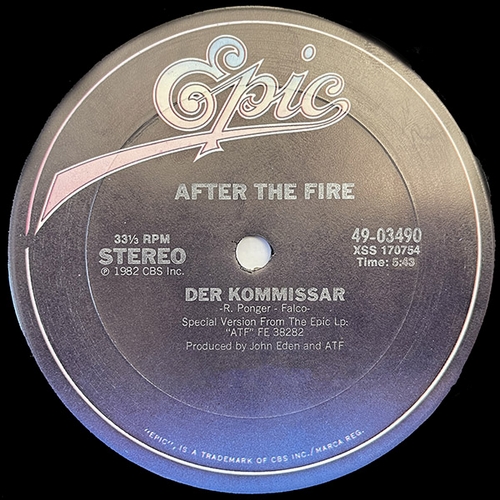
Tracklist: 01.After The Fire - Der Kommissar (Special Extended Remix) (5:43) 02.After The Fire - Der Kommissar (Dub Remix) (4:50) "Der Kommissar" (German: [deːɐ̯ kɔmɪˈsaːɐ̯]; "The Commissioner") is a song originally recorded by Austrian artist Falco in 1981. The song was written by Robert Ponger and Falco. In mid-1982, British rock band After the Fire recorded an English version, also titled "Der Kommissar", and released it as a single, but the record floundered. Coming off a tour opening for Van Halen, After the Fire was working on material for a new album when in December 1982, the group announced onstage during a concert that they were disbanding. Both the After the Fire and Falco versions were rising on the Canadian charts at the time, but neither had cracked the US pop charts. Around that time, American singer Laura Branigan began working on her second studio album, Branigan 2, and she recorded "Deep in the Dark", a new song written over the melody and arrangement of "Der Kommissar" which was prepared for release. Then the After the Fire version finally hit the US Billboard Hot 100 on 22 February 1983, and started rising. Though its version barely nicked their home country's Top 50, in 1983 the song's music video received extensive airplay on MTV propelling its popularity on US radio. The song entered the US top 40 on 5 March 1983, peaking at No. 5, and spending a total of 14 weeks in the top 40. The single was released under the Epic Records label. Amidst all this renewed attention to the composition, Falco's own version, which had done well in some US markets but not charted nationally, was re-released, but the German-language record remained essentially a novelty hit there, charting concurrently with the After the Fire version but not rising above No. 74 on the Cashbox chart. In Canada, Falco's version had peaked at No. 11 the same late-January week that After the Fire's version peaked at No. 12. After the Fire's record company, CBS, pleaded with the band to regroup, but to no avail. While UK promotional singles for "Deep in the Dark" were pressed (the After the Fire version missed the UK top 40 and the Falco version failed to chart there), Branigan's record company, Atlantic, officially released "Solitaire" in the United States, where that song peaked at No. 7.
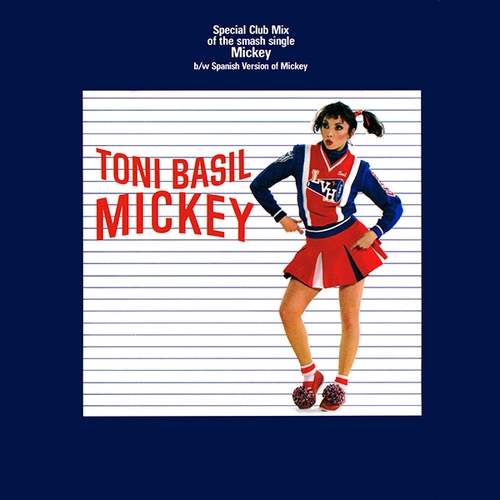
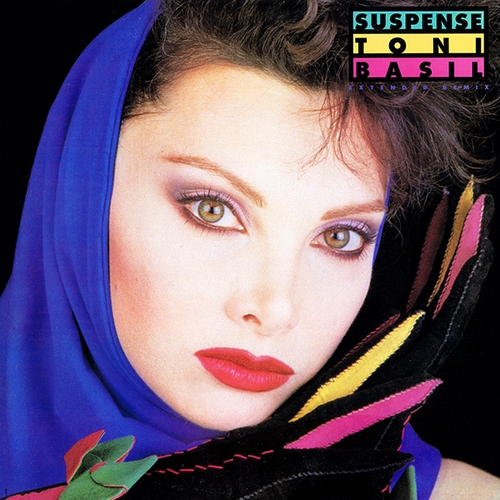
Tracklist: 01.Toni Basil - Mickey (Special Club Mix) (5:57) 02.Toni Basil - Mickey (Spanish Version) (5:13) "Mickey" (originally titled as "Kitty") is a song recorded by American singer and choreographer Toni Basil for her debut studio album, Word of Mouth (1981). It was first recorded by the pop group Racey. Mike Chapman and Nicky Chinn wrote the song, while production was helmed by Greg Mathieson and Trevor Veitch. Basil's version is new wave, featuring guitar, synthesizers and cheerleading chants. It garnered a mixed response from music critics, with some critics praising the radio-friendly nature of the song, while others described some of the lyrics as obscene. The song was originally performed by British pop group Racey, with the title "Kitty", and was included on their debut studio album Smash and Grab in 1979. The original Racey song did not include the "Oh Mickey, you're so fine" chant, which Basil added. For years, it was rumored that the name was changed to Mickey because Basil developed a crush on the Monkees' drummer and lead vocalist Micky Dolenz, after meeting him on the set of their movie, Head, for which she was the choreographer. However, that claim has been denied by Basil, who has said that she "didn't really know Micky at all". In January 2020, Basil released a re-recording of the song as "Hey Mickey" to digital and streaming platforms. On August 31, 2017, Basil filed a multi-claim lawsuit against Razor & Tie Direct, Forever 21, Disney, Viacom, VH1, and South Park. Basil alleged that the defendants had commercially used the song "Mickey" without a license and damaged her right of publicity, claiming excess of $25,000 in damages. Basil also filed a lawsuit against AMC on May 12, 2020, for the unauthorized use of "Mickey" in a trailer for Preacher. On August 27, 2020, a California state of appeals court affirmed dismissal of Basil's case. The music video was directed, produced and choreographed by Basil herself. The cheerleaders featured in the video were members of a championship squad from Carson High School in Carson, California. The cheerleading uniform Basil wore in the music video was the one she actually wore in high school. According to Basil, "They didn't put anything in the budget, I did everything myself. And this is the actual cheer sweater from Las Vegas High." "Mickey" was Basil's only U.S. Billboard Top 40 single.
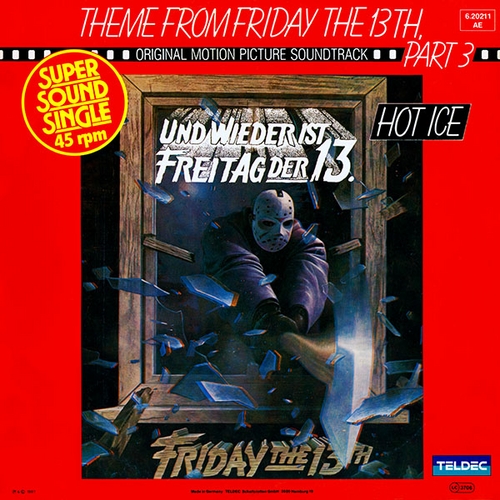
Tracklist: 01.Hot Ice - Theme From Friday The 13th Part 3 (Extended Version) (5:18) 02.Hot Ice - Rock Bottom (5:19) “Theme From Friday The 13th Part 3” is a song written by American film composer and jazz-soloist Henry Manfredini and American producer, arranger, conductor, keyboardist and songwriter,Michael Zager. The disco flavored theme was written for the third installment of the popular Friday The 13th film series which was filmed in 3-D. The track was performed by the short lived disco group Hot Ice which consited of Harry Manfredini and Michael Zager. Complete with spooky synths a killer bass line and Jason Vorhees signature chi chi chi, ha ha ha. Go ahead listen if you dare.
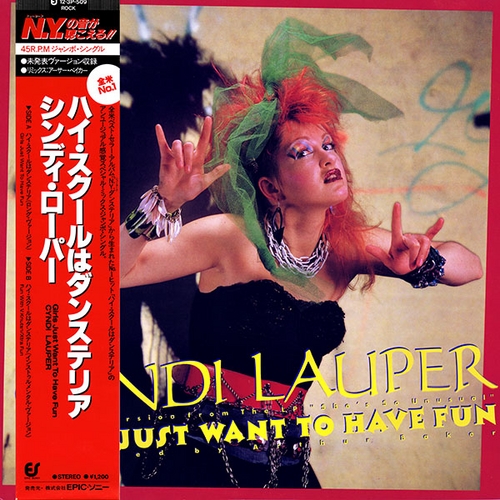
Tracklist: 01.Cyndi Lauper - Girls Just Want To Have Fun (Extended Version) (6:05) 02.Cyndi Lauper - Fun With V. Knutsn (Instrumental) (7:09) 03.Cyndi Lauper - Xtra Fun (5:07) "Girls Just Want to Have Fun" is a song made famous by Cyndi Lauper four years after it was written by Robert Hazard. It was the first major single released by Lauper as a solo artist and the lead single from her debut studio album, She's So Unusual (1983). Lauper's version gained recognition as a feminist anthem and was promoted by a Grammy-winning music video. It has been covered, either as a studio recording or in a live performance, by over 30 other artists. The single was Lauper's breakthrough hit, reaching No. 2 on the US Billboard Hot 100 chart and becoming a worldwide hit throughout late 1983 and early 1984. It is considered one of Lauper's signature songs and was a widely popular song during the 1980s. The lists "Rolling Stone and MTV: '100 Greatest Pop Songs': 1–50", "Rolling Stone: The 100 Top Music Videos" and "VH1: 100 Greatest Videos" ranked the song at No. 22, No. 39 and No. 45, respectively. The song received Grammy Award nominations for Record of the Year and Best Female Pop Vocal Performance. The song was written by Robert Hazard, who recorded a demo of it in 1979. Hazard wrote the song from a male point of view. Lauper's version appeared on her 1983 debut solo record She's So Unusual. Lauper changed some of the lyrics at the suggestion of her producer and she also had her own suggestions about how her version should sound. The track is a synthesizer-backed anthem, from a feminist perspective, conveying the point that all women really want is to have the same experiences that men can have.[9] Gillian G. Gaar, author of She's a Rebel: The History of Women in Rock & Roll (2002), described the single and corresponding video as a "strong feminist statement", an "anthem of female solidarity" and a "playful romp celebrating female camaraderie." Cash Box said that "Robert Hazard’s original male point of view is transformed into a cheerleader-like sing-along for party girls, and the Toni Basil–like beat is augmented by a hooky, ringing guitar." The song was released in late 1983 but much of its success on the charts came during the first half of 1984. The single reached the Top 10 in over 25 countries and reached No. 1 in ten of those countries including Australia, Brazil, Canada, Ireland, Japan, New Zealand, and Norway. It also reached No. 2 in both the United Kingdom and the United States. In the United States, the song entered the Billboard Hot 100 at No. 80 on December 17, 1983. It ultimately peaked at No. 2 on March 10, 1984, where it stayed for two weeks, behind Van Halen's "Jump". In the United Kingdom, the song entered the chart at No. 50 on January 14, 1984, and peaked at No. 2 on February 4, 1984, where it stayed for one week. In Ireland, the song entered the chart on January 29, 1984. It peaked at No. 1 for two weeks and was on the chart for a total of seven weeks. In Australia, the song debuted on the Kent Music Report Top 100 on February 27, 1984. It entered the Top 10 in only its third week on the chart and reached No. 1 on March 26, 1984. It topped the chart for two weeks and then remained at No. 2 for four weeks behind Nena's "99 Luftballons". It stayed on the chart for 21 weeks and was the 9th biggest-selling single of the year. In Belgium, the song debut at No. 38 on February 18, 1984, and peaked at No. 4 on April 7, 1984. In the Netherlands, the song entered the chart at No. 38 on February 25, 1984, and peaked at No. 4 on March 31, 1984. In Sweden, the song entered at No. 13 on March 6, 1984, and peaked at No. 5 on April 3, 1984, charting for six weeks. In Switzerland, the song entered the chart at No. 15 on April 1, 1984, and peaked at No. 6 on April 29, 1984. In New Zealand, the song debuted at No. 21 on April 1, 1984, and peaked at No. 1 on May 6, 1984, where it stayed for three weeks. In Austria, the single entered at No. 3 on May 1, 1984, which was its peak position. In Netherland and New Zealand "Girls Just Want To Have Fun" made the year end charts for the Top 100 of 1984. On the ARC (American Radio Chart), "Girls Just Want To Have Fun" reached #1 and made the Top 40 songs of the year for 1984.
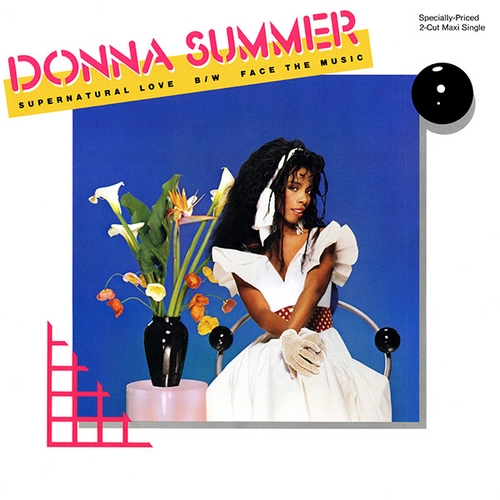
Tracklist: 01.Donna Summer - Supernatural Love (6:12) 02.Donna Summer - Face The Music (4:14) "Supernatural Love" is the second single from Donna Summer's 1984 Cats Without Claws album. The song released on October 23, 1984 by Geffen Records (US) and Warner Bros. Records (UK). It was written by Summer, Michael Omartian and Bruce Sudano, and produced by Omartian. The typically 1980s synthesized song was remixed for its release as a single and became a minor hit in the US. It was accompanied by a very colourful video again featuring Donna and husband Bruce Sudano as a star-crossed couple chasing each other through time when he is abducted by an evil enchantress—from the stone age into current 1980s New Wave, where Donna pursues the enchantress in order to save him. While the single only peaked at #75 on Billboard's Hot 100 chart, it fared better on the Billboard Hot Dance Club Play chart at #39.
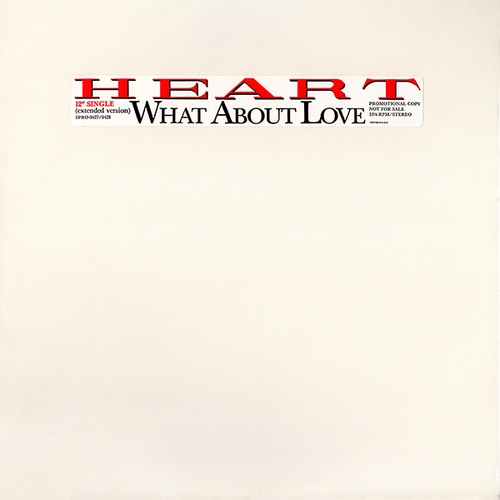
Tracklist: 02.Heart - What About Love? (Extended Version) (5:27) 02.Heart - What About Love? (3:41) "What About Love" is a song originally recorded by Canadian rock band Toronto in 1982. It was later recorded by American rock band Heart in 1985 and was released as the first single from the band's self-titled album, Heart. The band's "comeback" single, it was the first Heart track to reach the top 40 in three years, and their first top 10 hit in five. The song was also their first hit single on their new record label, Capitol Records. Grace Slick and Mickey Thomas, co-lead vocalists of Starship at the time, provide additional background vocals on the song. The song's sound marked a considerable change in the musical direction for Heart, moving from the hard rock and folk rock of their earlier work to a more polished, power ballad sound. "What About Love" received extensive airplay on MTV and returned Heart to the top-10 of the U.S. Billboard Hot 100 for the first time in five years, peaking at No. 10.
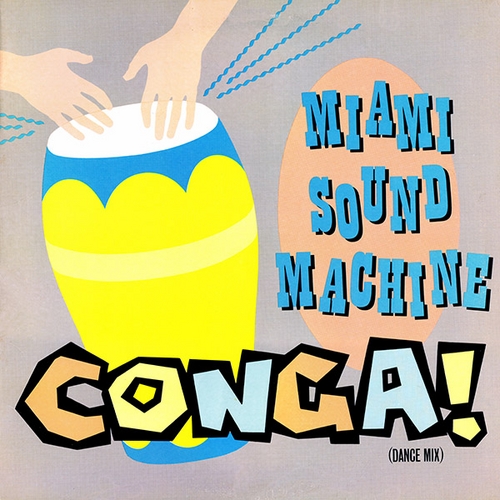
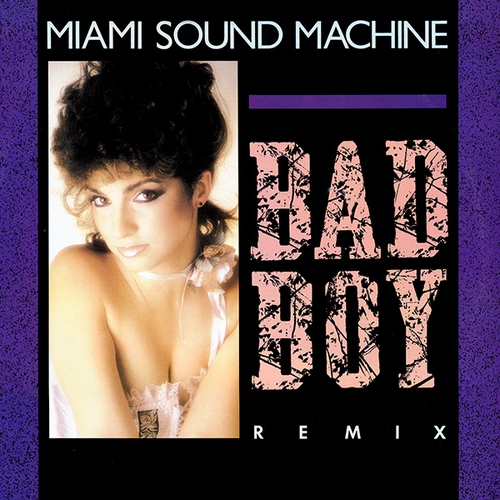
Tracklist: 01.Miami Sound Machine - Conga (Dance Mix) (6:00) 02.Miami Sound Machine - Conga (Instrumental) (4:53) “Conga” is the first single released by the American band Miami Sound Machine led by Gloria Estefan on their second English language album, and ninth overall, Primitive Love. The single was released worldwide in 1985 and became a smash success around the world, providing the band worldwide mainstream popularity, reaching #10 on the U.S. Billboard Hot 100 and winning the Grand Prize at the 15th annual “Tokyo Music Festival” in Japan. The single was certified Gold by the RIAA in the U.S. for sales of 500,000 copies. “Conga” became a worldwide success and is recognized as the signature song of the band and Gloria Estefan. The song reached the Top Ten in various countries, including the United States and the Netherlands. The song was a minor hit in the United Kingdom, while the attention was based more on the single “Bad Boy”. In Billboard magazine’s year-end chart in 1986, “Conga” finished at #40.
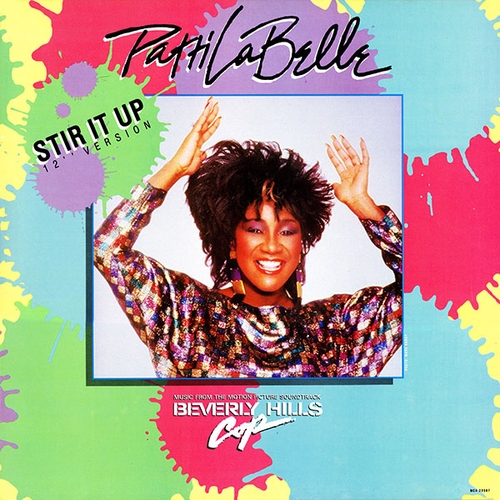
Tracklist: 01.Patti LaBelle - Stir It Up (Extended Version) (7:09) 02.Patti LaBelle - Stir It Up (Radio Edit) (5:29) 03.Patti LaBelle - Stir It Up (Percussapella) (5:23) "Stir It Up" is a song by American singer Patti LaBelle. It was written by Dan Sembello and Allee Willis and recorded by LaBelle for the motion picture soundtrack album for the 1984 action comedy film Beverly Hills Cop; production was helmed by Harold Faltermeyer and Keith Forsey. "Stir It Up" was the second of two songs she recorded for MCA Records immediately after signing her new contract with them (following "New Attitude"). Her first full-length album for MCA, Winner in You, would follow the next year. Released as the second single from the soundtrack, which was awarded the 1986 Grammy Award for Best Score Soundtrack for Visual Media, it reached number five on the US Hot R&B/Hip-Hop Songs chart. "Stir It Up" was also used as the theme song to the short-lived sitcom Stir Crazy, based on the 1980 movie.
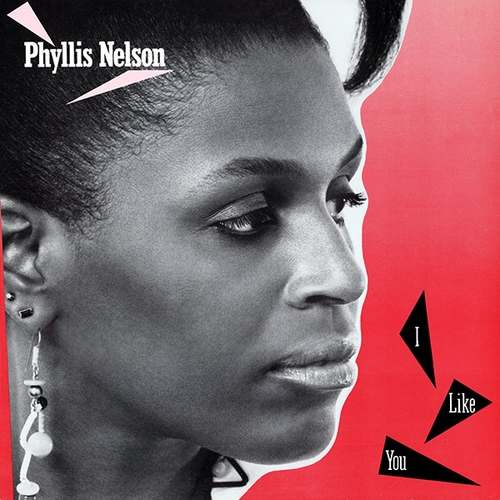
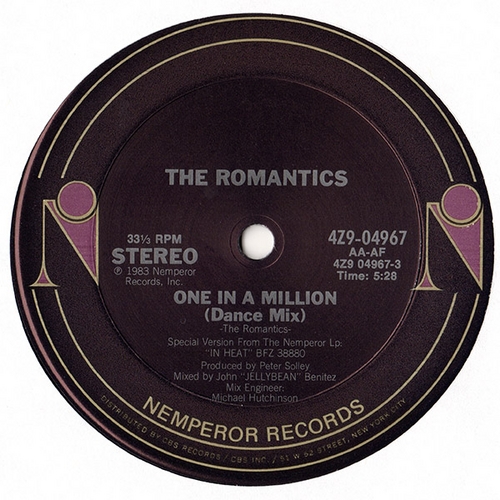
Tracklist: 01.Phyllis Nelson - I Like You (Extended Version) (7:26) 02.Phyllis Nelson - I Like You (Dub Version) (6:53) 03.Phyllis Nelson - I Like You (Extended Single Version) (5:11) "I Like You" is 1985 dance single by Philadelphia-born singer, Phyllis Nelson. The single was number one on the U.S. dance charts for one week. "I Like You" also crossed over the soul chart where it peaked at #65 and #61 on the Billboard Hot 100, respectively. The single was her sole entry into both the pop and soul charts, and the last of two chart entries on the dance chart for her. According to Neil Tennant of Pet Shop Boys, they were inspired by "I Like You", which was produced by Shep Pettibone, who did a remix of of their 1988 single "Heart". A music video was also made for the track, portraying Nelson performing the song on a piano to a young boy in a dancing studio, along with scenes of men at a pool bar and Nelson in a relationship with a man outside on the streets. Nelson died in January 1998 from breast cancer in Los Angeles, California, where she had been living. She was 47 years old.
Добавлено 28 релизов
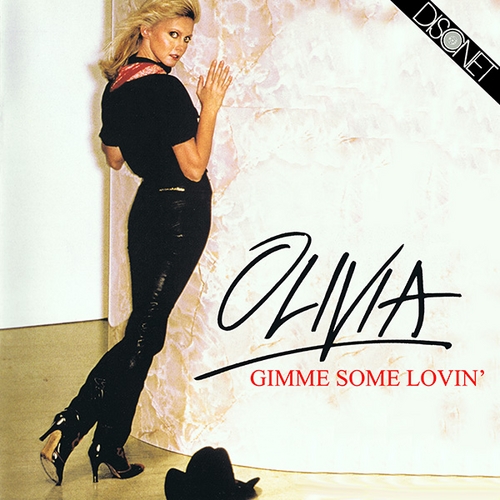
Tracklist: 01.Olivia Newton-John - Gimme Some Lovin' (Disconet Edit) (4:22) Today marks the one year anniversary of the passing of superstar, and icon Olivia Newton-John. Most of you that have been following me know that I am a massive ONJ fan so I wanted to do something special today. In July of 1979 Disconet Remix Service released issue Volume 2 Number 11 which included a remix edit of one of the buried treasures from Olivia's 1978 LP "Totally Hot" a cover version of Spencer Davis Group's biggest U.S. hit, "Gimme Some Lovin'. Olivia did not release the song as a single however this would mark the first time Olivia appeared on any remix service. This edit along with many other early Disconet edit's has been lost until now. The track was remixed and edited by American DJ and remixer Bobby "DJ" Guttadaro. A former professional pharmacist, "The man who's got ears" - as he was called in the music industry - started DJing at Fire Island's "The Ice Palace" in 1971 and, later, at Manhattan's "Le Jardin" and "Infinity", soon becoming one of the most renowned names in the '70s disco scene. Bobby DJ is unanimously regarded as an out-and-out pioneer in beatmixing and disco remixing: No wonder he was a member of the original team of remixers of legendary subscription label Disconet Program Service, along with such other famed DJs as Savarese and Kevin Guilmet. He was the first DJ to be presented with a Gold Disc - for his work on Love Unlimited Orchestra's "Love's Theme" - and, in 1976, he was also awarded - with Tom Savarese - the Billboard Magazine's "National Disco DJ of the Year" prize. Unfortunately, Bobby DJ passed away in New York in 1989 (reportedly of AIDS-related illness). Please keep in mind that this edit was done with vinyl recordings and then re-recorded and transferred to vinyl for the Disconet release. I have done my best to meticulously clean and restore this track. I also made a custom front cover sleeve for this release. I hope you enjoy it.
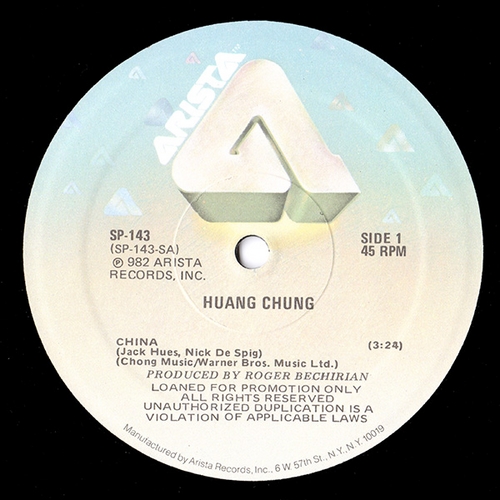
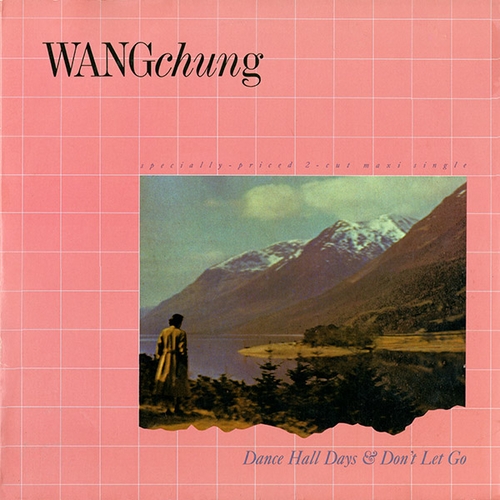
Tracklist: 01.Huang Chung - China (Special Extended Remix Version) (6:56) 02.Huang Chung - Ti Na Na (Special Extended Version) (4:35) "China" is a pre-Wang Chung single originally released in 1982 as a U.S. only 12" promo taken from the band's deut LP "Huang Chung". "China" was one of three single's released by the band on Arista Records under the direction of producer Rhett Davies. The band's debut studio album was issued in 1982. Self-titled, it compiled three non-charting Arista singles, one of the Arista B-sides, and six other new tracks. Like the associated singles, the Huang Chung album failed to chart. In 1984 Arista remixed "China" and re-released it in Europe where it failed to chart. In 1983 they were still billed under the band name "Huang Chung". At this juncture, the band changed the spelling of their name to Wang Chung, at their new label Geffen's suggestion, to make the pronunciation easier for English-speakers.
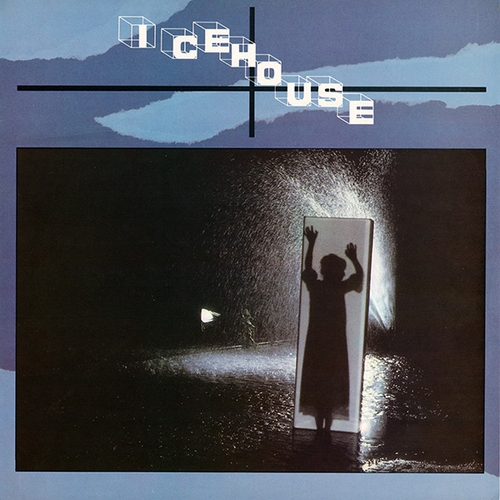
Tracklist: 01.Icehouse - Icehouse (4:09) 02.Icehouse - All The Way (Live) (4:08) 03.Icehouse - Cold Turkey (Live) (4:16) "Icehouse" is a song by the Australian rock band Flowers, later known as Icehouse. It was released as a single in Europe in 1982 by Chrysalis Records from the band's first album, Icehouse, after the band changed its name to Icehouse. In the United States, the song peaked at number 28 on the Billboard Mainstream Rock chart in 1981 even though the song was not realeased as a single the U.S. "Icehouse" was written by founding member Iva Davies when he lived at 18 Tryon Road, Lindfield in an old, cold flat of a two-storey mansion—across the street was a dishevelled house which had its lights on all night peopled by short-term residents. Davies only learned that it was a half-way house for psychiatric and drug rehab patients after he wrote the song. Russell Mulcahy, an expatriate Australian living in London, directed the music video for "Icehouse".
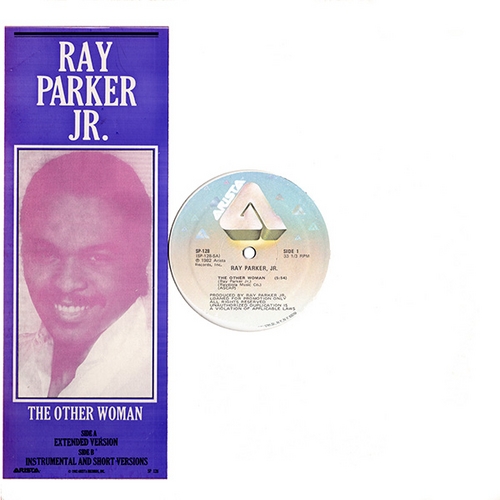
Tracklist: 01.Ray Parker Jr. - The Other Woman (Extended Version) (5:55) 02.Ray Parker Jr. - The Other Woman (Instrumental) (5:55) 03.Ray Parker Jr. - The Other Woman (Short Version) (4:03) "The Other Woman" is the title track from the album The Other Woman by American muscian Ray Parker Jr. It was his first solo hit single without his longtime group, Raydio. Released as a single in March 1982, it peaked at number four on the Billboard Hot 100, number two on the Hot Black Singles chart, number twenty-four on the dance chart, and number thirty-three on the Adult Contemporary chart. It also spent one week at number one in Australia. The instrumental is exclusive to this USA 12" Promo release.
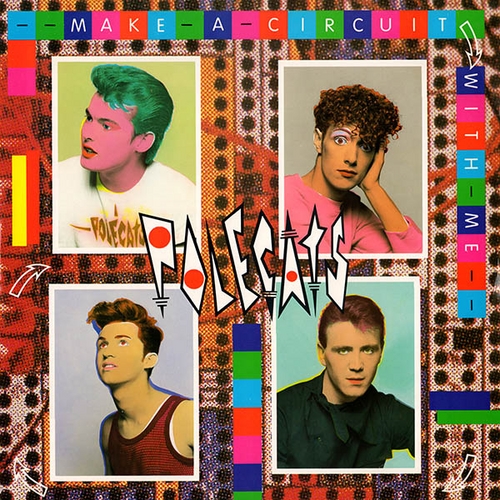
Tracklist: 01.The Polecats - Make A Circuit With Me (Rockin' Mix) (2:53) 02.The Polecats - Juvenile Delinquents (From A Planet Near Mars) (2:40) 03.The Polecats - Red Ready Amber (2:11) "Make A Circuit With Me" is a 1982 single by English rockabilly band The Polecats formed in 1977 in north London. The original line-up was Tim Worman (a.k.a. Tim Polecat, vocalist), Martin "Boz" Boorer (guitarist and vocalist), Phil Bloomberg (bassist), and Chris Hawkes (drummer) who originally played under the name "Cult Heroes". Finding difficulty persuading promoters to book them on the rockabilly circuit with a name sounding "too punk", they adopted Hawkes' suggested band name, the Polecats. Hawkes was later replaced by Neil Rooney, who was subsequently replaced by John Buck. The Polecats played rockabilly with a "punk sense of anarchy and helped revive the genre for a new generation in the early '80s." The Polecats were known for their fresh and energized take for the classic genre. Adding a sense of punk and sparking a multitude of bands to follow on their footsteps. Their arguably most famous song, "Make A Circuit With Me" may be their cheesiest song, but they do it well. It has a perfect balance of infectious guitar work, danceable beat and cheesy lyrics about love through electricity. "Make A Circuit With Me" peaked at #76 on the UK singles chart. In the Disney Pixar film WALL-E, advertisers used the Polecats' 1983 hit song "Make a Circuit with Me" in their television trailers for the film. In 2010, the U.S. broadcaster TBS used "Make a Circuit with Me" in two episodes of the TV series Glory Daze.
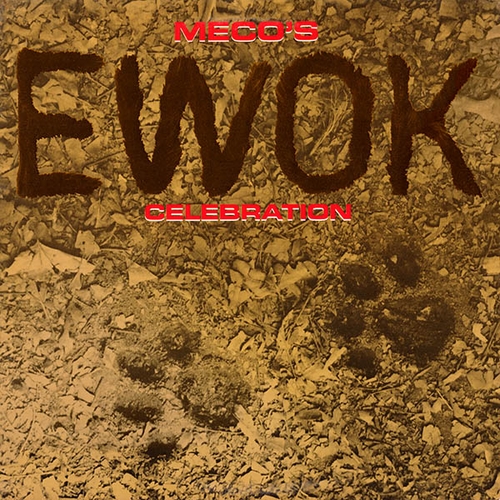
Tracklist: 01.Meco - Ewok Celebration (Club Version) (6:58) 02.Meco - Ewok Celebration (Dub Version) (4:36) "Ewok Celebration", known commonly as "Yub Nub", is a 1983 song that appears in the end of the Star Wars film Return of the Jedi, during the celebration of the Ewoks on Endor with members of the Rebel Alliance after the destruction of the second Death Star. The song was replaced with a different orchestral piece in the 1997 special edition re-release. In 1983, American record producer and musician Meco recorded a version of the song "Ewok Celebration" which reached No. 60 on the Billboard Hot 100.
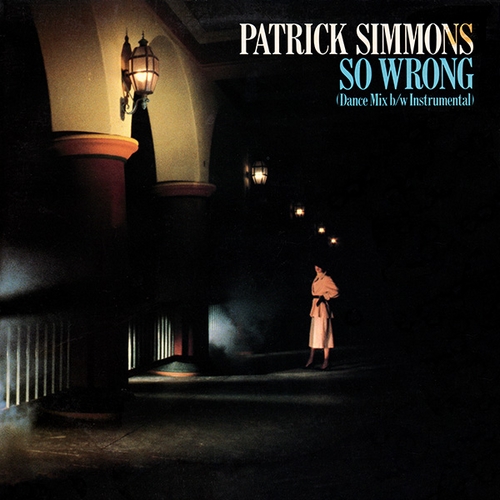
Tracklist: 01.Patrick Simmons - So Wrong (Dance Mix) (5:21) 02.Patrick Simmons - So Wrong (Instrumental) (3:46) So Wrong" is the debut solo single by American musician Patrick Simmons, best known as a founding member of the rock band The Doobie Brothers. In 1983, Simmons released his first solo album, Arcade, on Elektra Records. It yielded his only top 40 hit, "So Wrong", which peaked at #30 on the Billboard Hot 100. "So Wrong" was also a surprise hit on the US dance/disco chart, peaking at #8.
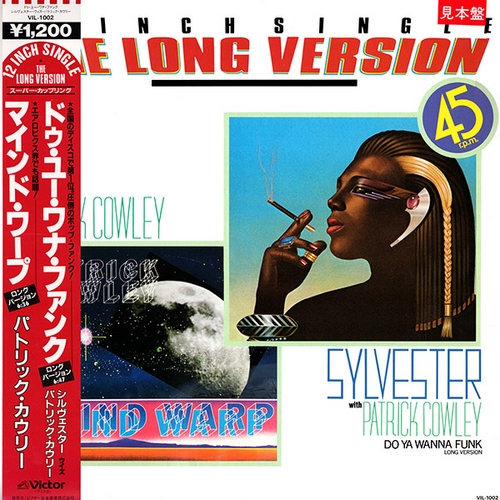
Tracklist: 01.Sylvester with Patrick Cowley - Do Ya Wanna Funk (Long Version) (6:57) 02.Patrick Cowley - Mind Warp (Long Version) (6:36) Patrick Cowley was one of disco’s most mysterious figures. His life was cut short in 1982, when he died of Aids at age 32. He was a key presence in the gay San Francisco disco scene; in the 1970s and early 1980s, when the city had one of the best disco scenes in the world. Sylvester was San Francisco’s biggest star and Cowley’s muse – a larger-than-life presence around town, dressed to the nines and often carrying multiple shopping bags as he walked down Castro Street. Cowley most famously worked with Sylvester on the ecstatic mega-hit You Make Me Feel (Mighty Real) and was a pioneer of the genre known as Hi-NRG, a relentlessly uptempo variant of disco that gained serious traction, especially in the UK and Europe. Cowley was a good deal quieter than Sylvester, and more of a tech boffin, experimenting with music in an apartment in the Castro crammed with electronics, with cables hanging everywhere. “It was a mess of wires,” recalls John Hedges, who ran Megatone Records for many years, the now-legendary record label that Cowley originally started with Marty Blecman in the 1970s. “It certainly didn’t look very safe,” he adds. “He was always experimenting to get the sounds. They would wire everything in and have tape machines, and the tape would go from one tape machine to another about 10 feet away to create the echo they wanted, or delay.” Sylvester known as "The Queen Of Disco" died six years after Cowley, of Aids-related complications in 1988. Patrick Cowley, and Sylvester were iconic trailblazers not just for queer and androgynous people, but for disco music as a whole, overcoming trauma, prejudice, and stigma to achieve their dreams. "Do Ya Wanna Funk" is a 1982 dance song recorded by American recording artists Sylvester and Patrick Cowley. It was produced by Cowley, who incidentally died the same year. The song was mostly successful in Europe, especially in Belgium, Finland and Norway, where it became a top-10 hit. It also reached the top 20 in the Netherlands and Switzerland, and made it to the top 30 in West Germany and Australia, and the top 40 in the United Kingdom. The song was inspired by "I'm Your Jeanie", a single by Jeanie Tracy, who was a background vocalist for Sylvester. It was also featured in the film Trading Places (1983). In 2022, Rolling Stone ranked "Do Ya Wanna Funk" number 179 in their list of 200 Greatest Dance Songs of All Time. "Mind warp" was the title track from Patrick Cowley's third and final album.
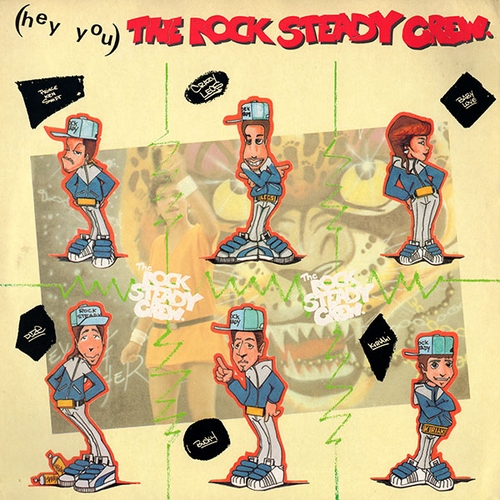
Tracklist: 01.The Rock Steady Crew - (Hey You) The Rock Steady Crew (Extended Version) (5:27) 02.The Rock Steady Crew - (Hey You) The Rock Steady Crew (Instrumental Version) (3:51) "(Hey You) The Rock Steady Crew" is the debut single by American hip hop group the Rock Steady Crew from their debut studio album Ready for Battle. It was released in 1983 through Charisma/Virgin Records as the album's lead single. Written by Budd "Blue Soldier" Dixon, Ruza Blue and Stephen Hague, and produced by Dixon and Hague, the lead vocals were performed by 15 year old Daisy Castro, aka "Baby Love". The song became the most popular hit song of the Rock Steady Crew. The single peaked at number-one on the Belgian and Dutch singles charts, and reached the top ten in many other European countries, including the United Kingdom.
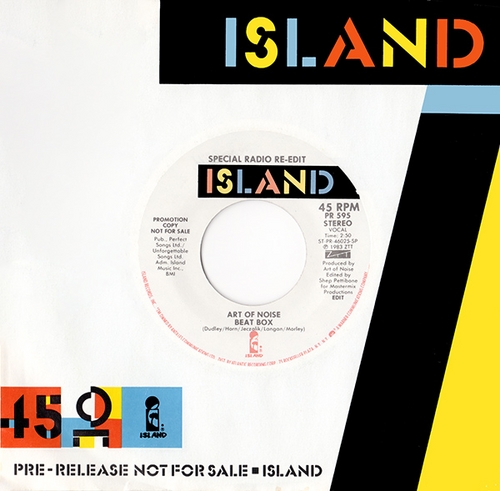
Tracklist: 01.Art Of Noise - Beat Box (Special Radio Re-Edit) (2:53) "Beat Box" is a song by English avant-garde synth-pop group Art of Noise. Originally appearing as the second track on the 12" EP Into Battle with the Art of Noise (1983), it was released as the group's first single in December 1983. This U.S. 7" promo contains the "Special Radio Re-Edit" also known as "Shep Pettibone Radio Edit" which differs from the 2:55 Original 7" Edit. This mix is a unique edit of the original Into Battle version and has a snippet of the track "battle" at the beginning. The same track appears on both sides of the 7" release.
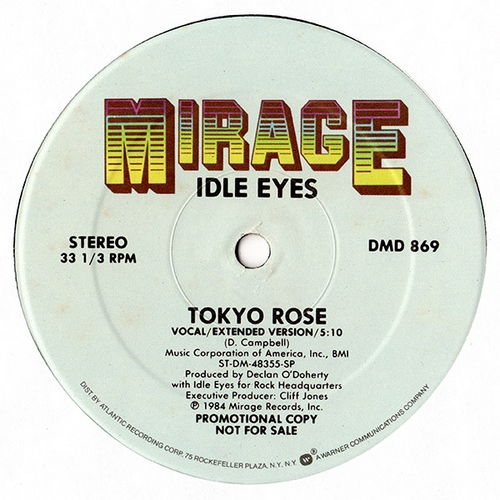
Tracklist: 01.Idle Eyes - Tokyo Rose (Vocal Extended Version) (5:13) 02.Idle Eyes - Tokyo Rose (Vocal LP Version) (3:47) 03.Idle Eyes - Tokyo Rose (Dub Mix) (5:22) "Tokyo Rose" is the debut single by Canadian Rock Band Idle Eyes. The song peaked at #16 on RPM's Canadian singles chart in June 1985. "Tokyo Rose" won an award that year from SOCAN (Society of Composers, Authors and Music Publishers of Canada) as one of the top ten most played songs on Canadian radio that year. "Tokyo Rose" was inspired by the generic name "Tokyo Rose", which was used to describe female Japanese DJs who attempted to shake the morale of American soldiers and spread propaganda in the Pacific Theater during World War II. "Tokyo Rose" was only released as a 12" Promo with remixes in the United States.
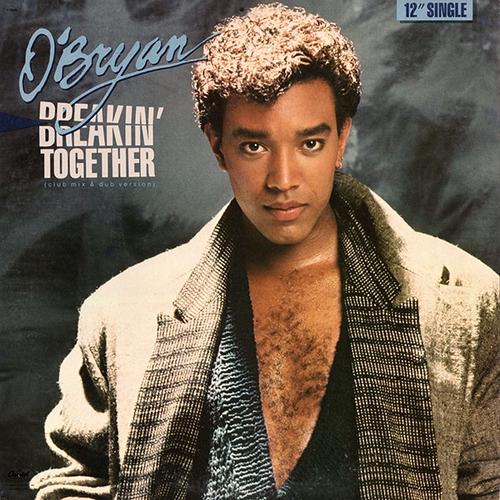
Tracklist: 01.O'Bryan - Breakin' Together (Club Mix) (6:21) 02.O'Bryan - Breakin' Together (Dub Version) (6:21) "Breakin' Together" is the second single taken from the third studio album Be My Lover recorded by American musician, singer, songwriter, record producer, and multi-instrumentalist O'Bryan. "Breakin' Together" reached #32 on the U.S. R&B Chart on September 15, 1984 after spending ten weeks on the survey. During his career O'Bryan released nine singles, and recorded six albums.
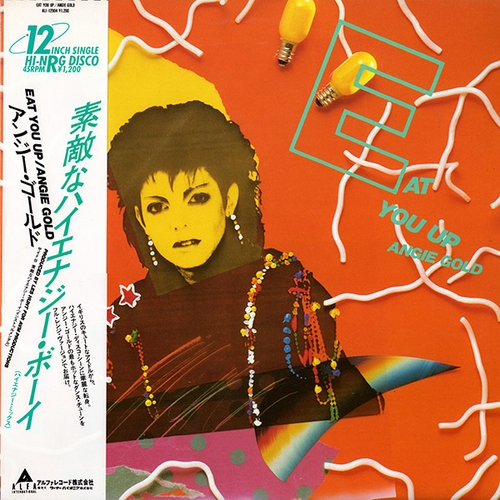
Tracklist: 01.Angie Gold - Eat You Up (Hi-NRG Mix) (6:43) 02.Angie Gold - Eat You Up (Instrumental) (5:41) "Eat You Up" is a song by British singer-songwriter Angie Gold, written by Gold and Anthony Baker and released in 1985 by Passion Records (U.S.). The single peaked at No. 30 on Billboard's Dance Club Songs Chart on August 17, 1985 after spending six weeks on the survey, "Eat You Up" would be Gold's only U.S. Charting single. It found more success in Japan, where it was titled "Suteki na High Energy Boy" (素敵なハイエナジー・ボーイ, Suteki na Hai Enajī Bōi, "Nice High Energy Boy") and spent four consecutive weeks at No. 1 on Oricon's international singles chart in early 1986. The song was also adapted in several languages by other artists in Japan, Hong Kong, and South Korea. Gold later re-recorded the song with producer Ian Levine for her 1995 compilation album The Best of Angie Gold: Eat You Up.
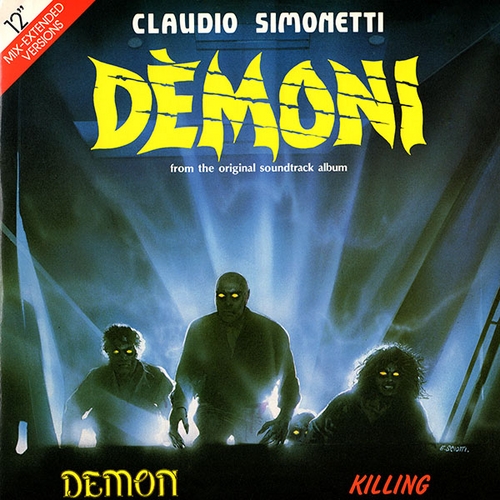
Tracklist: 01.Claudio Simonetti - Démon (5:36) 02.Claudio Simonetti - Killing (3:09) "Démon" is the instrumental theme song for the 1985 Italian horror film of the same name performed by Italian musician and film composer Claudio Simonetti who was also the keyboardist of the progressive rock band Goblin, Simonetti has specialized in the scores for Italian and American horror films since the 1970s. A long-time collaborator of director Dario Argento, Simonetti has worked on several of the director/producer's films including Deep Red, Suspiria, Dawn of the Dead, Tenebrae, Phenomena, Demoni, and Opera.
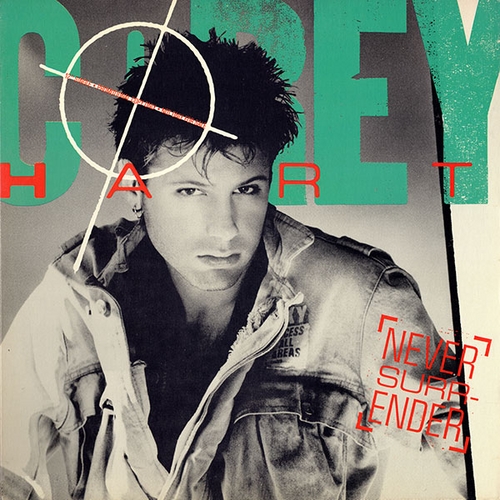
Tracklist: 01.Corey Hart - Never Surrender (Album Version) (4:53) 02.Corey Hart - Never Surrender (Edited Version) (4:25) This song has always been special to me growing up in a conservative state and coming out to my parents at age sixteen who did not take the news well I found myself on my own trying to find my way in a sometimes cruel world. "Never Surrender" and it's lyrics "Just a little more time is all we're asking for 'Cause just a little more time could open closing doors" spoke to me as a gay teen coming to terms with my own sexuality. "Never Surrender" is an anthem of empowerment and hope. Corey Hart has since become an LGBTQ+ ally performing at various Pride events. "Never Surrender" is a song by Canadian singer Corey Hart. It was released in June 1985 as the first single from his second studio album, Boy in the Box. The song was number-one for four weeks in Canada and was Hart's highest charting single in the United States, reaching number three on the Billboard Hot 100 (topping the sales only chart for one week) in August 1985. The song won a Juno Award in 1985 for the "Single of the Year", and was certified Platinum in Canada for sales of over 100,000 copies in 1985. In 2019, Hart released an updated version of the song on his EP Dreaming Time Again, performed as a slow piano ballad with a new "angels lead you home" coda. He released the new version as a single in 2020, highlighting its message of hope and resilience during the COVID-19 pandemic. On the lyrical content, Hart said, "My mother influenced me with this ethic of never quitting on yourself or your dreams no matter how challenging or daunting. I also greatly admired Sir Winston Churchill, reading many biographies on his life. He used this expression 'Never Surrender' during the dark days of the Nazi attacks on Great Britain as a motivating inspiration for his countrymen." AllMusic has since called "Never Surrender": "a soaring power ballad of empowerment, giving this album (Boy in the Box) a greater musical and emotional range than his (Hart's) debut." Regarding the song becoming another US hit single Hart said "I really think it's difficult breaking into America regardless of where you're from. I don't think it's any more difficult for a Canadian act than for a band from Oklahoma". The music video features a story line of Hart leaving his home after an argument with his father and hitchhiking his way to a major city where he finds himself alone and ends with a 'live' performance with his band. Portions of the video were filmed on Yonge Street, Spadina Avenue and Queen Street West in downtown Toronto, including the now defunct Crest Grill. The video's director, Rob Quartly, had worked with Hart on three previous music videos and Quartly was again nominated for a Juno Award for his work on this video.
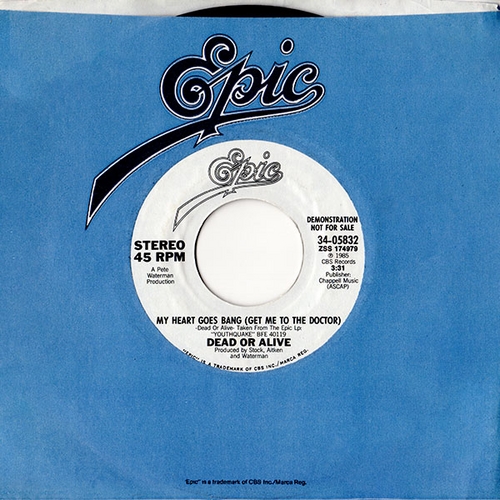
Tracklist: 01.Dead Or Alive - My Heart Goes Bang (Get Me To The Doctor) (American 'WIPE-OUT' Mix Edit) (3:31) We could not have Pride month with that Liverpool band Dead Or Alive without LGBTQ+ Icon, Pete Burns, And His Impact Upon The World Through His Powerful Presence. "People always want to know – am I gay, bi, trans or what? I say, forget all that. There's got to be a completely different terminology and I'm not aware if it's been invented yet. I'm just Pete." - Pete Burns. "My Heart Goes Bang" is a 1985 song by English pop band Dead or Alive. It was the fourth and final single from the band's second studio album Youthquake. It peaked at No. 23 in the United Kingdom, No. 12 in Japan, and became a dance hit in the U.S. ++ The version included here is an edit of the "American 'WIPE-OUT' Mix", otherwise unavailable on any other format. The mix title is not listed on the labels, and the same track is on both sides.
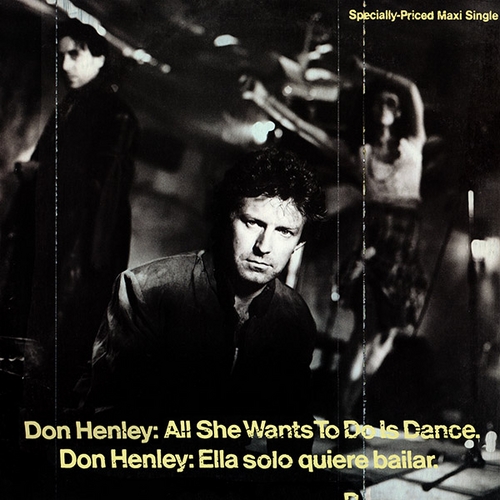
Tracklist: 01.Don Henley - All She Wants To Do Is Dance (Extended Dance Remix) (7:36) 02.Don Henley - All She Wants To Do Is Dance (Dubb Remix) (5:15) 03.Don Henley - All She Wants To Do Is Dance (Remix Edit) (4:29) "All She Wants to Do Is Dance" is a song written by Danny Kortchmar and performed by Don Henley, co-lead vocalist and drummer for Eagles. It was released as the second single from Henley's second studio solo album, Building the Perfect Beast (1984), and was Henley's sixth solo single overall. It was one of Henley's most commercially successful singles, peaking at No. 9 on Billboard Hot 100 and also became his third song to top the Top Rock Tracks chart. The song critiques the US intervention in Central America, particularly in the then-ongoing Contra War, in which the Reagan administration funded the right-wing rebel group Contras to overthrow the socialist Sandinista National Liberation Front government in Nicaragua. Backing vocals for the song was provided by Patty Smyth of the band Scandal, and Martha Davis, lead singer of the Motels. When Kortchmar was asked about the song, he said, "I had the groove and the music going. That record was made back when the technology had just started to really take over in music. I had one of the first Yamaha DX7s, which was a keyboard that was used a ton in the '80s, but we ended up luckily getting one of the first ones in the United States. It's a synthesizer keyboard, and I used it to get that sound that you hear the record starting with." ** As a BONUS TRACK I have included the "Remix Edit" which was taken from the U.S. 12" Promo.
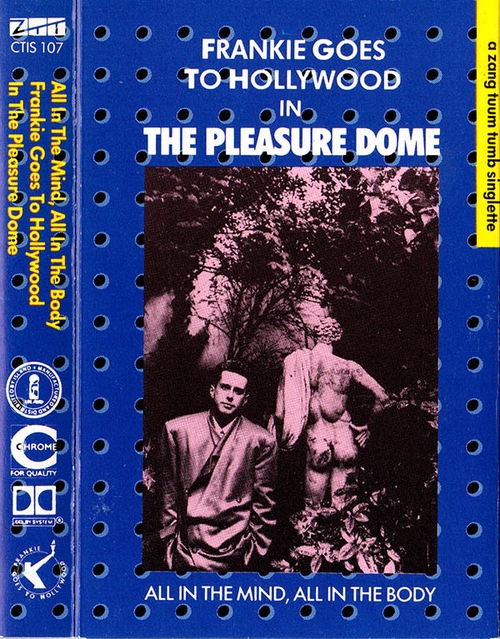
Tracklist: 01.Frankie Goes To Hollywood - Happy Hi! (1:22) 02.Frankie Goes To Hollywood - Welcome To The Pleasure Dome (The Soundtrack From Bernard Rose's Video) (9:48) 03.Frankie Goes To Hollywood - Welcome To The Pleasure Dome (How To Remake The World) (9:32) 04.Frankie Goes To Hollywood - Happy Hi (1:12) Pride month would not be complete without including Frankie Goes To Hollywood known for their their leather clad homoerotic videos and suggestive lyrics. Frankie Goes To Hollywood's ambitious work sought to challenge the status quo of pop, and politics. they were true trailblazers. "Welcome to the Pleasuredome" is the title track to the 1984 debut album by British band Frankie Goes to Hollywood. The lyrics of the song were inspired by the poem Kubla Khan by Samuel Taylor Coleridge. In March 1985, the album track was abridged and remixed for release as the group's fourth UK single. While criticised at the time of release and afterward for being a song that glorifies debauchery, the lyrics (and video), just as Coleridge's poem, were about the dangers of mindless indulgence. This song, along with "Relax", made Frankie Goes to Hollywood even more controversial than they already were. Billboard compared it to "Relax," saying that "Welcome to the Pleasuredome" had "less hook, less controversy, more drama." Despite the group's record label (ZTT) pre-emptively promoting the single as "their fourth number one", an achievement that would have set a new UK record for consecutive number one singles by a debuting artist, "Welcome to the Pleasuredome" peaked at number two on the UK Singles Chart, being kept off the top spot by the Phil Collins/Philip Bailey duet "Easy Lover". The single spent a total of eleven weeks on the UK chart. It was the first release by the group not to reach number one and, despite representing a creditable success in its own right, it symbolically confirmed the end of the chart invincibility that the group had enjoyed during 1984. Frankie Goes to Hollywood would not release another record for seventeen months, and they would fail to emulate their past chart success upon their return. The spoken-word introductions to both 12-inch mixes are adapted from Walter Kaufmann's 1967 translation of Friedrich Nietzsche's The Birth of Tragedy. The recitation on the first 12-inch ("Real Altered") is by Gary Taylor, whilst that on the second 12-inch ("Fruitness") and the cassette is by actor Geoffrey Palmer. It is unknown whether Palmer's concluding "Welcome To The Pleasuredrome" was a genuine mistake or a deliberately scripted one. All releases featured an edited version of "Get It On", originally recorded for a BBC Radio 1 session in 1983 (a full-length version was included on the cassette release), plus a faded or full length version of "Happy Hi!", a non-album track. The video, by Bernard Rose, features the group stealing a car, going to a carnival and encountering all manner of deceptively "pleasureable" activities. The audio soundtrack of the video was included as part of the cassette single.
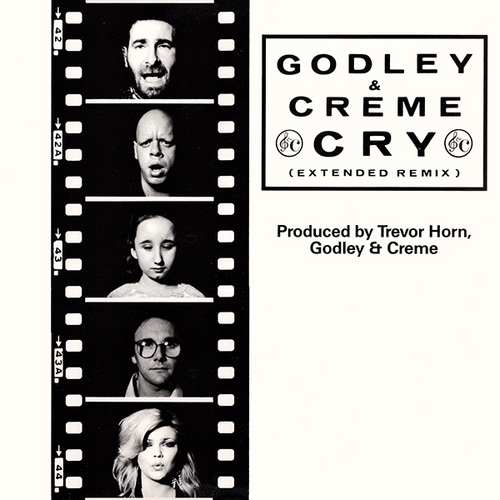
Tracklist: 01.Godley & Creme - Cry (Extended Remix) (7:25) 02.Godley & Creme - Cry (Single Version) (3:56) 03.Godley & Creme - Cry (Extended Version) (6:30) "Cry" is a song released by the English music duo Godley & Creme on 11 March 1985. It was included on the duo's album The History Mix Volume 1. The song reached number 16 on the Billboard Hot 100 chart, becoming Godley & Creme's lone Top 40 hit in the US apart from their former band, 10cc. It reached No. 19 on the UK Singles Chart. The duo also directed the song's music video, which featured faces blended into each other using dissolving and wiping effects. After Godley & Creme left their former band 10cc after the group's fourth album, they began writing songs for their own albums, but became better known for producing music videos for other bands. Within the music video producing process, they met producer Trevor Horn, ex of the Buggles and now heading his own label ZTT Records. Godley & Creme asked Horn to produce their album, but had very little material that was recording studio ready. After their first track failed to produce the required effect, Horn asked what else they had. The pair had already written the first verse of "Cry", and much as though the song came from a position - a man in a relationship where his partner lies and cheats on him - unlike 10cc's "I'm Not in Love", it didn't come from real-life experience. The three hence sat down and started writing down words and phrases which could be associated with the first verse, and then Horn put Godley in the recording booth to record them. Godley later described the song's creation process as "patchwork like", but it worked due to its envisaged simple production. The basic sound of the track was provided by electronic music specialist J. J. Jeczalik who used a Fairlight CMI synthesizer. Godley & Creme then created the full backing track, which was mixed and produced by Horn.
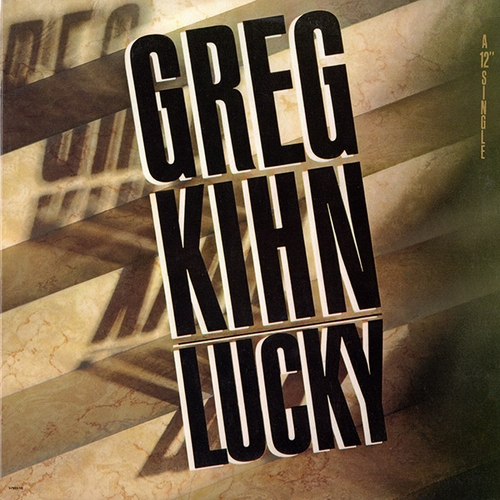
Tracklist: 01.Greg Kihn - Lucky (Dance Mix) (5:54) 02.Greg Kihn - Lucky (Trench Mix) (4:06) "Lucky" was the first single taken from the LP Citizen Kihn by the American musician Greg Kihn, release in 1985 through EMI America records. It was his first album since 1978's Next of Kihn not to be released under the Greg Kihn Band name. "Lucky" peaked at #30 on the U.S. Billboard Hot 100 Pop Singles Chart in February 1985, the single also reached #16 on the Billboard Dance Chart.
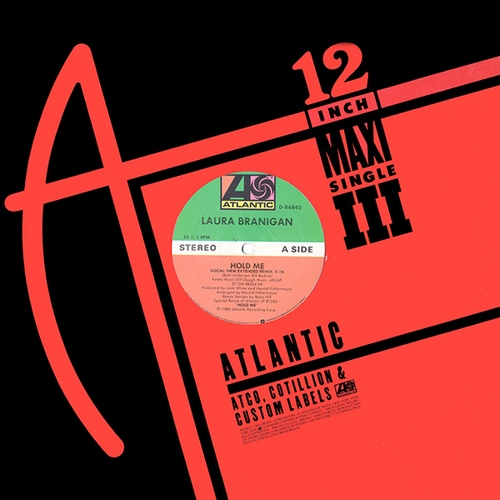
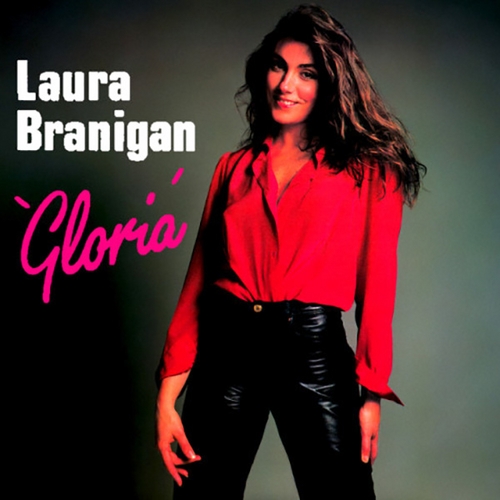
Tracklist: 01.Laura Branigan - Hold Me (Vocal/New Extended Remix) (5:20) 02.Laura Branigan - Tenderness (Vocal/Extended Remix Version) (5:52) 03.Laura Branigan - Spanish Eddie (Vocal/Extended Remix Version) (4:09) "Hold Me" is a song by the American pop singer Laura Branigan, which was released in 1985 as the second single from her fourth studio album Hold Me. It was written by Bill Bodine and Beth Andersen, and produced by Jack White and Harold Faltermeyer. Following the Top 40 success of the first single from Hold Me, "Spanish Eddie", "Hold Me" was released as the follow-up single. It reached No. 82 on the U.S. Billboard Hot 100 Chart and No. 39 on the Billboard Dance/Club Play Songs Chart.
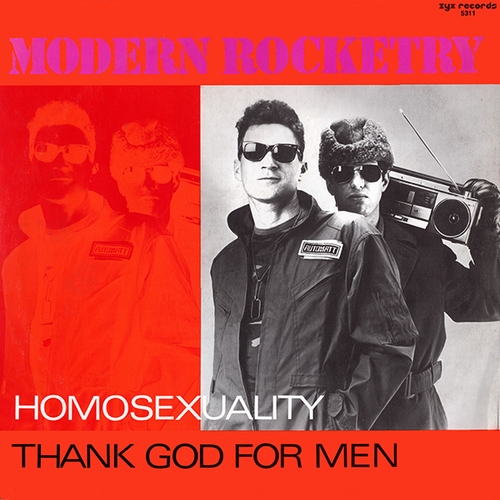
Tracklist: 01.Modern Rocketry - Homosexuality (5:59) 02.Modern Rocketry - Thank God For Men (5:37) Modern Rocketry were a hi-nrg disco band featuring Ken Kessie, active from 1983 to 1988. They're not very well known - in fact they're downright obscure - but what little fame they enjoyed was probably due to their 1985 release, best described as the gayest disco song ever. Homosexuality, with its b-side of 'Thank God For Men', followed in the well-trodden footsteps of Patrick Cowley's Menergy and Boystown Gang's 'Cruising In The Streets' with massive gay audience appeal. A hit in gay clubland. Other notable songs include '(I'm Not Your) Steppin' Stone' and 'Deeper N Deeper', none of which, it has to be said, has quite the show stopping charm of a song whose main chorus is 'Homosexuality… Yes sir! Do you wanna get next to me?'. Oh, and the Pet Shop Boys did a live cover of it at a pride event in 1992, too.
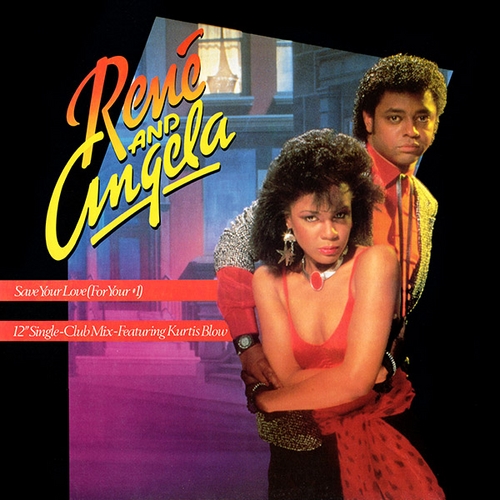
Tracklist: 01.René & Angela - Save Your Love (For Your #1) (Club Mix) (5:29) 02.René & Angela - Save Your Love (For Your #1) (Instrumental) (4:21) 03.René & Angela - Save Your Love (For Your #1) (Vocal) (4:19) "Save Your Love (For #1)" is a 1985 song written and sung by the duo René & Angela from their album Street Called Desire. It was their first single (and album) for Mercury Records. The single also featured labelmate Kurtis Blow performing a rap, making it one first times hip hop artists collaborated with R&B artists on their work. The single was number one on the Billboard R&B chart for two weeks and was the duo's biggest hit on that chart.
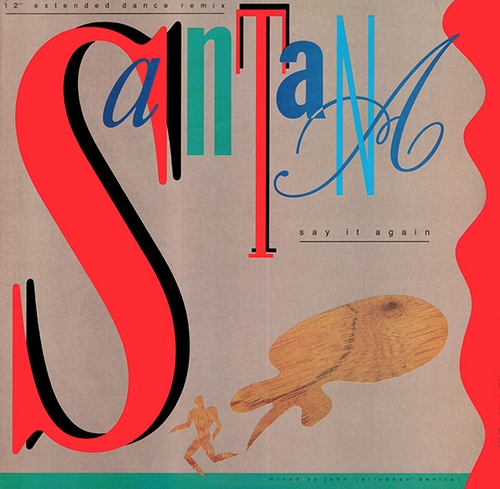
Tracklist: 01.Santana - Say It Again (Dance Mix) (7:41) 02.Santana - Say It Again (Instrumental) (6:28) "Say It Again" is a 1985 single by American band Santana formed in San Francisco in 1966 by Mexican-born guitarist Carlos Santana. "Say It Again" nearly hit the U.S. Top 40 peaking at #46 in 1985, and in Carlos Santana's arsenal of lead singers, the vocals on "Say It Again" fell to the soulful Greg Walker. Of Santana's 15 Top 40 songs, Walker would sing lead on two of them as he made his mark with "Stormy" and "She's Not There" - both of which charted in the '70s and were remakes of '60s songs. "Say It Again", also reached #15 onbetter on Billboard's Mainstream Rock Tracks chart. The song was taken from the band's fourteenth studio album "Beyond Appearances".
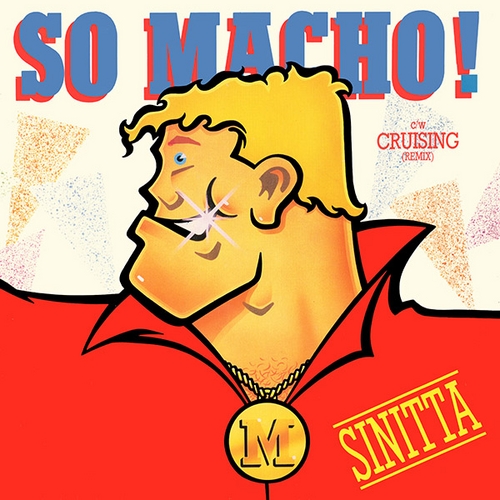
Tracklist: 01.Sinitta - So Macho (Extended Dance Remix) (6:36) 02.Sinitta - Cruising (Remix) (7:31) "So Macho" is a song by American-British singer Sinitta. The song was released in 1985 as her self-titled début album's second single. Sinitta was both Simon Cowell's and Fanfare Records' first signing. Cowell had contacted record producer and songwriter George Hargreaves, who in turn provided the song "So Macho". Armed with a highly infectious pop record, Sinitta looked poised for success; however, Iain Burton changed his mind and called Cowell to advise he was pulling the plug on Fanfare Records. Convinced "So Macho" was destined to be a hit, Cowell persuaded Burton to give him £5,000 to release the record. The single was first released in late July 1985 and, like Sinitta's début single "Cruising", it quickly gained popularity in the gay clubs and on the Hi-NRG dance scene. Although the single failed to chart, it continued to sell throughout the summer, including 15,000 copies on import. The song's popularity led Cowell to make the decision to delete the single at the end of October 1985 to let demand build up again. As Christmas approached, the song found renewed popularity in straight clubs and discos. The single was re-released as a double A-side with "Cruising" on 17 February 1986. The record's sleeve was changed from an image of Sinitta to a cartoon macho man, in an effort to make clear to radio programers that it was a pop record, and not R&B or soul. The re-release was not an immediate success as it remained in the lower reaches of the charts. It was not until four months later that the single started gaining airplay and entered the top 40, upon which it quickly rose to number two in the UK Singles Chart. The song's belated video was recorded for £500 in a London flat belonging to one of Cowell's friends, in the hope of gaining TV exposure. Sinitta supplied her own wardrobe, and there was no budget for hair or makeup. It was certified gold by the BPI, and has sold 585,000 copies. Iain Burton's initial £5,000 investment became a profit of £1,000,000 and paved the way for Fanfare's future.
Tracklist: 01.Sly Fox - Let's Go All The Way (Extended Version) (5:28) 02.Sly Fox - Let's Go All The Way (Bonus Beats) (4:52) "Let's Go All the Way" is a song by American group Sly Fox. Released as a single in December 1985 from their debut studio album of the same name, the record entered the Billboard chart on December 28 and reached the top 10 in both the U.S. and the UK. Despite receiving considerable commercial and critical success, the group failed to match expectations with their later singles, and are sometimes referred to as a one-hit wonder. Original MTV veejay Martha Quinn has described "Let's Go All the Way" as "one of the funkiest songs ever." The track begins with synthesizer-processed chanting, with the lines "Simonini" repeating over a recurrent buzzing until drums and a synth-led riff begin. The duo of Gary "Mudbone" Cooper and Michael Camacho's harmonized vocals then come in, punctuated with deadpan "yeah, yeah, yeah"s. When released, the song was a top 10 hit in the United States, peaking at number seven, after reaching number three on the UK Singles Chart earlier in the year. It was a number one song on the Canadian RPM Top Singles chart peaking on May 10, 1986. The song also hit number five in the Netherlands as well as No. 14 in Belgium and No. 27 in New Zealand. AllMusic notes that "the song's oddball mix of hip-hop, Latin pop, disco, and new wave, crossed radio formats, from R&B to Top-40 to 'Rock of the ‘80s' stations ruled by the Smiths and the Cure." On the strength of the single's multiformat success, the band's album hit the top 40 in two formats as well, peaking at number 31 on the Top 200 Albums chart and at number 34 on the Top R&B Albums chart. **The "Extended Version" here is exclusive to this U.D. & Canadian pressings. For the first couple minutes it sounds like the standard 5:28 extended mix that appears everywhere else...but scroll to the 2:40 mark...instead of guitars playing in the bridge, It's synthesizers. Also after the last chorus the structure changes...there's an extra chorus inserted before the "we can make a better way" alternate chorus...and an exclusive break before the "nah nah nah" part.
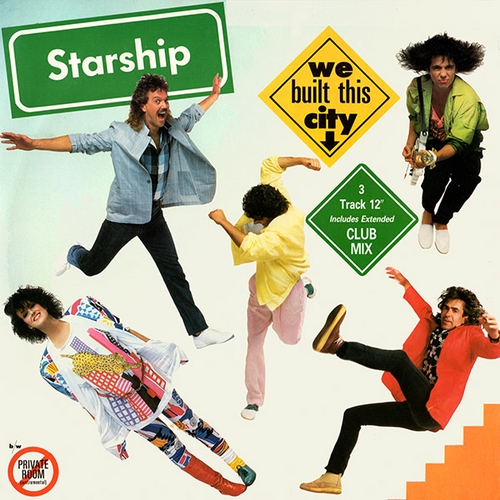
Tracklist: 01.Starship - We Built This City (Special Club Mix) (7:00) 02.Starship - We Built This City (4:51) 03.Starship - Private Room (Instrumental) (4:55) "We Built This City" is a 1985 song by American rock band Starship, the debut single from the album Knee Deep in the Hoopla. It was written by English musicians Martin Page and Bernie Taupin, who were both living in Los Angeles at the time, and was originally intended as a lament against the closure of many of that city's live music clubs. The song peaked at number one on the Billboard Hot 100. Outside the United States, "We Built This City" topped the charts in Australia and Canada, peaked inside the top 10 of the charts in Germany, the Republic of Ireland, Sweden and Switzerland, the top 20 on the charts in Belgium, New Zealand and the United Kingdom and the top 30 of the charts in Austria and the Netherlands. The song has gained significant scorn, both for the inscrutability of its lyrics (notably the line "Marconi plays the mamba"), and for the contrast between the song's anti-corporate message and its polished, "corporate rock" sound. It topped a 2011 Rolling Stone poll of worst songs of the 1980s by a wide margin, and the magazines Blender and GQ both called it the worst song of all time. Billboard said that this "unusual rock 'n' roll anthem is as wise as it is rebellious." Cash Box called it "an ear-catching tune" and described it as "dance rock with sharp hooks." "We Built This City" received a Grammy Award nomination for Best Rock Vocal Performance by a Duo or Group in 1986. The song was engineered by producer Bill Bottrell, written by Bernie Taupin, Martin Page, Dennis Lambert and Peter Wolf and arranged by Bottrell and Jasun Martz. The song was based on a demo by Page and Taupin with a darker feel and based on how clubs were dying in Los Angeles, leaving live performers without work. Wolf reworked the song's arrangement with a more upbeat tone. The song features Mickey Thomas and Grace Slick sharing lead vocals. MTV executive and former DJ Les Garland provided the DJ voiceover during the song's bridge. Additionally, some radio stations, with the help of jingle company JAM Creative Productions, inserted their own opening lines to promote their stations.
Tracklist: 01.'Til Tuesday - Love In A Vacuum (Single Remix) (3:20) 02.'Til Tuesday - Love In A Vacuum (Long Version) (3:36) "Love in a Vacuum" is a song by American band 'Til Tuesday, which was released in 1985 as the third and final single from their debut studio album Voices Carry. The song was written by Aimee Mann, Michael Hausman, Robert Holmes and Joey Pesce, and produced by Mike Thorne. "Love in a Vacuum" peaked at No. 88 on the US Cash Box Top 100 Pop Singles chart. 'Til Tuesday first recorded "Love in a Vacuum" in 1983, before they had signed a record deal and shortly after winning the WBCN Rock 'n' Roll Rumble in Boston. The band sent producer and engineer Ian Taylor a demo tape in the hope he would be interested in recording a demo with the band and generate awareness of them through his connections in the music industry. Taylor produced the "Love in a Vacuum" demo which was independently released in 1983 and gained heavy rotation on Boston's WBCN-FM. The band's victory in the Rock and Roll Rumble, along with the subsequent publicity and local airplay of "Love in a Vacuum", helped gain the attention of Epic Records, who signed the band in 1984. The band's debut album, Voices Carry, was recorded with producer Mike Thorne and included a new recording of "Love in a Vacuum". As the album's third and final single, "Love in a Vacuum" failed to enter the US Billboard Hot 100, but did reach No. 88 on the Cash Box Top 100 Pop Singles chart. Guitarist Robert Holmes told Rolling Stone in 1986, "'Voices Carry' didn't sound like an obvious hit to me. If anything, I thought 'Love in a Vacuum' sounded like a big hit. And that totally died."
Thomas Turbando
Hello, mate.
I have more 60 itens (56 are 24/96 and 4 are 16/44.1 (I lost the wetransfer links) - all 2023 from BTG - not included on your update.
Please, let me know if you have interest.
Also, if someone here have these 4 releases in 24/96, from 2023, please share: Breakfast Club - Right On Track (MCA Records – MCA-23687)
Brenda K. Starr - Pickin_ Up Pieces (Mirage – 0-96873)
Daryl Hall John Oates - Method Of Modern Love (RCA – PW-13971)
Peter Wolf - Can_t Get Started (EMI America – V-19243) Here's my full 24/96 from 2023 list: Best regards.
DMMANIAC
Thomas Turbando, Hello. If you think that you have releases not included here - share it with me & i will add them in future update.
Thanks in advance
PS: And by the way this is the Part 2 http://new-team.org/viewtopic.php?t=68679
iTunesUniverse
if someone here have these 4 releases in 24/96, from 2023, please share: Breakfast Club - Right On Track (MCA Records – MCA-23687)
Brenda K. Starr - Pickin_ Up Pieces (Mirage – 0-96873)
Daryl Hall John Oates - Method Of Modern Love (RCA – PW-13971)
Peter Wolf - Can_t Get Started (EMI America – V-19243) Best regards.
Here you go... https://we.tl/t-0rl1CQGNU5 on a side note does anyone have any of these early 16bit rips from the beginning of burning the ground that are not contained in the 2 BTG torrents? Aretha Franklin - Get It Right (US 12")
Barry Gibb - Fine Line (US 12" Promo)
Barry Gibb - Shine Shine (UK 12")
Bee Gees - One (US 12" Promo)
Belinda Carlisle feat. Freda Payne - Band Of Gold (US 12")
Boney M. & Bobby Farrell with The School-Rebels - Happy Song (Germany 12")
Bonnie Pointer - The Beast In Me (US 12")
Bonnie Tyler - Band Of Gold (US 12")
Cher - Hell On Wheels (US 12" Promo)
Corey Hart - Dancing With My Mirror (US 12" Promo)
Culture Club - God Thank You Woman (UK 12")
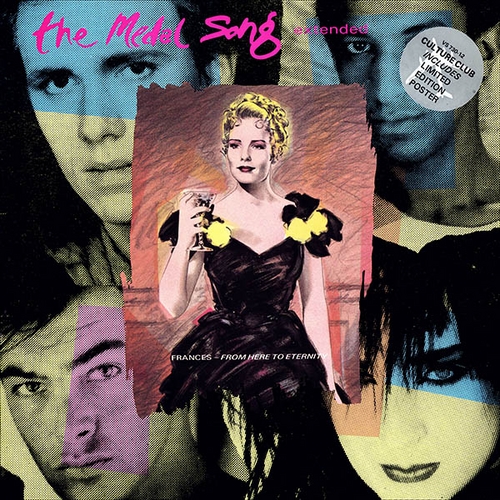
Culture Club - The Medal Song (UK Limited Edition 12")
D&M - On The Shelf (US 12" Promo)
Eighth Wonder - Baby Baby (US 12" Promo)
Funkadelic - One Nation Under A Groove (US 12" Promo)
Gang Of Four - Is It Love (US 12")
Hi-Gloss - You’ll Never Know (UK 12")
Hot Posse - An American Dream (Medley) (US 12")
Jermaine Jackson - (Closest Thing To) Perfect (US 12")
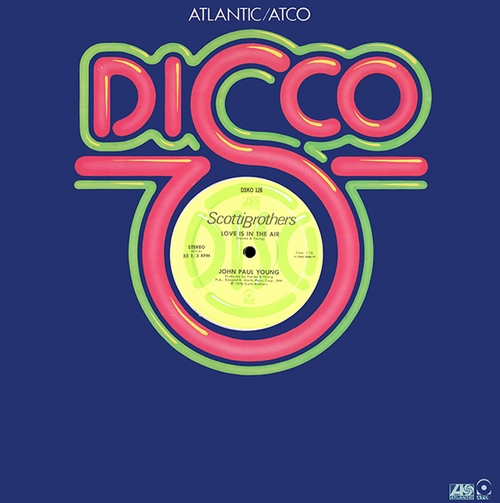
John Paul Young - Love Is In The Air (US 12")
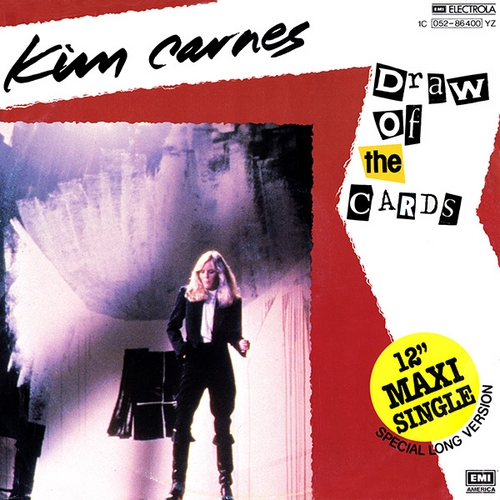
Kim Carnes - Invisible Hands (UK 12")
Klymaxx - Man Size Love (US 7")
LaTour - Involved (US 12")
Lipps, Inc. - Designer Music (Exclusive Remix) (US 12")
Mari Wilson - Just What I Always Wanted (US 12" Promo)
Marianne Faithfull - Broken English (US 12")
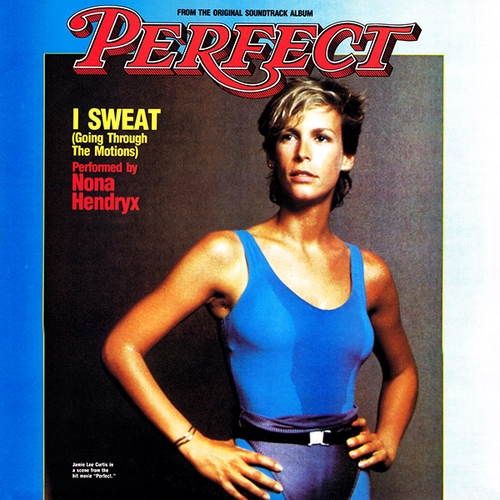
Nona Hendryx - I Sweat (Going Through The Motions) (US 12" Promo)
Paul Simon - The Boy In The Bubble (US 12" Promo)
Paul Young - Every Time You Go Away (US 12")
Phil Collins - Take Me Home/Mega Mix (German 12")
Pia Zadora - The Clapping Song (US 12" Promo)
Pointer Sisters - Jump (For My Love) (UK 12")
Prince & The Revolution - Paisley Park (Germany 12")
Pseudo Echo - Funkytown (US 12" Promo)
"Q" - The Voice Of "Q" (UK 12")
Rhythm Heritage - Theme From S.W.A.T. (UK 7")
S.B.B.L. - Purple Mix (Netherlands 12")
Sam Harris - Sugar Don’t Bite (US 12″ Promo)
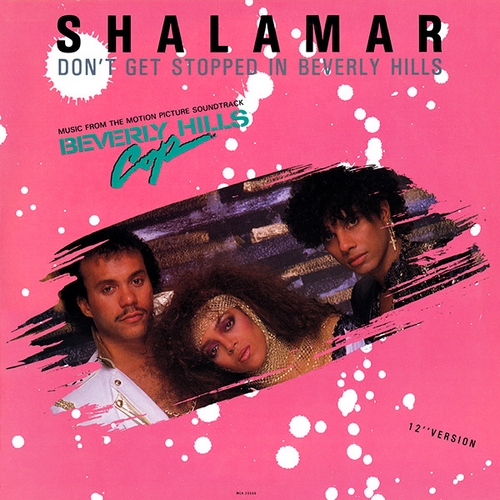
Shalamar - Don’t Get Stopped In Beverly Hills (US 12" Promo)
Shanice - (Baby Tell Me) Can You Dance (US 12")
Shanice - No 1/2 Steppin’ (US 12")
Sister Sledge - Lost In Music (1984 Remix) (UK 12")
Spandau Ballet - Chant No. 1 (I Don’t Need This Pressure On) (US 12")
Spandau Ballet - Lifeline (UK 12")
Spandau Ballet - True (UK 12")
Stevie Wonder & Michael Jackson - Get It (US 12")
Survivor - Eye Of The Tiger (UK 12")
Swing Out Sister - Surrender (US 12")
Teena Marie - 14K (US 12" Promo)
Teena Marie - Square Biz (US 12" Promo)
Teena Marie - Surrealistic Pillow (US 12" Promo)
The Funky Worm - Hustle! (To The Music…) (US 2 x 12" Promo)
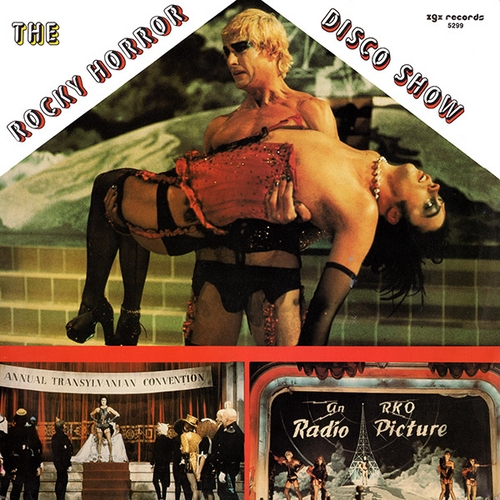
The Rocky Horror Picture Show - The Time Warp (Remix 1989) (US 12")
Trance Dance - Do The Dance (US 12")
UB40 with Chrissie Hynde - I Got You Babe (US 12" Promo) thanks
DMMANIAC
Заменено 7 релизов
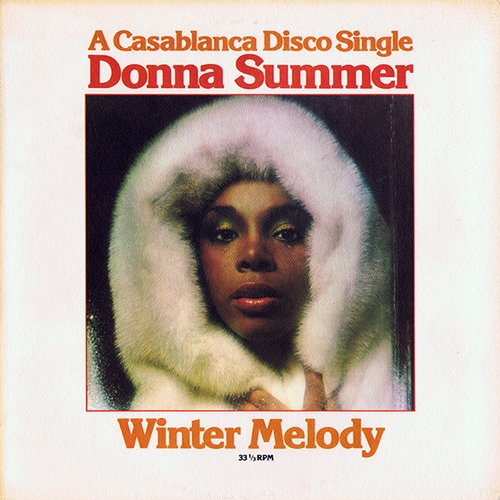
Tracklist: 01.Donna Summer - Winter Melody (Edit) (4:00) 02.Donna Summer - Spring Affair (Edit) (3:41) "Winter Melody” is a song by Donna Summer released as a single in late 1976 from her Four Seasons of Love album. It became a top 30 hit in the UK, where it peaked at #27. By this time Summer was making her name as the queen of disco music, though this song is a soul ballad. The song represented the “winter” phase of the concept album, and speaks of a woman struggling to come to terms with the fact that her relationship has ended. As with much of Summer’s material at that time (particularly with songs found on her concept albums), the song played for a considerable amount of time (over six minutes), however, the song was edited for its release as a single. "Winter Melody" peaked at #43 on the US Billboard Hot 100 Singles Chart. The flip side "Spring Affair" (which represents the "spring" phase of the concept album) tells of the beginning of a new relationship. "Spring Affair" is more than eight minutes long, though it was edited for release as a single. The song peaked at number 15 in Spain singles charts and number 3 in Spain Radio chart. "Spring Affair" peaked at #43 on the US Billboard Hot 100 Singles Chart.
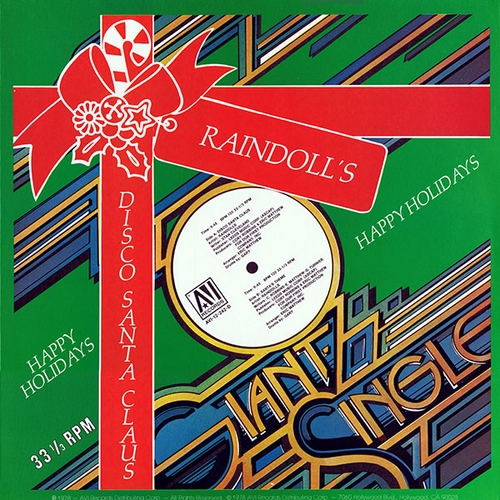
Tracklist: 01.Raindolls - Disco Santa Claus (6:50) 02.Raindolls - Santa's Theme (6:37) Disco Friday! Season's Greetings, this year you’ll be hanging the Christmas stockings with cheer, as boogie fever fills the air! "Disco Santa Claus" is a one-off Disco single by studio group Raindolls. Produced and arranged by Eric Matthew one of the co-founders of the Disco group Gary's Gang the song also includes drums by Gary's Gang drummer Gary Turner. "Diso Santa Claus" was produced by Profile records founder Cory Robbins. The b-side "Santa's Theme" is an instrumental of "Disco santa Claus".
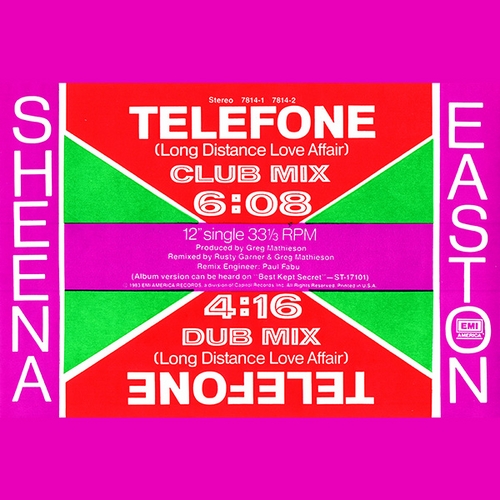
Tracklist: 01.Sheena Easton - Telefone (Long Distance Love Affair) (Club Mix) (6:09) 02.Sheena Easton - Telefone (Long Distance Love Affair) (Dub Mix) (4:16) "Telefone (Long Distance Love Affair)" is a song by Scottish singer Sheena Easton, the first single released from her fourth album, 1983's Best Kept Secret. In November 1984, Easton added "Telefono" to her Spanish album Todo Me Recuerda a Ti for the Latin markets. The song was nominated for a Grammy in 1983 for Best Female Pop Vocal Performance. The song was most successful in the United States, where it became Easton's fourth top 10 hit, peaking at number nine for two weeks in October and November 1983. The song was less successful in Easton's native United Kingdom where it reached number 84. The music video, shot in black and white, featured Easton in a haunted house and a cemetery, being pursued by Dracula, Frankenstein's monster, and the Hunchback of Notre Dame before being rescued by King Kong. Although "Telefone" was released internationally as single the North and South American markets were the only teeritories were a 12" single was released.
Tracklist: 01.The Waitresses - Christmas Wrapping (Long Version) (5:23) 02.The Waitresses - Hangover 1/1/83 (4:29) 03.The Waitresses - Christmas Wrapping (7" Single Version) (3:52) "Christmas Wrapping" is a Christmas song by the American new wave band The Waitresses. First released on ZE Records' 1981 compilation album A Christmas Record, it later appeared on the band's 1982 EP I Could Rule the World If I Could Only Get the Parts and numerous other holiday compilation albums. It was written and produced by Chris Butler, with vocals by Patty Donahue. The song received positive reviews; AllMusic described it as "one of the best holiday pop tunes ever recorded". In 1981, ZE Records asked each of its artists to record a Christmas song for a compilation album, A Christmas Record. The Waitresses were in the middle of a difficult tour and the Christmas song commission was "the last thing we wanted", Butler said later. Butler wrote the song that August, assembling it from assorted unused riffs. He finished the lyrics in a taxi on the way to the recording studio, Electric Lady Studios in Greenwich Village. Butler said the lyrics came from his hatred of Christmas: "Everybody I knew in New York was running around like a bunch of fiends. It wasn't about joy. It was something to cope with." The bassist, Tracy Wormworth, was inspired by Bernard Edwards' bassline on the recently released "Good Times" by Chic. Written while hip hop music was beginning to gain prominence, "Christmas Wrapping" is "almost rapped" by Donahue. Its title, a pun on "rapping", alludes to the 1979 song "Christmas Rappin'" by Kurtis Blow. Butler said he also "liked the idea of the word 'wrap,' like a wraparound, because the story is circular". "Christmas Wrapping" is told from the perspective of an unpartnered woman, who was determined not to participate in the exhausting holiday season after a year that was so busy, she has been unable to go on a date with an appealing gentleman she met months ago. Preparing to dine alone on Christmas Eve, she runs into the fellow in a grocery store, bringing "the year to a very happy ending". "Christmas Wrapping" was released as a single in the UK in 1981 on Island Records. It did not initially make the charts, but was reissued in 1982 and reached No. 45 on the UK Singles Chart that December. It remains the Waitresses' highest-charting single in the UK. Butler said the reception was a rejuvenating gift for the band: "We do the Christmas song, forget about it and go back on the road. The next thing I know when calling back to New York is that it's all over the radio and much to our surprise it leaps over our heads and hits all the cities where we're heading and all of a sudden we're back on an upswing again." ** The 7" Single Version has not appeared on CD as far as I know most compilations use the longer version. 7" Single Version was taken from the UK 7" single.
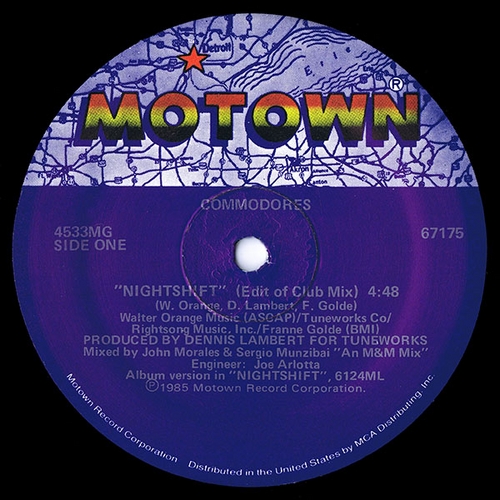
Tracklist: 01.Commodores - Nightshift (Edit Of Club Mix) (4:47) 02.Commodores - Nightshift (Club Mix) (7:04) 03.Commodores - Nightshift (Instrumental Mix) (7:18) "Nightshift" is a 1985 song by the Commodores and the title track from their album of the same name. The song was written by lead singer Walter Orange in collaboration with Dennis Lambert and Franne Golde as a tribute to soul/R&B singers Jackie Wilson and Marvin Gaye, both of whom died in 1984. The song was released as the album's first single in January 1985 by Motown Records. "Nightshift" was recorded in 1984 and became the Commodores' first hit after Lionel Richie's departure from the group. The song features a lead vocal from drummer Walter Orange, who had sung lead years earlier on "Brick House". Lionel Richie's replacement, J.D. Nicholas, sings the second verse and then Orange and Nicholas share lead vocals on the remaining choruses. The first verse mentions Gaye's song "What's Going On", while the second verse mentions Jackie Wilson's "Lonely Teardrops" ("Say you will"), "Baby Workout" and "(Your Love Has Lifted Me) Higher and Higher". "Nightshift" became their biggest hit after Richie's departure, peaking at number three for the week of April 20 on both the Billboard Hot 100 and UK Singles Chart, and rising to number one on the Hot Black Singles chart; the single also became a success on the Adult Contemporary and the Hot Dance Music/Maxi-Singles Sales charts in the first half of that year. It was the group's final top ten hit. Although the band was against the label decision to release it as a single, it won a Grammy Award in 1985 for Best Vocal R&B Performance by a Duo/Group. John Leland of Spin said the song, "puts the group back on the map with a vengeance. Its spare, lilting Caribbean groove dispenses with the group's penchant for schmaltz, and new lead singer J. D. Nicholas' sweet tenor is all late-night yearning."
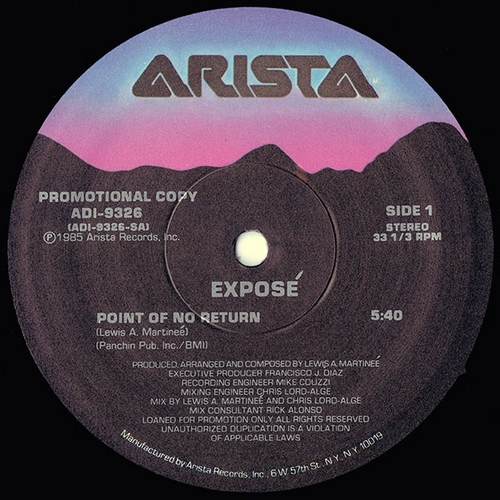
Tracklist: 01.Exposé - Point Of No Return (6:08) 02.Exposé - Dub Of No Return (7:03) "Point of No Return" is a single by the American pop group Exposé. Written and produced by Lewis Martineé, the single was originally released in 1984 on the Pantera label with Alejandra Lorenzo (Alé) as the lead singer under the group name X-Posed. In 1985 the single was released on Arista records under the name Exposé. The original vocal mix of the song, featuring Lorenzo, reached the top of the U.S. Billboard Hot Dance Club Play chart on April 20, 1985 spending twelve weeks on rhe survey. There was no music video released for the 1985 version of the song a video was later released in 1987 after the groups line up had changed and the song was re-recorded with different lead vocals. + +Neither of these tracks appeared on the 2015 Cherry Pop remastered CD Edition of the album "Exposure".
Tracklist: 01.The Dream Academy - The Love Parade (12") (6:16) 02.The Dream Academy - The Love Parade (7") (3:46) 03.The Dream Academy - Girl In A Million (For Edie Sedgwick) (3:47) "The Love Parade" is the fourth single released by The Dream Academy. It was a more "edgy" song than their previous singles, made so by the inclusion of implied themes of adultery and erotic temptation in the lyrics, and was arranged to a brisk bossa nova-esque beat which was in stark contrast to the style of the group's first single Life In A Northern Town . There were two additional singles released in the UK by Blanco y Negro, a 7" shaped picture disc and a second limited edition release. The Love Parade is the only song on The Dream Academy's eponymous album not to be produced by David Gilmour. Instead, the band recruited Alan Tarney to work with them on the track. Tarney was brought in at the suggestion of Rough Trade Records founder Geoff Travis to work on "The Love Parade". "What happened was, we had a pretty good demo for “Love Parade,” and we loved it, and when we made the record with David, somehow we never got 'round to it". Lead vocalist Nick Laird-Clowes noted that Tarney brought some "real special techniques" to the table: he tracked the vocals "12 or 15 times" during certain portions of the song. There were high hopes for the single, especially from Warner, and there was some degree of promotion of the song (such as a live performance on American Bandstand). However, the single failed to live up to the expectations of their debut single, "Life in a Northern Town", just making the top 40 (#36) in the US and reaching #68 in the UK.
Добавлено 23 релиза
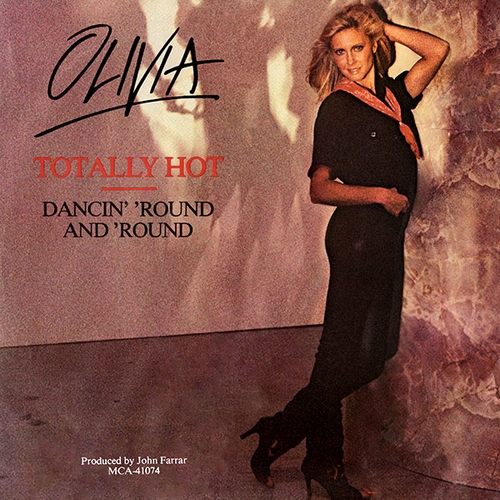
Tracklist: 01.Olivia Newton-John - Totally Hot (Single Remix) (3:50) "Totally Hot" is a song recorded by British-Australian singer Olivia Newton-John. It was released as the third and final single from her 1978 tenth studio album of the same name, and reached number 52 on the US Billboard Hot 100 and number 92 on the Canadian RPM Top Singles chart. "Totally Hot" was released as a double-A sided single in the United States and "Dancin' 'Round and 'Round" was sent to country radio, peaking at number 29 on the Hot Country Songs chart. In the United States the song was remixed for it's 7" single release, and has never appeared digitally or on Compact Disc. The LP "Totally Hot" has been released as a 45th Anniversary Edition available on CD and Vinyl but does not contain any bonus material. A music video was shot for the song directed by Alan Metter and filmed at Century City Towers, Los Angeles, California.
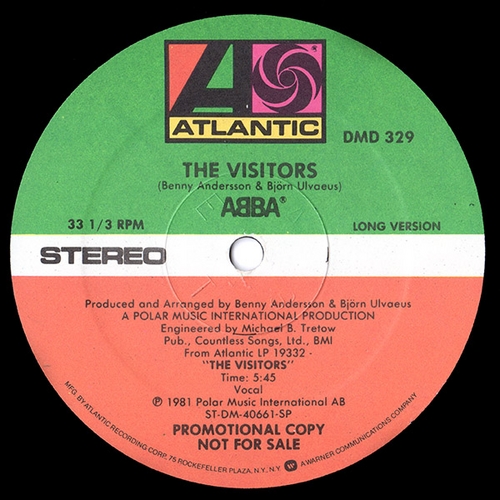
Tracklist: 01.ABBA - The Visitors (Long Version) (5:45) 02.ABBA - The Visitors (Short Version) (4:22) "The Visitors" (working title "Den första", meaning "The First"), also known as "The Visitors (Crackin' Up)", is a 1981 song by the Swedish pop group ABBA. It is the title track from the band's studio album of the same name, and was released as the fourth and final single in April 1982. The lead vocal was performed by Anni-Frid Lyngstad. The official stated theme is a protest against the persecution of political dissidents in the Soviet Union at the time, as ABBA seemed to put political issues into their lyrics in the final days of the group. Björn Ulvaeus has stated that at the time of release he preferred that the song should have a sense of mystery so did not explain the exact meaning. In 1982, the album The Visitors was banned in the Soviet Union, possibly due to the band allowing a video of "When All Is Said and Done" to be shown in the United States Information Agency television special, Let Poland Be Poland, along with a spoken message from Ulvaeus and Benny Andersson, broadcast via satellite around the world on 31 January 1982. The show, which also featured Frank Sinatra, Paul McCartney, Orson Welles, Henry Fonda, UK Prime Minister Margaret Thatcher and US President Ronald Reagan, was a public protest against the then-recent imposition of martial law in Poland. However, ABBA's segment was not included in the broadcast. The official reason given was time constraints. However, in a Rapport interview, Björn Ulvaeus mentioned that their message referenced human rights issues in several countries, including El Salvador and Chile. This has led to speculation that political considerations might have influenced the decision to exclude the segment, although this remains unconfirmed. "The Visitors" was released as the album's second (and final) single in the US instead of "Head over Heels," which remained as the B-side. The single peaked just outside the Top 60 at No. 63 on the singles chart in the U.S., and a double A-sided "The Visitors/When All Is Said and Done" 12" single reached No. 8 on the Billboard dance chart. AllMusic reviewer Bruce Eder retrospectively described the song as "a topical song about Soviet dissidents that also manages to be very catchy." Even though the song did not have any success in some countries, "The Visitors" was No. 1 in Costa Rica. ++ The "Short Version" included on this U.S. 12" Promo is a vinyl only exclusive, and has not appeared on CD.
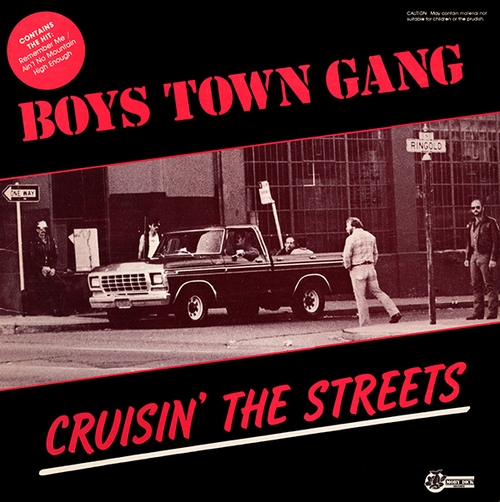
Tracklist: 01.Boystown Gang - Remember Me / Ain't No Mountain High Enough Suite (13:57) 02.Boystown Gang - Cruisin' The Streets (13:12) The blockbuster success of the Village People proved one of two things: either middle America was finally willing to embrace post-Stonewall queer culture in all its out-and-proud glory, or else your average Reagan voters wouldn't recognize a homosexual even if he sold their teenage sons poppers and stuffed the cash into his assless chaps. Regardless, the Village People phenomenon spawned untold numbers of cash-in records that ratcheted the camp appeal into the danger zone. The “postdisco” recording industry in San Francisco between 1978 and 1984. For most of America, disco died in 1979. Gay people, however, continued to dance, and in the Castro enterprising gay DJs, record producers, and musicians started their own small dance music record labels to make up for the lack of new, danceable music. The sound derived its aesthetic from San Francisco’s unique queer configuration of elements, but immediately this music had a reach far beyond the Bay Area, with Megatone Records, Moby Dick Records, and other labels achieving worldwide success with San Francisco artists such as Sylvester, Patrick Cowley, Lisa, and Boys Town Gang creating the world’s first gay-owned, gay-produced music for a dancing audience. In 1980, DJ Bill Motley saw an opportunity to form a disco group that catered to San Francisco's large gay clientele. In his search to form a group, he auditioned hundreds of vocalists, both male and female. Local cabaret singer Cynthia Manley captured the lead spot. The idea was originally for one 12" single with two tracks of high energy disco music. Motley, a Diana Ross fan, picked two Ashford & Simpson songs to form a medley for the A-side track. For the B-side track, he wrote a disco drama in four acts. A private record label was founded to release the two songs. "Remember Me"/"Ain't No Mountain High Enough" is a Diana Ross medley the song became a huge dance hit in the U.S. peaking at #5 on the Dance/Disco chart. The song was also a top 20 hit in Belgium and the Netherlands. "Cruisin' the Streets" The extended version of the song includes a lengthy dialogue taking place at night in what is clearly implied to be Folsom Street in San Francisco. The dialogue consists of gay men cruising each other, discussing their sexual encounters and conversing with a female prostitute. At one point, a police car stops and three policemen step out and confront two men who are engaging in sexual activity as a female prostitute looks on. One of the officers asks the others what should be done, and the third officer states that he knows "just what to do to 'em" and from the subsequent noises it is implied that the officers are having sex with the two men, and the prostitute. "Cruisin' the Streets" was a snapshot of San Francisco's South of Market Distric at the time. **ABOUT THE VINYL RESTORATION This record was a challenge maybe due to the length of the tracks and the pressing. On Side AA there is some sibilance baked into the track especially on the female spoken dialogue parts not really much that can be done about that. Still I think everything turned out nicely. I hope you enjoy it.
Tracklist: 01.Olivia Newton-John - Landslide (Video Mix) (4:28) 02.Olivia Newton-John - Rolling (1:17) So today is my birthday, and I wanted to try something different—sort of an experiment, but also fun. I have been tinkering with the idea of recording audio from some of my VHS tapes, which are analog and fit perfectly with my audio transfers of 12" vinyl and cassette tapes. The tracks I chose to work on today are, of course, ONJ. These two tracks did not make it to the remastered Deluxe Edition of her 1981 LP "Physical," which I helped work on back in 2021. I dusted off my Emerson Hi-Fi 4-head VCR, and the results turned out rather well. The video mix of "Landslide," which was also featured on Olivia's 1982 ABC TV Special "OLIVIA PHYSICAL," which also aired on my birthday, February 8, 1982, The video mix includes an extended synth and drum intro lasting about 20 seconds. There are also some sound effects at around the 2:30 mark (sword fighting) and glass breaking. The track also has an earlier fade than what appears on the LP and single versions. The video was directed by Brian Grant and also features Olivia's first husband, Matt Lattanzi. "Landslide" was released as the third single from the LP "Physical." peaking at #52 on the Billboard Hot 100. The second track, "Rolling," is an instrumental written by Olivia's longtime producer, John Farrar. This instrumental plays during the opening sequence of the Physical TV special showing Olivia running and working out on the beach. The TV special was later edited down to just include the music videos, mostly from the Physical album, and released on home video. Olivia was a pioneer in making this full-length video album, which was one of the first of its kind. This was pre-MTV and won Olivia the 1982 Grammy for best long-form video album. Said to cost half a million dollars to produce, it was filmed in California (at Olivia's Malibu home), London, and Hawaii. In addition, I also created custom artwork for this special post. I know many ONJ fans will be delighted to finally have both tracks digitally.
Tracklist: 01.Endgames - Love Cares (Extended Version) (6:01) 02.Endgames - Love Cares (3:20) 03.Endgames - Ready Or Not (3:47) "Love Cares" was the fourth overall and second single on Virgin Records by Scottish pop band Endgames. The song was taken from their debut LP "Building Beauty" (1983). "Love Cares" charted on Billboard, reaching #47 on the Disco/Dance Chart, but MCA Tecords in the U.S. didn't promote the band enough so the actual sales weren't strong with the parent album failing to chart. Meanwhile, Endgames toured as a support act for Howard Jones during his sold-out first tour of the UK in March–April 1984. Shortly thereafter Virgin Records ended their contract and Endgames disbanded.
Tracklist: 01.Europeans - A.E.I.O.U. (Alphabet Soup) (6:24) 02.Europeans - Voice On The Telephone (3:38) 03.Europeans - A.E.I.O.U. (Album Version) (4:01) "A.E.I.O.U." was the second single released by British new wave group Europeans formed in 1981 and disbanded in 1985. "A.E.I.O.U." along with two other singles were released before the group's first album "Vocabulary". There was not a music video released for the single.
Tracklist: 01.The Romantics - One In A Million (Dance Mix) (5:28) 02.The Romantics - One In A Million (Instrumental) (3:33) "One in a Million" was the third single taken from the fourth studio LP "In Heat" by American band the Romantics. "One in a Million" debuted on the Billboard Hot 100 on February 25, 1984 peaking at #37 on April 7, 1984 after spending twelve weeks on the survey. The music video for "One In A Million" was directed by Oley Sassone known for The Fantastic Four (1994), Wild Hearts Can't Be Broken (1991) and Xena: Warrior Princess (1995).
Tracklist: 01.U2 - Two Hearts Beat As One (5:54) 02.U2 - Two Hearts Beat As One (Album Version) (4:03) 03.U2 - Two Hearts Beat As One (Edit) (3:52) "Two Hearts Beat as One" is a song by Irish rock band U2. It is the seventh track on their 1983 album, War, and was released as its second single in the United States, United Kingdom, and Australia on 21 March 1983. The music video was directed by Meiert Avis and was filmed outside the Basilica of Sacré Coeur de Montmartre in Paris in March 1983 and portrays the band performing the song, intercut with scenes of an acrobat and other scenes featuring Peter Rowen (the boy who appears on the album cover). The Parisian church is dedicated to the Sacred Heart of Jesus. Unlike the other videos from the album, it has never been included on any of the band's video compilations. It was released as the album's second single in the US, UK and Australia, as opposed to "Sunday Bloody Sunday", which was released only in the mainland of Europe. Both singles were released in Japan.
Tracklist: 01.Culture Club - The Medal Song (Extended Mix) (6:23) 02.Culture Club - Don't Go Down That Street (6:30) "The Medal Song" was the second single released from the 1984 album "Waking Up With The House On Fire" by British new wave band Culture Club. "The Medal Song" is about the 1930s American actress Frances Farmer, who was featured on the sleeve of the single. The single was only released in Europe, Japan , and Australia. "The Medal Song" peaked at #32 in the UK, #14 Ireland, and #50 in New Zealand. The b-side "Don't Go Down That Street" features Japanese chatting by Miko, Boy George's friend at the time. That song was recorded especially to be a B-Side, after the other songs were made for the Waking Up album. There are two versions of the track: one short for the single in Japan, and another, around six minutes long, which can be found as the B-Side of various singles. Even though the song was available as a B-side in most countries (it was also the B-side of "Mistake No. 3" in Canada and the U.S.), it still received a separate release in Japan as a single in 1985 for the Japan-only "Love Is Love EP", where it peaked at number 69. "The Medal Song (Extended Mix)" was omitted from the remastered re-issue of "Waking Up With The House On Fire".
Tracklist: 01.Frankie Goes To Hollywood - The Power Of Love (Cassetted) (22:43) "The Power of Love" is a song originally recorded and released by British band Frankie Goes to Hollywood. It was written by Holly Johnson, Peter Gill, Mark O'Toole and Brian Nash, four of the five members of the band. It was released by the group as their third single. Initially issued as a single in November 1984, and taken from the debut album, Welcome to the Pleasuredome (1984), "The Power of Love" followed its two predecessors, "Relax" and "Two Tribes", to the top of the UK singles chart. It scored the band an early December number-one. "The Power of Love" was also a top 10 hit in several European countries, in Australia and New Zealand, and in Canada. "The Power of Love" is often regarded as a Christmas song, despite having no reference to Christmas within the song lyrics. However, the accompanying video features the Nativity of Jesus, and the single cover was The Assumption of the Virgin. The single spent just one week at Number One in the UK, outsold by the charity single "Do They Know It's Christmas?" by Band Aid, which until 1997 was the best selling single ever in the UK. Holly Johnson, who co-wrote the song, later reminisced: "I always felt like 'The Power of Love' was the record that would save me in this life. There is a biblical aspect to its spirituality and passion; the fact that love is the only thing that matters in the end". **I have made the choice to leave this cassette un-edited to keep the integrity of the original cassette. I did clean up the audio manually removing clicks/pops along with adding fade in at the beginning and end of the cassette. This was recorded with DOLBY NR enabled.
Tracklist: 01.Janet Jackson - Don't Stand Another Chance (Specially Remixed Version) (6:55) 02.Janet Jackson - Don't Stand Another Chance (Dub Version) (6:52) "Don't Stand Another Chance" is a song by American recording artist Janet Jackson, included on her second studio album, Dream Street (1984). It was written by Marlon Jackson and John Barnes. Marlon also produced it, and provided backing vocals along with his brothers Michael, Jermaine, Tito, and Jackie. "Don't Stand Another Chance" was released as the lead single from Dream Street on August 13, 1984, by A&M Records. "Don't Stand Another Chance" received generally positive reviews from critics. Although it did not chart on the Billboard Hot 100, the song managed to reach number one on the Bubbling Under Hot 100 Singles. "Don't Stand Another Chance" became Jackson's second single to enter the top ten of the Hot R&B Songs chart, reaching number nine. In order to promote Dream Street and the single, Jackson performed the song on American Bandstand. She later included the song on her 2008 Rock Witchu Tour and her performance at the 2010 Essence Music Festival. "Dream Street" is both the lowest charting studio album of Janet Jackson's career in the US, and her only studio album to not spawn any hits on the Billboard Hot 100 chart. There was not a music video shot for "Don't Stand Another Chance".
Tracklist: 01.Rick Springfield - Bop 'Til You Drop (Long Version) (6:11) 02.Rick Springfield - Human Touch (Long Version) (7:21) 03.Rick Springfield - Human Touch (Instrumental) (5:07) "Bop 'Til You Drop" is the third single taken from "Hard To Hold" the eighth studio album by Australian-American musician and actor, Rick Springfield released on 23 July 1984, by RCA Records as the soundtrack to the film of the same name. On October 20, 1984 "Bop 'Til You Drop" peaked at #20 on the U.S. Billboard Hot 100 after spending fifteen weeks on the survey. In Canada the single reached #70. Cash Box called "Bob 'Til You Drop" "an urban mover for the ’80s." The music video was directed by Academy Award nominated director David Fincher.
Tracklist: 01.Rod Stewart - Infatuation (LP Version) (5:13) 02.Rod Stewart - Infatuation (Edit) (4:05) "Infatuation" is a 1984 song by Rod Stewart from his thirteenth studio album Camouflage, written by Stewart, Duane Hitchings and Rowland Robinson released as the first single from the album. It features guitar playing by Jeff Beck, who makes a cameo in the video.
For the songs single release the song was edited and remixed. The song reached #6 on Billboard's Hot 100 charts. On the US dance charts, "Infatuation" peaked at #19. in the UK the song reached #27. The song's video, directed by Jonathan Kaplan, is a story filmed mostly in black in white. In the video, a woman (played by Kay Lenz) moves into an apartment complex where Stewart lives. Shortly after she settles in, Stewart is accosted by the woman's bodyguard (played by Mike Mazurki) asking about her, showing him a picture of her with two mobsters, one of the faces covered by the bodyguard's thumb; Stewart denies knowing the woman, though his apartment walls are covered with numerous pictures he took of the woman in various stages of dress (and undress); he is constantly snapping additional pictures or peering into the woman's apartment with his binoculars. Eventually Stewart's obsession with the woman gets him in trouble; he is caught with his binoculars by the woman's bodyguard, who punches him in the face. After Stewart falls back on his pillow the film changes from black and white to color, suggesting a dream sequence. The last scene takes a surreal turn, showing Stewart standing at a moving carousel with Lenz trapped in the center while one of the two mobsters (Dick Miller), riding a mount, taunts Stewart. The video has two different endings. One ending shows the woman waving goodbye to Stewart as she and the other mobster (the one whose face was covered by the bodyguard's thumb in the picture) drive away in a blue convertible, leaving Stewart riding the carousel alone. The other has the mobster driving away alone as Stewart and Lenz ride the carousel together in each other's arms. In the first ending might, other 'mobster' is actually Stewart with his hair slicked down. Mazurki later said that he got more fame in the making of this video than in any of the feature films or TV shows in which he'd starred.
Tracklist: 01.Scritti Politti - Wood Beez (Pray Like Aretha Franklin) (4:48) 02.Scritti Politti - Wood Beez (Version) (5:57) "Wood Beez (Pray Like Aretha Franklin)" is the seventh single released by British pop band Scritti Politti, issued in the UK on 24 February 1984 by Virgin Records. It later appeared on the band's second studio album Cupid & Psyche 85 (released in June 1985) and was produced by Arif Mardin. The song's subtitle is a reference to "I Say a Little Prayer", Aretha Franklin's biggest UK hit; Mardin had also produced Franklin. The single was Scritti Politti's breakthrough hit on the UK Singles Chart, where it peaked at No. 10 in a 16-week chart run. It was also a Top 30 hit in Australia and New Zealand. In the United States it reached No. 4 on the Billboard Dance Chart. Two music videos were shot for the song. The first, shot in 1984, was directed by John Scarlett-Davis, who also directed the videos for "Absolute" and "The Word Girl" and features the dancing of Michael Clark. A second music video was released for the US in 1986, directed by Jean-Baptiste Mondino and featuring model Veronica Webb (who also appeared in the video for "Perfect Way"). Both versions were featured on a video compilation simply titled "Scritti Politti", released on VHS, Betamax and LaserDisc by Virgin Music Video in 1986. The 1984 version is simply titled "Wood Beez", while the 1986 version is titled "Wood Beez – USA".
Tracklist: 01.Shalamar - Don't Get Stopped In Beverly Hills (Special Mix) (7:38) 02.Shalamar - Don't Get Stopped In Beverly Hills (Radio Edit) (5:44) 03.Shalamar - Don't Get Stopped In Beverly Hills (Instrumental) (7:37) 04.Shalamar - Don't Get Stopped In Beverly Hills (Dub Version) (7:38) "Don't Get Stopped In Beverly Hills" is a single released by American R&B group Shalamar, released in 1984 on the MCA Records label. It features a new line-up of Delisa Davis, Micki Free and Howard Hewett (Davis and Free having replaced Jeffrey Daniel and Jody Watley who had both left the group after the release of the previous album "The Look"). The song was featured on the Multi-Platinum Beverly Hills Cop soundtrack and on Shalamar's eigth studio album "Heartbreak". The song peaked at #79 on the U.S. Billboard Hot R&B chart in June, 1985.
Tracklist: 01.David Knopfler - Shockwave (Special Mix) (6:16) 02.David Knopfler - Sunset (3:33) 03.David Knopfler - The Missing Book (4:50) "Shockwave" is a 1985 single by British musician David Knopfler taken from his second solo album "Behind The Lines" after leaving Dire Straits. He was born in Scotland, but raised in Blyth, near Newcastle upon Tyne, England. Together with his older brother Mark Knopfler, John Illsley, and Pick Withers, he founded the rock band Dire Straits in 1977, serving as rhythm guitarist on their first two albums. After quitting the band in 1980 during the recording of their third album, Knopfler embarked upon a solo career as a recording artist. "Shockwave" did not chart, and there was not a music video released for the song. The single was only released in Germany, and the U.K. This 12" was pressed on Blue Transparent vinyl.
Tracklist: 01.Kaja - Shouldn't Do That (Dance Mix) (6:15) 02.Kaja - Shouldn't Do That (Dub Mix) (5:25) 03.Kaja - Charm Of A Gun (4:27) "Shouldn't Do That" was the first and only single taken from the third album " Crazy Peoples Right to Speak" by English new wave band Kaja (Kajagoogoo), released in 1985 by Parlophone/EMI America. "Shouldn't Do That" reached #63 in the UK. This 12" contains exclusive USA only Paul Sabu, Rusty Garner remixes.
Tracklist: 01.Kate Bush - Hounds Of Love (3:03) 02.Kate Bush - Hounds Of Love (Extended Version) (3:46) "Hounds of Love" is a song written, produced and performed by English art rock singer Kate Bush. It is the title track and the third single released from her No. 1 studio album Hounds of Love. The single was released on 24 February 1986, and reached No. 18 in the UK Singles Chart. The song is about being afraid to fall in love; in the song this feeling is compared to being chased by a pack of hounds. The versions worldwide differ slightly: the US single mix included an additional chorus just after the second chorus. The words "it's in the trees, it's coming!" heard at the beginning of the track are sampled from the British 1957 horror film Night of the Demon and are mouthed by an actor from the film, Reginald Beckwith, who plays a medium channelling a character played by Maurice Denham, who provides the voice. A music video was made for the song, which Bush herself directed. It was inspired by Alfred Hitchcock's thriller film The 39 Steps (1935) and a Hitchcock lookalike also features in the video (a nod to the director's famous cameo appearances in his movies).
Tracklist: 01.Kool & The Gang - Emergency (7" Remix) (4:05) 02.Kool & The Gang - You Are The One (4:21) "Emergency" was the title track from the sixth studio LP by American Pop/R&B group Kool & The Gang released in October, 1985. The song was the fourth single taken from the album."Emergency" peaked at #18 on the US Billboard Hot 100, #7 R&B, and #41 Dance. In the UK the single reached #50.
Tracklist: 01.Nona Hendryx - I Sweat (Going Through The Motions) (Dance Remix) (5:43) 02.Nona Hendryx - I Sweat (Going Through The Motions) (Instrumental) (4:41) 03.Nona Hendryx - I Sweat (Going Through The Motions) (Single Version) (3:53) I Sweat (Going Through The Motions)" is a 1985 single recorded by American vocalist, record producer, songwriter, musician, and author Nona Hendryx. The song was written and produced by Hendryx for the 1985 romance/thriller "Perfect" starring Jamie Lee Curtis and John Travolta. The song debuted on the U.S. Billboard R&B chart on March 31, 1984 peaking at #28 on June 2, 1984 after spending fourteen weeks on the survey.
Tracklist: 01.Pseudo Echo - A Beat For You (Vocal Dance Mix) (5:22) 02.Pseudo Echo - A Beat For You (Echo Dub Mix) (6:02) Artist spotlight Australian band Pseudo Echo! Periodically I will be doing blocks of singles by some of my favorite artists. For the next few days I will be posting the singles that I have in my collection from Pseudo Echo most of these will be their U.S. 12" singles which differ from singles released in Australia most of which I have already posted in the past. I hope you enjoy this run of singles from one of pop/new waves most underrated bands. They were so much more than "Funkytown". "A Beat for You" was released in the USA with two seperate 12" singles this is the first release which includes exclusive remixes by Paul Sabu, and Rusty Garner released in 1985 produced by John Punter. The song originally appeared on the band's debut LP Autumnal Park (1984). For the U.S. market an updated 1987 version was included on the group's follow-up album, Love an Adventure (1987). In the United States the single did not chart. To the best of my knowledge the two mixes included here are vinyl only.
Tracklist: 01.Pseudo Echo - Don't Go (Extended Mix) (6:39) 02.Pseudo Echo - Don't Go (3:58) 03.Pseudo Echo - Living In A Dream (Jazz Version) (3:31) Artist spotlight PSEUDO ECHO! "Don't Go" is a song by Australian pop group Pseudo Echo. The song was released in October 1985 as the lead single from their second studio album, Love An Adventure (1985). The song became the band's second top five single, reaching number 4 on the Australian Kent Music Report. In the United States the song was not released as a single early pressings of the U.S. edition of the RCA LP "Love An Adventure" contained "Don't Go" instead of "Funkytown" (a.k.a. "Funky Town"). The record company soon regretted this decision and allowed people who bought this version to exchange it for a reissue with "Funkytown" on it. This 12" is the only australia 12" that I had not yet posted.
Tracklist: 01.Rochelle - My Magic Man (Magic Mix) (5:47) 02.Rochelle - My Magic Man (Samurai Mix) (6:29) 03.Rochelle - My Magic Man (Machine Gun Dub) (6:09) 04.Rochelle - My Magic Man (7" Edit) (3:51) "My Magic Man" is a 1985 dance single by Bermuda born singer Rochelle (born Rochelle Simons in 1957). "My Magic Man"was her second single release which peaked at #17 on Billboard’s Hot Dance\Disco Club Play chart, staying on the chart for 10 weeks and became her highest charting single to date. the song also reached #27 in the UK. Rochelle only released three sibgles during her short career from 1985 to 1988 all of which reached the top thirty on the US dance chart.
DMMANIAC
Заменено 6 релизов
Tracklist: 01.Giorgio Moroder - Chase (13:07) "Chase" (also known as "The Chase") is a 1978 instrumental composition by Italian music producer Giorgio Moroder. It was released as a single during 1978 from his Academy Award-winning soundtrack album Midnight Express (1978), and was a disco instrumental that was subsequently extended and released as a 13:00 12" maxi single. It made the Billboard Hot 100 in January 1979, peaking at number 33, and the UK Singles Chart, peaking at number 48. Created especially for the film Midnight Express, Alan Parker, the director of the film, explicitly asked Moroder for a song in the style of "I Feel Love", which Moroder composed for Donna Summer. It was Moroder's second time composing a movie soundtrack after his work on 1972's German softcore sex film "Sex Life in a Convent". The song's main melody was played on a Roland SH-2000 synthesizer, while the bass lines were played on a Minimoog synthesizer. The track also has a flanging effect produced by the MXR Flanger, while other instruments used include an ARP/Solina String Ensemble, Fender Rhodes, Hohner Clavinet, and piano. Although a disco piece, "Chase", along with "I Feel Love", is more specifically considered the pioneering introduction of the hi-NRG genre, which came to prominence in the early 1980s. The music was arranged by Harold Faltermeyer under the leadership of Giorgio Moroder. Pitchfork named it the 175th best song of the 1970s, saying, "Any time someone describes a piece of music as 'cinematic,' there’s a decent chance they’re thinking, consciously or subconsciously, of 'Chase'. It's impossible to overstate, let alone list, the amount of composers and films who've ripped off 'Chase'."
Tracklist: 01.Cliff Richard - We Don't Talk Anymore (Long Version) (6:54) 02.Cliff Richard - Count Me Out (4:13) "We Don't Talk Anymore" is a song recorded by Cliff Richard, written by Alan Tarney and produced by the Shadows' rhythm guitarist, Bruce Welch. It was released in 1979 as a single and reached number one in the UK Singles Chart in August 1979, remaining there for four weeks, Richard's tenth UK number one and his first since "Congratulations" in 1968. Tarney wrote the song in 1979, planning to use it on an album with the Tarney/Spencer Band. However, Tarney played a demo of the song to Welch during a break in recording sessions for Where to Now by Charlie Dore (which the two were producing). Welch instantly knew it was going to be a hit and phoned up Richard's manager Peter Gormley, as he believed "there was only one person who could record it — Cliff Richard". It was then quickly recorded in May 1979 at RG Jones Recording Studios in Wimbledon. It was released as a stop-gap single between the albums Green Light and Rock 'n' Roll Juvenile. However, it wasn't meant to be included on Rock 'n' Roll Juvenile, as Richard didn't think it was appropriate for "an energy packed album of progressive rock 'n' roll". However, record label EMI were insistent on including it after it became a massive hit and Richard reluctantly conceded. Due to the single's success, Tarney was brought in to produce Richard's next two albums I'm No Hero and Wired for Sound and has said that "'We Don't Talk Anymore' should really have been on I'm No Hero". The single release featured the B-side "Count Me Out", which was written by Terry Britten and Welch and was taken from Green Light. In several European countries a 12-inch single was released, featuring an extended slightly remixed version of the song that runs to seven minutes long. This version has never been released on CD. The US release of the single features an edited version of "We Don't Talk Anymore", which fades over half a minute early. In December 1990, a remixed version of "We Don't Talk Anymore" was released as a single in continental Europe and in Australasia in November 1991. Taken from the live album From a Distance: The Event, it was remixed by Ian Curnow and Phil Harding at the PWL Studios. The single failed to chart. Coming just before his 39th birthday, and just when it was announced that he was to receive the OBE for services to music, the record cemented his comeback, which continued well into the 1980s and 1990s. The single was his biggest worldwide seller; it was number one in Germany for five weeks (his only English-language German chart-topper, though he had two German-language number ones there in the 1960s), and reached number seven on the Billboard Hot 100 singles chart in the United States. The fact that its chart run extended beyond the end of 1979 meant Richard became the first act to reach the Hot 100's top 40 in the 1950s, 1960s, 1970s and 1980s. The single sold over 4 million copies worldwide, topping the charts in the UK, Austria, Belgium (Flanders), Finland, West Germany, Ireland, Norway and Switzerland. The song spent 4 weeks atop the Irish Singles Chart in September 1979. The song was certified Gold in both the UK and West Germany. During the single's run at the Number 1 position on the UK Singles Chart, Norrie Paramor, Richard's original producer who guided his early career in the late 1950s and 1960s, died on 9 September 1979. The song was the sixth video aired on MTV on its launch on 1 August 1981.
Tracklist: 01.Wham! U.K. - Wham! U.K. Mega Mix (8:52) "Wham! U.K. Mega Mix" is a 1983 U.S. only promotional 12" single released by Wham! U.K. as they were called in America on Clumbia/Innervision Records. The medley was mixed by DMC's Alan Couthard, and was possibly the U.S. version of the "Club Fantastic Megamix" which was also mixed by Couthard. This single has never been released in any other format. This 12" is a precious rarity for any complete Wham! collection. The same track appears on both sides of this single.
Tracklist: 01.Cyndi Lauper - She Bop (Special Dance Mix) (6:26) 02.Cyndi Lauper - She Bop (Instrumental) (5:21) Cyndi Lauper, renowned for her groundbreaking contributions to music, activism, and LGBTQ advocacy, epitomizes the ethos of pride, inclusivity, and resilience. "She Bop" is a song by American singer-songwriter Cyndi Lauper, released as the third single from her debut studio album She's So Unusual. It reached number three on the U.S. Billboard Hot 100 chart in September 1984. Worldwide, the song is her most commercially successful single after "Girls Just Want to Have Fun" and "Time After Time", and reached number 46 on the UK Singles Chart and number 6 on the ARIA Singles Chart. "She Bop" was her third consecutive Top 5 on the Hot 100. The song was considered controversial, as it dealt with the subject matter of masturbation. It was also included on the Parents Music Resource Center's "Filthy Fifteen" list, due to its sexual lyrics; this led to the creation of the Parental Advisory sticker. (Other songs on the "Filthy Fifteen" list included tracks by Madonna, Prince, and AC/DC.) In an interview on The Howard Stern Show, Lauper stated that she recorded the vocals of the song while nude. Lauper said she wanted little kids to think the song was about dancing, and to understand the real meaning as they got older. It could receive airplay as she never directly stated in the song what the meaning was. Lauper stated at a concert during her 2013 She's So Unusual anniversary tour that she recorded the song topless in a dark room and tickled herself under her arms, which is why there is her laughter on the track. "She Bop" was released on July 2, 1984 and became a success. The single debuted on the Billboard Hot 100 at #52 in the issue dated July 21, 1984, and spent a total of twenty-five weeks on the chart, reaching a peak position of #3 in the issue dated September 8, 1984. It was the third single from Lauper's debut album to make the top 10 of the Hot 100. The single also reached number ten on the Hot Dance/Club Play Songs chart the week of September 15, 1984 and placed at 34 on the Billboard year-end chart of 1984. On April 17, 1989, the song was certified gold by the Recording Industry Association of America (RIAA) for the shipment of a million copies across the United States.
Tracklist: 01.Eddy Grant - Romancing The Stone (Edited Version) (3:31) 02.Eddy Grant - Romancing The Stone (Long Version) (9:08) 03.Eddy Grant - My Turn To Love You (A Live Recording From The Movie "Eddy Grant At Notting Hill Carnival") (8:30) "Romancing the Stone" is a song written, recorded and produced by Eddy Grant, who released it from his 1984 album Going for Broke. It was intended for the 1984 feature film of the same name, in fact was announced by Casey Kasem on the 30 June 1984 edition of American Top 40 as the title song to the movie, but ultimately was used only briefly in the film. Clips from the film appeared in at least one official music video for the song, and the song is mentioned in the film's closing credits. In the United States, the song reached number 26 on the Billboard Hot 100 and number 22 on Cash Box during the summer of that year. It was a much bigger hit in Canada, where it reached number seven. It was also a hit internationally, narrowly missing the Top 40 in Germany and the UK, but reaching number 28 in New Zealand. "Romancing the Stone" was a hit on two other US charts. On the soul chart it went to No. 68, and on the dance charts, it peaked at No. 12.
Tracklist: 01.Night Ranger - Sister Christian (Long Version) (4:59) 02.Night Ranger - Sister Christian (Short Version) (4:15) "Sister Christian" is a song by the American rock band Night Ranger. A power ballad, it was released in March 1984 as the second single from their album Midnight Madness. It was ranked No. 32 on VH1's 100 Greatest Songs of the 1980s. It was written and sung by the band's drummer, Kelly Keagy, for his sister. It was the band's biggest hit, peaking at number five on the Billboard Hot 100, and staying on the charts for 24 weeks. It also reached No. 1 in Canada. The song is used in several films, including Boogie Nights (1997), Superstar (1999), Friday the 13th (2009) and Ben Affleck's 2023 film Air (2023). "Sister Christian" was inspired by Keagy's younger sister, Christy. Upon returning from a visit to his hometown of Eugene, Oregon, Keagy wrote the song at his San Francisco apartment after being astonished at the speed at which his sister was growing up. Keagy later recalled that "after we started playing it a lot, Jack turned to me and said, 'what exactly are you saying?,'" adding that bandmate Jack Blades "thought the words were Sister Christian, instead of Sister Christy, so it just stuck." The meaning of the lyric, "You're motoring. What's your price for flight? In finding Mr. Right?" has generated significant attention and debate. In a VH-1 Behind the Music interview, the band stated that the term "motoring" should be interpreted to mean "cruising". Differences between album version and 7" single version On the single version, part of the second chorus is omitted. More specifically, the words "You've got him in your sight. And driving through the night," are omitted from the single version. The third chorus is repeated once on the album version, but never on the single. The music video (which uses the shorter single version) was filmed within San Rafael High School.
Добавлено 29 релизов
Tracklist: 01.John Paul Young - Love Is In The Air (5:16) "Love Is in the Air" is a 1977 disco song by Australian singer John Paul Young. It was written by George Young (no relation) and Harry Vanda, and released as the lead single from Young's fourth studio album, Love Is in the Air (1978). The song became a worldwide hit in 1978, peaking at No. 3 on the Australian charts and No. 5 on the UK Singles Chart. In the United States, it peaked at No. 7 on the pop chart and spent two weeks at No. 1 on the Adult Contemporary chart, his only U.S. top 40 hit. The song plays at 122 beats per minute, a typical 1970s disco rhythm. At the Australian 1978 King of Pop Awards, the song won Most Popular Australian Single. In 1992, a remix of the song was released and featured on the soundtrack to the Golden Globe-nominated film Strictly Ballroom. A new music video was also produced. In 2017, the song was selected for preservation in the National Film and Sound Archive's Sounds of Australia collection. John Paul Young said of the recording, "We actually did 'Love Is in the Air' because we needed something for the German market. 'Standing in the Rain' became a hit in the clubs over there and then on the charts, so we needed a follow-up. I'd been to Germany and heard the music. It was electronic mania, all clicks and electronic buzzes. So George and Harry gave it the treatment." Young performed "Love is in the Air" live on episode 148 of Countdown on 30 April 1978 and on Top of the Pops on 4 May 1978. This U.S. promotional 12" single contains the same track on both sides, in addition the Disco version is exclusive to the United States.
Tracklist: 01.Village People - Y.M.C.A. (Disco Mix) (6:47) 02.Village People - Macho Man (Disco Mix) (5:15) Village People reign supreme as gay-anthem chart toppers. Songs like ‘Macho Man’, ‘Go West’ (covered brilliantly by the Pet Shop Boys), ‘Cruisin’’ and ‘In the Navy’ are full of double entendres, and 1978’s ‘Y.M.C.A.’— which became one of the most popular singles of the 1970s — is no different. In fact, the Young Men’s Christian Association was so appalled at the song's implications that it threatened to sue, until it noticed that membership had significantly increased in the wake of the tune’s success. Turns out any press is good press — eh, boys? In 1978 Casablanca Records released a double A-side 12" which included the Diso Mixes of "Y.M.C.A." along with "Macho Man". Both tracks appear only on one side of the record. "Y.M.C.A." is a song by American disco group Village People, written by Jacques Morali (also the record's producer) and singer Victor Willis and released in October 1978 by Casablanca Records as the only single from their third studio album, Cruisin' (1978). A medley with "Hot Cop" reached No. 2 on the US Billboard Dance Music/Club Play Singles chart, while the song reached No. 2 on the Billboard Hot 100 in early 1979, placing behind both "Le Freak" by Chic and "Da Ya Think I'm Sexy?" by Rod Stewart. Outside the US, "Y.M.C.A." reached No. 1 on the UK Singles Chart around the same time, becoming the group's biggest hit. It has sold 12 million copies worldwide. "Macho Man" released as the second single and title song of their album of the same name (1978). The song entered the Billboard Hot 100 on June 24, 1978 (when the album had already been charting since March) before picking up more airplay that August. It became the Village People's first charting hit in the United States, peaking on the Hot 100 at number 25 on the week of September 2. A medley with "I Am What I Am" and "Key West" reached number four on the Billboard Dance Music/Club Play Singles chart. On the survey of Chicago radio superstation WLS-AM, "Macho Man" spent two weeks at number three.
Tracklist: 01.Exile - How Could This Go Wrong (Disco Mix) (6:20) 02.Exile - Being In Love With You Is Easy (5:37) "How Could This Go Wrong" is a 1979 song performed by American group Exile. It was written by Mike Chapman and Nicky Chinn. The song was included on the band's fourth studio album All There Is, and it was the first of three singles released from the LP. The song reached #88 on the U.S. Billboard Hot 100 on April 29, 1979 after spending only two weeks on the survey. In the U.K. the song reached #46. "How Could This Go Wrong" also charted in Australia #68, and New Zealand #67. The pop and country music group, formed in Richmond, Kentucky, in 1963 as the Exiles. They toured with Dick Clark Caravan of Stars from 1965 to 1968. In 1972 they changed their name to Exile. In 1978 they had a US #1 pop hit with “Kiss You All Over”. They evolved into country music in 1983 with many subsequent country chart hits. The "Disco Mix" is only available on this U.S. 12".
Tracklist: 01.Leif Garrett - Feel The Need (Disco Mix) (5:38) 02.Leif Garrett - New York City Nights (2:47) "Feel The Need" is a hit song originally recorded by American R&B group the Detroit Emeralds in 1972 titled "Feel The Need In Me". The group re-recorded the song and re-released a disco version in 1977 as "Feel the Need". In 1979 American singer Leif Garrett released a cover of the song from his second studio LP of the same name. "Feel The Need" was the follow-up to his top ten single "I was Made For Dancin which been released in October 1978. "Feel The Need" peaked at #57 on the U.S. Billboard Singles chart on June 2, 1979 after spending eight weeks on the survey. The single aslso reached #38 in the U.K. The b-side "New York City Nights" is a non-album track.
Tracklist: 01.Stephanie Mills - You Can Get Over (8:58) 02.Stephanie Mills - Deeper Inside Your Love (3:56) "You Can Get Over" is a 1979 Disco hit by American singer and songwriter Stephanie Mills taken from her third LP 'What Cha' Gonna Do with My Lovin''. The song was written and produced by James Mtume & Reggie Lucas. Lucas also produced several tracks for Madonna's debut LP including "Borderline", and "Lucky Star", while James Mtume formed the R*B group Mtume best known for their hit "Juicy Fruit". "You Can Get Over" peaked at #8 on the Billboard Dance/Club Play chart in September 1979 (co-charting with "Put Your Body In It") and just missed the Hot 100. The song also reached #55 on the Billboard R&B chart in December of that year.
Tracklist: 01.Bobby "O" - I'm So Hot For You (5:13) 02.Bobby "O" - Still Hott 4 U (4:06) "I'm So Hot For You" was the debut 12" single release by American record producer, indie record label owner, songwriter, and musician. Bobby Orlando (aka Bobby'O). He is regarded as an innovator in the Hi-NRG genre for developing his signature sound, using a "powerful beat" and "new wave-style" vocals with the help of a "heavy [synthesizer] bass", synthesizers, piano, guitars, cowbells his style was referred to as Boystown or just simply gay disco. "I'm So Hot For You" peaked at #17 on the U.s. Billboard Dance Chart the track was remixed by FunHouse DJ supreme - John "Jellybean" Benitez. Despite being know as hyper-macho, incredibly cocky, rampantly homophobic ex-boxer who made gay disco. Bobby Orlando made his strange mark on LGBTQ+ music even producing hits for gay icons Divine, and Pet Shop Boys. Bobby Orlando became a legend in the ’80s through a multitude of disco and Hi-NRG records released on his independent label, O Records. "I'm So Hot For You" is currently being used in the Gay nightclub scene in the Netflix original series "Eric".
Tracklist: 01.Carol Douglas - You're Not So Hot (7:20) 02.Carol Douglas - Party Nights (3:37) "You're Not So Hot" is a Disco single released by American singer Carol Douglas whose hit "Doctor's Orders" (1974) was a pioneering track in the disco genre. In 1983, Carol moved to Paris, and signed with Carrere Records releasing her sixth album (and last one to date) "I Got Your Body", renamed "Love Zone" in the US which failed to make any impact on the charts. "You're Not So Hot" was the secobd single taken from that LP reaching #71 in France.
Tracklist: 01.Laura Branigan - Gloria (Vocal Long Version) (5:56) 02.Laura Branigan - Living A Lie (Vocal) (3:39) "Gloria" is a 1979 song written and composed in Italian by Umberto Tozzi and Giancarlo Bigazzi, and afterwards translated to English by Jonathan King. A 1982 cover version by American singer Laura Branigan peaked at number two on the US Billboard Hot 100 and has been certified platinum by the Recording Industry Association of America (RIAA). The most successful version of "Gloria"' was featured on the 1982 album Branigan, the first album release by Laura Branigan. Although another track, "All Night with Me", was chosen as the album's lead single, Branigan also performed the cover song during her promotional television appearances at the time of the album's release, and the track was chosen as the album's second single in June 1982, first becoming a disco favorite, and gradually accruing radio support to enter the pop charts in July. The single reached number two on the Billboard Hot 100 on 27 November 1982, behind Lionel Richie's "Truly", and remained there the following two weeks, through 11 December—when Richie had been supplanted by Toni Basil's "Mickey". "Gloria" earned Branigan a nomination for the Best Pop Vocal Performance Female Grammy Award for the year 1982. The song remained in the Top 40 for 22 weeks, and its total Hot 100 residency of 36 weeks established a new record for a single by a solo female act. The song also topped Cash Box magazine's chart. Certified platinum for sales of one million in the United States alone, "Gloria" was also an international success, most notably in Australia where it held the top position for seven consecutive weeks, from 7 February to 21 March 1983. "Gloria" also reached number one in Canada, number four in Ireland, number six in New Zealand and the United Kingdom, and number nine in South Africa.
Tracklist: 01.Peter Godwin - Images Of Heaven (Dance Mix) (4:59) 02.Peter Godwin - Torch Song For The Heroine (Extended Version) (5:40) 03.Peter Godwin - Emotional Disguise (Vocal) (4:15) 04.Peter Godwin - Emotional Disguise (Instrumental) (4:15) "Images Of Heaven" was the second 12" EP released by English new wave musician Peter Godwin. The EP contained different track listings depending on the country of release. The song "Images of Heaven" became a "cult favorite on New Wave radio stations. None of the songs contained on this EP appeared on Godwin's only full-length studio LP "Correspondence". Neither this EP or the LP "Correspondence" have been released on CD. Mix titles on Side A are not listed on the release.
Tracklist: 01.Tony Ansell - Victory (2:59) 02.Tony Ansell - Stonewall Samba (2:34) "Victory" is a 1982 single by Australian composer, pianist and keyboardist Tony Ansell (1945-2000). "Victory" was the theme music for ABC TV's (Australian Broadcasting Corporation) telecasts of the 1982 Brisbane Commonwealth Games. "Victory" was released as a single in October 1982 peaking at #7 on the Australian singles chart.
Tracklist: 01.Altered Images - Don't Talk To Me About Love (U.S. Mix) (6:10) 02.Altered Images - Last Goodbye (3:17) "Don't Talk to Me About Love" is a song by Scottish new wave band Altered Images, released as the first single from their third album, Bite. The single reached the top 10 in three countries; number 7 in the UK, and number 6 in both Ireland and New Zealand. The song was their last major hit, as the next three singles only had moderate to minor chart placings ("Bring Me Closer" was their last single to make the top 40 in the UK and Ireland, peaking at numbers 29 and 17, respectively). The U.S. Mix is exclusive to the U.S. and Australia. To my knowledge this 6:10 version has not appeared on CD.
Tracklist: 01.Boytronic - You (Extended Version) (7:11) 02.Boytronic - You (Dub Remixed Version) (7:06) "You" is the debut single released by German synth-pop group Boytronic originally released in Europe in 1983. The single reached #10 in Germany. "You" was remixed and re-released in 1986 in the United States but failed to chart.
Tracklist: 01.Limahl - Only For Love (12" Mix When She Moves In Close) (5:43) 02.Limahl - Only For Love (3:51) 03.Limahl - O.T.T. (Over The Top) (1:27) "Only for Love" is the debut solo single by former Kajagoogoo singer Limahl, following being fired from the group by his bandmates in 1983. The song was included on Limahl's 1984 debut solo album, Don't Suppose. The song became his first UK top 20 hit, peaking at No. 16 on the UK Singles Chart. It remains his second most popular single in the UK as a solo act (the first being "The Neverending Story"). Limahl performed the song with Beth Anderson on the TV show American Bandstand on March 9, 1985. The song also played a part in the singer meeting producer Giorgio Moroder, while he was performing the song at a rock festival in Tokyo the following year. Moroder would help Limahl reach greater international success later in his career. The remix on the A-side "12" Mix When She Moves In Close" did not appear on the 2014 re-issue of the album "Don't Suppose". This mix is vinyl-only.
Tracklist: 01.Mark Holden - Who Do You Love? (3:36) 02.Mark Holden - Hey Little Girl (1:55) "Who Do You Love?" was the second single taken from the self-titled fourth studio LP by Australian singer-songwriter Mark Holden. The album would also be his first release on American label Casablanca Records. "Who Do You Love?" was co-written by Holden, and only released as a single in Australia, and Japan failing to chart. Richard Carpenter covered the song for his solo album "Time" (1987). Holden was a pop star in the 1970s and had four top 20 hit singles, "Never Gonna Fall in Love Again" (May 1976), "I Wanna Make You My Lady" (September), "Last Romance" (November) and "Reach Out for the One Who Loves You" (October 1977). Holden regularly appeared on national pop music show, Countdown. Holden is remembered for his good looks, and clean-cut image. In the 1980s he worked as a songwriter in Los Angeles providing material recorded by Meat Loaf, Joe Cocker, Gladys Knight, Bob Welch and Steve Jones. He was one of three original judges on the television series Australian Idol (2003–07) and the first season (2005) of The X Factor. In 2023, Holden voiced "The Old Man" in the narrative video game RoboCop: Rogue City. After the lack of success of Mark Holden (LP), Holden focussed on becoming a songwriter and music producer. He formed a company called Multimedia with Anthony Curtis and Dan Wilson and over the next decade co-wrote two top ten hits on the Hot R&B/Hip-Hop Songs for the Temptations, "Lady Soul" (June 1986) and "Look What You Started" (1987). There were also hits with Tracie Spencer, Joey Lawrence, Will Downing, a #1 dance hit with Kathy Sledge, and over 50 cover recordings of his songs from artists as varied as Belinda Carlisle, Steve Jones of the Sex Pistols, The Manhattans, Donny Osmond, José Feliciano, Fleetwood Mac, David Hasselhoff, Scarlett and Black and Branford Marsalis.
Tracklist: 01.Taka Boom - Ride Like The Wind (Vocal) (7:19) 02.Taka Boom - Ride Like The Wind (Dub) (6:02) "Ride Like The Wind" is a song written, and originally recorded by Christopher Cross in 1979. In 1983 American R&B and dance music singer Taka Boo, younger sister of singer Chaka Khan released a cover version of the song which was released as the second single from her second studio album "Boomerang". Her Disco version of the song was produced by highly prolific songwriter, arranger and producer Bob Etsy. Taka Boom's version failed to chart.
Tracklist: 01.The Coconuts - Did You Have To Love Me Like You Did? (Extended Version) (5:16) 02.The Coconuts - Hats Off To Citizen K (4:06) "Did You Have To Love Me Like You Did?" was the first single released by American female trio The Coconuts a "Solo" spinoff of Kid Creole And The Coconuts. "Did You Have To Love Me Like You Did?" was released in the U.K. in May 1983 peaking at #60. The single was taken from their debut LP "Don't Take My Coconuts". The b-side "Hats Off To Citizen K" did not appear on the album. The record was produced by August Darnell, most famous for fronting Kid Creole And The Coconuts as Kid Creole.
Tracklist: 01.Andy Summers - 2010 (5:16) 02.Andy Summers - To Hal And Back (3:20) "2010" is a 1984 single released by guitarist for the band The Police, Andy Summers for the soundtrack of the film 2010: The Year We Make Contact. "2010", which was a modern new-wave pop version of Richard Strauss's Also Sprach Zarathustra (which had been the main theme from 2001: A Space Odyssey). Though Summers' recording was included on the soundtrack album and released as a single, it was not used in the film. For the B-side to the single, Summers recorded another 2010-based track entitled "To Hal and Back", though this appeared in neither the film nor the soundtrack album.
Tracklist: 01.Billy Idol - Eyes Without A Face (LP Version) (4:58) 02.Billy Idol - Eyes Without A Face (Single Version) (4:10) "Eyes Without a Face" is a song by the English rock musician Billy Idol, from his second studio album Rebel Yell (1983). It was released in June 1984 as the second single from the album. The song is softer and more ballad-like than most of the album's other singles. It reached No. 4 on the Billboard Hot 100, becoming Idol's first top-10 hit in the US. The recording features the voice of Perri Lister—she appeared in the banned video for "Hot in the City"—who sings "Les yeux sans visage" (French for "Eyes without a face") as a background chorus. The title of the song refers to the English title of French director Georges Franju's horror film Les Yeux sans visage (1960).
Tracklist: 01.Donna Summer - Stop, Look & Listen (Extended Remix) (5:56) 02.Donna Summer - Tokyo (4:20) "Stop, Look & Listen" was the third single taken from Donna summer's eleventh studio album "She Works Hard For The Money" released by Mercury Records. The song which was released in January 1984, dealt with the topic of social injustice, and peaked at #57 on the UK Singles Chart. there was not a music video released for this single. The "extended Remix" is vinyl only and did not appear on the expanded edition of the album.
Tracklist: 01.Giorgio Moroder & Paul Engemann - American Dream (6:56) 02.Giorgio Moroder & Paul Engemann - Too Hot To Touch (Instrumental) (6:09) ''American Dream'' is a 1984 Giorgio Moroder Single collaboration with American singer Paul Engemann, ''American Dream'' was the first single taken from Giorgio's forthcoming, 1985 album ''Innovisions''. The track ''Too Hot To Touch'' is an extended instrumental remix, the original version can be found on the 1983 album ''Solitary Men'' - a collaboration with Joe Esposito.
Tracklist: 01.Paul McCartney - No More Lonely Nights (Extended Version) (8:10) 02.Paul McCartney - Silly Love Songs (4:30) 02.Paul McCartney - No More Lonely Nights (Ballad) (4:39) "No More Lonely Nights" is a song written and performed by Paul McCartney, first released on 24 September 1984 on the album Give My Regards to Broad Street. The song features David Gilmour from Pink Floyd on guitars including the soaring solos and fills throughout the song. Reflecting upon the recording in a radio interview prior to 1990's Knebworth concerts, Gilmour told Jim Ladd that "No More Lonely Nights" was the last thing McCartney recorded for the film (late 1983/early 1984), and that he told McCartney to give his session fee to a charity of his choice. "No More Lonely Nights" reached number 6 in the US and number 2 in the UK. "Silly Love Songs" is a re-recording for the soundtrack to the motion picture Give My Regards to Broad Street. The original version was released in 1976 by Paul McCartney and Wings.
Tracklist: 01.Paul Parker - Desire (8:35) 02.Paul Parker - Desire (Hi Energy Mix) (8:39) "Desire" is the fifth single released by Hi-NRG dance artist from San Fransico, Paul Parker. The record was a non-album single produced by UK remixer Ian Anthony Stephens who picked up where Patrick Cowley had left off after he passed away keeping the Patrick Cowley sound present in this piece.
Tracklist: 01.Robin Gibb - Secret Agent (Extended Dub Mix) (5:40) 02.Robin Gibb - Robot (Extended Dub Mix) (5:17) "Secret Agent" was the second single and title track from Robin Gibb's third solo album of the same name. Robin wrote lyrics with broyher Maurice. Maurice played synthesizer and keyboard, but played relatively little on the finished track in favor of Rob Kilgore's expertise. Robin had long been interested in the electronic sound and Maurice was a willing accomplice. The concept was to carry on the sound of the big freestyle hit by Shannon, her 1983 song "Let the Music Play", which is why Robin brought in the same producers, Mark Liggett and Chris Barbosa, and musicians Rob Kilgore and Jim Tunnell to work on the song and album. "Secret Agent" was released as a single in August 1984 as the follow-up to the previous single "Boys Do Fall In Love" but the single failed to chart.
Tracklist: 01.Thelma Houston - You Used To Hold Me So Tight (12" Version) (5:37) 02.Thelma Houston - You Used To Hold Me So Tight (Dub Version) (6:36) 03.Thelma Houston - You Used To Hold Me So Tight (LP Version) (5:43) "You Used to Hold Me So Tight" is a song written and produced by Jimmy Jam and Terry Lewis for American singer Thelma Houston's 1984 album Qualifying Heat. Released as a single in mid-1984, "You Used to Hold Me So Tight" became a success on the U.S. charts, peaking at number seven on the Hot Dance Club Play chart. Although it missed the Billboard Hot 100, the song peaked at number thirteen on the Hot Black Singles chart. The single has been sampled in seven songs, notably among them "Ancodia" by 808 State from their 1989 album Ninety.
Tracklist: 01.Twisted Sister - I Wanna Rock (Video Intro Edit) (4:31) 02.Twisted Sister - We're Not Gonna Take It (Video Intro Edit) (6:31) "I Wanna Rock" is a song written and composed by Dee Snider and performed by his band Twisted Sister. It was released as the second single from their 1984 album Stay Hungry. The record reached No. 68 on the Billboard Hot 100 singles chart. MUSIC VIDEO
Like the earlier "We're Not Gonna Take It", the video features actor Mark Metcalf, best known as the abusive ROTC leader Douglas C. Neidermeyer from the movie National Lampoon's Animal House. In the video, he plays a teacher with a similar personality to Neidermeyer, who harasses a student for drawing the Twisted Sister logo on one of his textbooks. He chastises the student by shouting, "What kind of a man desecrates a defenseless textbook?! I've got a good mind to slap your fat face!", which echoes a line from Animal House ("What kind of man hits a defenseless animal [a misbehaving horse]? I've got a good mind to smash your fat face in!"). Metcalf's character reprises his question from the "We're Not Gonna Take It" video, "What do you want to do with your life?!" This provides a lead-in for the track, as the student answers with the first line of the song, "I wanna rock!", after which he and four of his classmates are instantly transformed into Twisted Sister's five members. The abusive teacher's repeated attempts to stop his rock-loving students not only fail; they also backfire on him. He crawls into the school principal's office, only to be confronted by the principal, played by Stephen Furst, who played Kent "Flounder" Dorfman in Animal House, opposite Metcalf. Furst's character, who suddenly approves Twisted Sister and its music, reprises one of his lines from the movie, "Oh boy, is this great!", before he sprays water from a seltzer bottle at the teacher, who collapses in defeat. "We're Not Gonna Take It" was the lead single taken from the LP Stay Hungry by American Rock band Twisted Sister the single was released in May 1984. The single reached No. 21 on the Billboard Hot 100 singles chart, making it Twisted Sister's only Top 40 single. It is the band's highest-selling single in the United States, having been certified Gold on June 3, 2009, for sales of over 500,000 units. The song was ranked No. 47 on 100 Greatest 80's Songs and No. 21 on VH1's 100 Greatest One Hit Wonders of the 80s. In 1985, it received criticism when the Parents Music Resource Center included the song on its "Filthy Fifteen" list for alleged violent lyrical content, allegations that were repudiated by lead singer Dee Snider. MUDIC VIDEO:
The music video was directed by Marty Callner with an emphasis on slapstick comedy. The video begins with a disobedient son, played by Callner's son, Dax, playing Twisted Sister songs in his bedroom while the rest of the family is eating dinner. The father, "Douglas C.", played by Mark Metcalf as a character similar to his Douglas C. Niedermeyer from the 1978 film Animal House, goes to the boy's room and scolds him for being interested only in his guitar and Twisted Sister. At the end of the speech, he screams "What do you want to do with your life?", to which the son replies "I Wanna Rock!". He strums his guitar and the sound blasts the father out of a nearby window. The boy transforms into Dee Snider, and the music begins. Snider sings to the other children, who turn into the rest of the band, and they wreak havoc on the family. The father gets the worst of the band's mischief, as he repeatedly tries and fails to get back at the band members, getting knocked out of more windows and even a wall. Still, even after a series of the father's failed retaliations, his wife happens by to awkwardly recover him, such as throwing a bucket of water onto him, dropping a first aid kit onto him, and even spraying his face with a hose. This U.S. 12" promo includes the itroductions from the music videos for both tracks.
Tracklist: 01.General Public - So Hot You're Cool (Hot Dance Mix) (5:29) 02.General Public - So Hot You're Cool (Cool Dub Mix) (8:02) 03.General Public - Day-To-Day (Live) (3:19) "Hot You're Cool" is a 1985 single released on I.R.S. Records ny English new wave band, formed in Birmingham General Public. The song was the fifth and final single from the band's 1984 debut LP "All The Rage". "Hot You're Cool" reached #16 on the US Billboard Hot Dance Chart on June 22, 1985 spending nine weeks on the survey. The record did not chart in the UK. There was not a music video released for this single.
Tracklist: 01.Jermaine Jackson - (Closest Thing To) Perfect (Extended Version) (5:51) 02.Jermaine Jackson - (Closest Thing To) Perfect (Single Version) (3:49) 03.Jermaine Jackson - (Closest Thing To) Perfect (Instrumental Version) (4:39) "(Closest Thing To) Perfect is the theme song from the 1985 film "Perfect" recorded by American R&B singer Jermaine Jackson. The film starring John Travolta, and Jamie Lee Curtis however was not Perfect and was neither a commercial nor a critical success. The single was released on Arista Records and peaked on the U.S. Billboard Hot 100 at #67 on August 6, 1985. The song also reached #63 on the Hot Black singles Chart. A music video was commisioned and featured Jermaine in a workout scene from the movie performing the song along with Jamie Lee Curtis and John Travolta.
Tracklist: 01.Klymaxx - Meeting In The Ladies Room (12" Version) (8:06) 02.Klymaxx - Meeting In The Ladies Room (Radio Edit) (5:18) 03.Klymaxx - Meeting In The Ladies Room (Instrumental) (9:56) "Meeting in the Ladies Room" is a song recorded by Klymaxx for the MCA Records label, and the title track from their fourth album. It was written by Reggie Calloway, Vincent Calloway, and Boaz Watson. It was released as a single, reaching number 4 on the Billboard R&B chart, number 59 on the Billboard Hot 100 chart and peaked at number 22 on the Billboard Hot Dance Club Play chart. The success of this song helped their Meeting in the Ladies Room album reach Platinum status. The song's music video was directed by Gerald Casale of Devo and featured an appearance from a then-unknown Vivica A. Fox. The song was also included on the MCA Records motion picture soundtrack for 1985's Secret Admirer. Billboard named the song #85 on their list of 100 Greatest Girl Group Songs of All Time. The song was also featured in an episode of the FX series Pose and in the third season of Logo TV's RuPaul's Drag Race. In addition, a comedy sketch parodying the song was featured in an episode of Saturday Night Live as part of their forty-fourth season, granting both the group and the song with newfound popularity. The Instrumental Version is Promo only and exclusive to this release.
Tracklist: 01.Ramsey Lewis - This Ain't No Fantasy (This Side) (Part One) (Extended Remix With Male Vocal) (6:07) 02.Ramsey Lewis - This Ain't No Fantasy (That Side) (Part Two) (Extended Remix With Female Vocal) (7:06) "This Ain't No Fantasy" is a single recorded by American jazz pianist Ramsey Lewis, released in 1985 on Columbia Records from the LP Fantasy. In December 1985 "This Ain't No Fantasy" reached #88 on the U.S. Billboard R&B chart as well as #48 on the Billboard Dance Chart. On September 12, 2022, Lewis passed away in his sleep at his home in Chicago at age 87.
sqa
In 2023 I ask Paul about; Survivor - Eye Of The Tiger (UK 12") Please ask him as well. If he see more people interest maybe he will upload (or re-rip)
DMMANIAC
Заменено 10 релизов
Tracklist: 01.Andy Gibb - Shadow Dancing (Special Disco Version) (6:06) 02.David Shire - Manhattan Skyline (Instrumental) (4:43) "Shadow Dancing" is a hit disco track by English singer Andy Gibb, which topped the Billboard Hot 100 for an impressive seven weeks in 1978. Produced and arranged by Albhy Galuten, with contributions from Barry Gibb, the song marked a peak in Andy's chart success. In July of that year, Andy performed “Shadow Dancing” at Miami’s Jai-Alai Fronton Studios, where Barry, Robin, and Maurice Gibb unexpectedly joined him on stage. This was the first time all four Gibb brothers performed together live. According to Billboard's Book of Number One Hits, Andy Gibb became the first solo artist in U.S. pop history to see his first three singles reach the number-one spot. "Shadow Dancing" was not only the top single of 1978 on Billboard's year-end chart but also peaked at number eleven on the soul chart, selling 2.5 million copies in the U.S. alone. The song was a collaboration among Andy and his brothers—Barry, Maurice, and Robin Gibb—written in Los Angeles while the three elder brothers worked on the film Sgt. Pepper’s Lonely Hearts Club Band. Andy recalled, “One night, while we were relaxing, we started working on tracks for my album Shadow Dancing, which later reached #7 on the U.S. album chart. In just ten minutes, we had a group going with the chorus.” This track became Andy’s final U.S. chart-topper, though he would achieve three more Top 10 hits in America. On March 5, 1988, Andy Gibb celebrated his 30th birthday in London, in the midst of working on a new album. Tragically, just five days later, on March 10, he passed away from myocarditis—an inflammation of the heart muscle brought on by a recent viral infection and worsened by his years of cocaine abuse. The B-side of this 12" release features “Manhattan Skyline,” an instrumental by American composer David Shire. This track, from the Saturday Night Fever soundtrack, reflects Shire's expertise in film, television, and stage musicals.
Tracklist: 01.Kim Carnes - Draw Of The Cards (Special Long Version) (6:51) 02.Kim Carnes - Break The Rules Tonite (Out Of School) (3:16) "Draw of the Cards" is a 1981 single, the second released from Kim Carnes's Platinum-plus Mistaken Identity album. Carnes said that the idea for the song came from when she went with her husband and co-writer Dave Ellingson and her producer Val Garay to visit her guitarist in the hospital. Carnes said that she said "something about his illness being all in the draw of the cards." Carnes continued that "We wrote some lines that went with that theme, the later Bill [Cuomo] brought his Prophet synthesizer over, played a line he had, and we pulled out the lyrics to finish the song." The single reached #28 on the Billboard Hot 100 in September 1981, failing to match the chart success of its predecessor, "Bette Davis Eyes", which reached #1. The music video was directed by Australian Russell Mulcahy, who had also directed the video for "Bette Davis Eyes." According to Wuench, the video "has some weird carnival activities and one long tongue by some creature of the underworld." Mulcahy has directed music videos for artists such as, Duran Duran, Spandau Ballet, and more. The "Special Long Version" sometimes called "Extended Version" was only released on 12" single for the European market.
Tracklist: 01.Various - Happy Christmas From The Stars (Part 1) (6:12) 02.Various - Happy Christmas From The Stars (Part 2) (6:14) I originally shared this post way back on December 22, 2012, but a good friend of the site suggested it was worth revisiting to kick off the Christmas season. After giving it some thought, I agreed—it’s a fantastic way to get into the holiday spirit. While I didn’t create a new transfer for this one, there’s only so much you can do with a 44-year-old flexi-disc. That said, I’m excited to share it again and wish you all the best this holiday season and beyond! "Happy Christmas From The Stars" is a promotional-only flexi-disc single featuring spoken-word holiday messages from various 80s pop stars. It was released in the UK in 1982 as a collaboration between Smash Hits, Levi’s, and Lyntone Records. The disc was included as a freebie with the December 9-22, 1982 issue of Smash Hits magazine. This promotional item was tied to Levi’s “Accessory Kit 3” campaign for their black Levi jeans. Interestingly, the idea for the single came from Neil Tennant, who was then Smash Hits’ news editor and would go on to fame as a member of the Pet Shop Boys. As with most flexi-discs, the audio quality isn’t stellar—they’re notorious for that. However, I’ve done my best to restore the recording while preserving some of the original crackle, which I believe adds to its charm. The full recording includes the Levi’s promo segments for a complete vintage experience.
Tracklist: 01.Duran Duran - The Wild Boys (Wilder Than Wild Boys) (Extended Mix) (8:00) 02.Duran Duran - The Wild Boys (45) (4:18) 03.Duran Duran - (I'm Looking For) Cracks In The Pavement (1984) (4:10) In late 1984, Duran Duran unleashed “The Wild Boys,” a pounding, futuristic anthem that marked a darker turn for the band and became one of their most iconic singles of the era. The track was conceived as part of a proposed film project based on the William S. Burroughs novel The Wild Boys: A Book of the Dead, with the idea pushed by director Russell Mulcahy (who had helmed many of the band’s most lavish videos). While the film never came to fruition, the song and its accompanying video pushed boundaries—and budgets—at the time. Produced by the legendary Nile Rodgers, “Wild Boys” was the only studio track on the band’s live album Arena and perfectly fused the band’s pop sensibility with Rodgers’ cutting-edge production and dancefloor sensibilities. The result was a sonic assault of heavy synths, aggressive guitar stabs, tribal drums, and Simon Le Bon’s defiant vocal delivery. The Extended Mix takes the drama up several notches, building the tension with a long, cinematic intro that recalls the dystopian atmosphere of the video. The breakdowns and effects-laden passages give the song more room to breathe and further highlight Rodgers’ intricate production. Chart-wise, “Wild Boys” was a smash. It reached #2 in both the US and UK, blocked from the top in the US by Hall & Oates’ “Out of Touch.” It also gave Duran Duran their first #1 in Germany and South Africa, proving the band's international staying power as they transitioned from New Romantic heartthrobs into global pop powerhouses. Fun fact: Simon Le Bon nearly drowned during the filming of the video, which featured the band tied to a windmill and submerged in a water tank. It's a miracle the band made it out intact—both literally and figuratively. The B-side, “(I’m Looking For) Cracks In The Pavement (Live),” was recorded during the band’s 5 March 1984 show at Maple Leaf Gardens in Toronto. This is the same concert where the video for “The Reflex” was filmed—capturing the band at the height of their early-’80s hysteria with screaming fans and high-voltage energy. The live track offers a grittier, rawer take on the Seven and the Ragged Tiger album cut, giving fans a peek into the band’s powerful live presence during their Sing Blue Silver tour. “Wild Boys” remains a touchstone of mid-80s maximalism: all attitude, danger, and style. It’s the sound of a band pushing their limits—and taking us along for the ride.
Tracklist: 01.Toni Basil - Suspense (Club Version) (6:59) 02.Toni Basil - Suspense (Dub Version) (6:05) “Suspense” is a song performed by American singer-songwriter Toni Basil. It was released by Chrysalis Records, as the second single from her eponymous second album. “Suspense” peaked at #8 on the Us dance chart on January 5, 1985.
Tracklist: 01.Howard Jones - Things Can Only Get Better (LP Version) (4:05) 02.Howard Jones - What Is Love (New Extended Version) (6:34) 03.Howard Jones - Things Can Only Get Better (Extended Version) (7:26) 04.Howard Jones - New Song (New Version) (4:53) "Things Can Only Get Better" by Howard Jones is an iconic track that captures the upbeat, positive energy of the mid-80s synthpop era. Released in 1985 as the lead single from his second studio album, Dream Into Action, the song was an immediate hit, reaching #5 on the Billboard Hot 100 in the U.S. and #6 in the UK charts. Known for its infectious optimism, "Things Can Only Get Better" became an anthem of resilience and hope, qualities that resonated with fans worldwide. The track showcases Jones' skillful blend of synthesizers, upbeat rhythms, and introspective lyrics. Musically, it features a prominent bassline, funky guitar riffs, and a brass section that adds an extra layer of excitement to the track. The song’s melody is uplifting, with Jones’ dynamic vocals driving home the theme of perseverance. His lyrics focus on pushing through life’s challenges and remaining hopeful, with the refrain "Things can only get better" embodying the core message of positivity. Jones, who had already made waves with hits like "New Song" and "What Is Love?", continued to solidify his place in the 80s music scene with this release. Not only did Dream Into Action go on to become a commercial success, but the single also helped define his image as a thoughtful pop artist. Jones' brand of synthpop was different in that he combined the new wave, electronic feel with introspective, almost philosophical lyrics—an approach that set him apart in a decade where flashy beats often took center stage. "Things Can Only Get Better" has been widely regarded as a classic 80s anthem, even appearing in films, TV shows, and commercials over the years. Its infectious optimism still resonates today, and its message of hope continues to be a source of inspiration for listeners across generations.
Tracklist: 01.Miami Sound Machine - Bad Boy (Remix) (6:10) 02.Miami Sound Machine - Bad Boy (Dub Version) (6:45) Back to the beat with the queen of Latin pop and her unstoppable crew! Miami Sound Machine’s infectious 1985 single “Bad Boy” was the follow-up to their breakout smash “Conga,” and it proved that Gloria Estefan & Co. were no one-hit wonder. With its tight production, punchy horns, and dancefloor attitude, “Bad Boy” cemented the group’s crossover success and became one of the defining tracks of the Latin freestyle and dance-pop explosion of the mid-'80s. Released as the second single from their breakthrough album Primitive Love, “Bad Boy” was produced by Emilio Estefan Jr., Gloria’s husband and the group’s guiding force. The single hit #8 on the Billboard Hot 100 and climbed all the way to #3 on the Hot Dance Club Play chart. Across the Atlantic, it also made waves, reaching #16 in the UK, giving the band their first major British chart success. A bit of trivia: The music video for “Bad Boy” featured Gloria Estefan surrounded by—you guessed it—guys in full-on Grease-style 1950s gang outfits... and dancing streetwise cats straight out of Broadway’s Cats. Only in the '80s! Today’s 12" takes the track to the club, giving DJs a chance to let that groove ride. The Shep Pettibone mix showcases the signature Latin percussion and synth work that made Miami Sound Machine stand out from their pop contemporaries. It’s slick, bold, and filled with energy that screams mid-'80s dancefloor magic.
Tracklist: 01.Olivia Newton-John - Soul Kiss (Extended Dance Mix) (6:56) 02.Olivia Newton-John - Soul Kiss (Dub Mix) (6:16) 03.Olivia Newton-John - Soul Kiss (Instrumental Mix) (5:02) "Soul Kiss" is a song recorded by English-born Australian singer Olivia Newton-John for her twelfth studio album, Soul Kiss (1985). Originally "Soul Kiss" was a standby song for the album but Olivia fell in love with the track and it was released as the lead single from the album on 25 September 1985 by MCA Records. The song was produced by John Farrar and written by Mark Goldenberg. "Soul Kiss" peaked at No. 20 on the Billboard Hot 100 dated November 23, 1985. "Soul Kiss" was Olivia's twenty first top-twenty single in the US. The music video was directed by David Mallet the video has Olivia as we'd never seen her before, rolling around on a red satin altar-like table dressed in red. There's some suggestive stuff with smoke funnels exploding and Olivia pulling the male waiter into the bath tub with her. The video also includes reenactments of classic kiss scenes from black and white films Wuthering Heights and Casablanca. Olivia was also pregnant at the time the video was filmed. Her then husband Matt Lattanzi plays the male lead in the clip.
Tracklist: 01.Pet Shop Boys - West End Girls (The Shep Pettibone Mastermix) (8:13) 02.Pet Shop Boys - West End Dub (9:35) 03.Pet Shop Boys - A Man Could Get Arrested (4:21) Few songs encapsulate the sound of the mid-80s like West End Girls by Pet Shop Boys. Originally released in 1984, the song was re-recorded in 1985 with producer Stephen Hague. It became an international hit in 1986, topping charts worldwide. Its mix of moody synth-pop, hip-hop-inspired beats, and Neil Tennant’s signature deadpan delivery created a track that still resonates today. But for remix enthusiasts, one particular version stands out—the Shep Pettibone Mastermix. Shep Pettibone, a legend in the remix world, was at the height of his powers in the mid-to-late '80s, working with artists like Madonna, New Order, and Janet Jackson. His take on West End Girls amplifies its dancefloor appeal, giving it a sharper, club-friendly edge while retaining the song’s atmospheric charm. Clocking in at over eight minutes, Pettibone’s remix extends and reshapes the track, introducing new percussive elements, enhanced synth layers, and a driving rhythm that makes the song even more energetic and dynamic. One of the standout elements of the Shep Pettibone Mastermix is its use of breakdowns and vocal manipulation. Tennant’s vocals are layered and looped, adding depth and drama to the track. The bassline, already a defining feature of the original, is pushed forward, creating a groove that feels tailor-made for dance floors. The result is a remix that not only respects the essence of the song but elevates it into something fresh and dynamic. It’s important to note that the Shep Pettibone Mastermix that appears on the 12" single is not the same version that appeared on DISCO: The Remix Album. Additionally, to my knowledge, neither version on the 12" single has appeared on CD. The B-side A Man Could Get Arrested is also a different version than the one that appears on the Alternative compilation or the Please Further Listening edition. Though the Shep Pettibone Mastermix wasn’t the most commercially promoted remix of West End Girls, it remains a favorite among DJs and collectors, capturing a moment when remix culture was beginning to redefine pop music. It’s a testament to both Pet Shop Boys’ innovative songwriting and Pettibone’s ability to transform great songs into club classics. For those who appreciate the extended mix era, this remix is a must-listen—a perfect blend of the Pet Shop Boys’ signature style and Shep Pettibone’s remix mastery. If you haven’t revisited it in a while, now’s the time to put it back on and experience West End Girls in a whole new way.
Tracklist: 01.Scritti Politti - Perfect Way (Way Perfect Mix Extended) (7:24) 02.Scritti Politti - Perfect Way (Single Version) (4:03) "Perfect Way" was only a modest hit in the UK, peaking at #48, but it became Scritti Politti's biggest success in the U.S. The song entered the Billboard Top 40 on October 26, 1985, and spent 13 weeks on the chart, reaching its peak position at #11.
Добавлено 29 релизов
Tracklist: 01.Blondie - Heart Of Glass (5:51) 02.Blondie - Heart Of Glass (Instrumental) (5:17) As we spin into another Disco Friday, we shine the glitterball on one of the most iconic genre-crossing tracks of the late '70s—Blondie’s "Heart of Glass." Released in 1979, this shimmering hybrid of new wave cool and disco heat wasn’t just a stylistic curveball—it was a game-changer. Produced by Mike Chapman, “Heart of Glass” was Blondie’s bold leap from punk-infused power pop into the throbbing lights of the dancefloor. Originally written as a slower, reggae-tinged track titled “Once I Had a Love,” the band revamped it with a four-on-the-floor beat, swirling synths, and Debbie Harry’s icy, detached vocal that would become instantly iconic. It wasn’t just a hit—it was a revolution. Some fans of Blondie's CBGB-era grit were shocked, even outraged, by the shift. But the gamble paid off. "Heart of Glass" reached #1 on the Billboard Hot 100 their first in the U.S., and topped charts in the UK, Canada, and Australia. Suddenly, it was cool for punk kids to dance. Today’s feature is the 12″ Disco Version, running nearly 6 minutes of slick, extended grooves and hypnotic instrumental breakdowns—a must-have for any serious vinyl spinner. Released on Chrysalis Records, this version turned dance floors upside down and made Blondie club royalty. More than 40 years later, “Heart of Glass” still pulses with life, bridging genres and generations with effortless glamour. Whether you're a punk, pop kid, or disco devotee—this track belongs on your turntable.
Tracklist: 01.Instant Funk - I Got My Mind Made Up (Special 12 Inch Disco Mix) (9:46) 02.Instant Funk - I Got My Mind Made Up (Special 12 Inch Disco Mix Edit) (7:13) "I Got My Mind Made Up" is a 1978 disco-funk classic by Instant Funk, released on Salsoul Records. A defining track of the era, the song became a massive dancefloor hit, fusing deep funk grooves, hypnotic rhythms, and high-energy production. From Simple R&B to a Club Anthem
The song's original production was a simple 3-minute R&B track recorded on an 8-track tape, but that was only the beginning. It was transferred to 24-track tape at Blank Tapes, NYC, where producer Bunny Sigler and engineer Bob Blank began transforming it into a club anthem. Among the many enhancements, Bunny brought in a woman to deliver the now-iconic “Say what?” throughout the track. As she recorded, Bunny stood behind her, shouting instructions like “Scream!”, which were amplified and incorporated into the mix. The Grueling Manual Remix Process
Remixing was a meticulous, manual process—no computerization was involved. Initially, legendary DJ Walter Gibbons attempted a remix but abandoned the project due to religious beliefs. Then, Ken Cayre, the owner of Salsoul Records, took a shot before it ultimately landed in the hands of Larry Levan. Working in Blank Tapes’ old Studio A, on a console without automation, the mix was assembled through painstaking tape splicing. To extend the groove that defines the song, four bars of the groove section were manually edited and repeated to create its now-familiar format. Bob Blank estimated that it took over 60 hours of mixing to finalize the versions that exist today. The Legendary 12" Versions
The original 12" vinyl release of “I Got My Mind Made Up” featured what later became known as the “Disco Version”, running 9:46—marking Larry Levan’s second-ever remix credit! This version has appeared on all subsequent CD releases. BUT… the flip-side of the 12" featured a version running 7:11, a mix that has never been repressed or released in digital format—EVER! This makes the original 12" pressing a sought-after collector's item. Chart Success & Lasting Influence
Upon release, "I Got My Mind Made Up" became a major success, spending three non-consecutive weeks at #1 on the Billboard R&B chart, briefly interrupted by Sister Sledge’s "He's the Greatest Dancer." It also reached #20 on the Billboard Hot 100 and topped the Billboard Disco chart, cementing its status as a dancefloor staple. However, in a tragic turn of events, Salsoul Records removed and destroyed all of their multi-track masters from Blank Tapes in 1985—hundreds of recordings lost forever. Thankfully, some were saved by John Morales, and this master was one of them, preserving its legacy. The song’s impact has lasted well beyond the disco era. Whether played in classic funk sets, sampled in modern productions, or rediscovered by new generations, "I Got My Mind Made Up" remains one of the most electrifying club anthems ever recorded.
Tracklist: 01.Earth Wind & Fire with The Emotions - Boogie Wonderland (Special Disco Version) (8:22) 02.Earth Wind & Fire with The Emotions - Boogie Wonderland (Instrumental) (Special Disco Version) (6:17) Few disco anthems are as instantly recognizable—or as joyfully infectious—as “Boogie Wonderland.” Released in 1979, this iconic collaboration between Earth, Wind & Fire and The Emotions marked a high point of late-'70s dancefloor magic. A swirling, soulful, full-throttle burst of disco energy, the track remains a gold standard of the genre. Written by Jon Lind and Allee Willis (the songwriting duo also responsible for “September”), “Boogie Wonderland” pulses with vibrant horns, lush strings, and an insistent four-on-the-floor beat that refuses to let go. It’s all elevated by the dynamic, gospel-tinged vocals of The Emotions—fresh off their own smash “Best of My Love”—who bring a raw emotional edge to the euphoria. Although Earth, Wind & Fire were known for their spiritual, funk-influenced sound, “Boogie Wonderland” saw them fully embrace the disco movement without losing their signature depth. The result? A smash hit that climbed to #6 on the Billboard Hot 100 and #2 on the US Hot Soul Singles chart. In the UK, it peaked at #4, becoming one of their most beloved international hits. The 12″ promo release featured an extended version clocking in at 8:21—a DJ’s dream, with a longer instrumental break perfect for mixing and building a groove. It's this mix that became a staple in clubs and continues to be sought after by crate diggers and dance music purists alike. "Boogie Wonderland" isn’t just a song—it’s a mood, a celebration, a glittering time capsule from the peak of the disco era. It’s also a testament to the genre’s power to unite people on the dance floor through rhythm, release, and radiant joy. If you're feeling down, if the world feels too heavy—just drop the needle on this one. There’s healing in the beat. There’s salvation in the sweat. Welcome to Boogie Wonderland.
Tracklist: 01.Machine - There But For The Grace Of God Go I (4:59) 02.Machine - Get Your Body Ready (4:07) "There but for the Grace of God Go I" by Machine is a classic in the realm of disco, known for its socially conscious lyrics and powerful beat. Released in 1979, the song was written by August Darnell, also known for his work with Kid Creole & The Coconuts, and his brother Stony Browder Jr. Its story addresses themes of societal pressures, racism, and the desire for a better life. The song follows a Latino couple, Carlos and Carmen Vidal, who move from the South Bronx to try to raise their daughter in a safer, more affluent environment. However, in their attempt to distance her from the influences they consider harmful, they isolate her and ultimately face the irony of trying to shield her from the very world they were once part of. The line "Too much love and protection can lead to your child's rejection" captures this tragic twist perfectly. Musically, "There but for the Grace of God Go I" combines funky basslines, driving percussion, and a memorable horn section, encapsulating the disco sound with a touch of Latin influence. Machine’s vocals are intense and commanding, matching the urgency of the lyrics. The song was both popular on the dance floor and impactful in its message, resonating with audiences who appreciated its unique blend of a danceable beat and socially aware storytelling. The song became a cult classic, especially in the dance and disco scenes, and its influence has endured, with various artists and DJs sampling or covering it. It remains a staple for those looking to explore disco music with a deeper message, showcasing how the genre could offer not just infectious rhythms but also poignant reflections on society. "There but for the Grace of God Go I" enjoyed notable success, especially within the dance and disco communities. The song quickly became a club favorite, thanks to its infectious groove and powerful social message. In the United States, it achieved significant success on the Billboard charts, peaking at #77 on the Billboard Hot 100 but making a much bigger impact on the dance floors. It reached the Top 10 on the Billboard Disco Top 100 chart, a reflection of its popularity in nightclubs and discos across the country. The song resonated in New York's vibrant disco scene and quickly spread internationally, particularly in Europe. It became a hit in Belgium, the Netherlands, and France, where its socially conscious lyrics and energetic beat struck a chord with fans of both disco and funk. "There but for the Grace of God Go I" helped establish Machine as one of the bands that pushed disco into a slightly edgier, message-driven direction, paving the way for future dance hits with more substantive themes.
Tracklist: 01.Peter Brown - Crank It Up (Funk Town) (Special Radio Disco Mix - Short Version) (8:00) 02.Peter Brown - Crank It Up (Funk Town) (Long Version) (10:35) "Crank It Up (Funk Town)" is a 1979 Disco hit by American singer-songwriter and record producer Peter Brown. The song was the first single lifted from his second studio LP Stargazer. The record reached #86 on the Billboard Hot 100 in August 1979 spending six weeks on the survey, "Crank It Up (Funk Town)" did mush better on the Billboard Disco chart where it reached #4 respectively.
Tracklist: 01.Teresa Wiater - Once And For All (Special Disco Mix) (6:45) "Once And For All" is a 1979 single released by the disco singer Teresa Wiater. The song became a minor hit for Wiater, who unfortunately fell into obscurity after recording only two albums for United Artists Records. Teresa Wiater was the vocalist who recorded Édith Piaf’s “La Vie En Rose” in 1977 for remixer/producer Tom Moulton. However, Teresa's version went unreleased. Grace Jones obtained an acetate pressing of Wiater’s unreleased recording and convinced Tom to give it to her. The rest is history, as it became popular all over Europe and other parts of the world. I found this record in a dollar bin that looked like it had never been played, so I grabbed it. The 12" is a time capsule of what I imagine life was like in NYC during the disco era. I'm sure it got some rotation at Studio 54.
Tracklist: 01.Madleen Kane - You Can (Special 12 Inch Version) (5:35) 02.Madleen Kane - Fire In My Heart (Special 12 Inch Version) (6:46) A Disco Classic with Moroder’s Magic Some songs capture the spirit of an era so perfectly that they remain timeless. You Can, the 1981 single by Madleen Kane, is one of those tracks—an irresistible blend of disco and early '80s dance energy, fueled by the legendary production of Giorgio Moroder. Kane, a Swedish-born model-turned-singer, had already made a name for herself in the disco scene, but You Can became one of her biggest hits. Co-written by Yolanda Yvette Adams, Donald Ray Atkins, and Marcus Ecby, the song soared to the top of the dance charts, spending three weeks at number one. It was a defining moment for Kane, as it became her only Billboard Hot 100 entry, peaking at #77. The track pulsates with Moroder’s signature electronic rhythms and hypnotic synth lines, creating an infectious groove that made it a dancefloor staple. The B-side, Fire in My Heart, was also a fan favorite, further cementing Kane’s status in the club scene. While You Can may not have reached mainstream pop stardom, its impact on dance music is undeniable. It’s a song that still shines on retro club playlists and remains a cherished piece of the early '80s dance movement. Crank up the volume and let Madleen Kane remind you why the disco beat never truly fades.
Tracklist: 01.Material With Nona Hendryx - It's A Holiday (7:12) 02.Cristina - Things Fall Apart (4:34) A Festive Throwback: Two Gems from the Original ZE Records Christmas Compilation. This rare U.K. 12" promo spotlights two standout tracks from the original 1981 release of A Christmas Record, the now-iconic holiday compilation by ZE Records. A unique blend of experimental and festive, the album became a cult classic, and these two tracks exemplify its groundbreaking style. The first track, "It’s a Holiday" by Material featuring the soulful vocals of Nona Hendryx, was recorded during the same sessions that produced the band’s single "Bustin’ Out." Nona, fresh off her years with Labelle and on the cusp of her 1980s solo career, became a favorite vocalist for Material’s mastermind, Bill Laswell. Her commanding presence on this track bridges the gap between funk, soul, and the avant-garde. The second offering, "Things Fall Apart," is a No Wave masterpiece by Cristina, an enigmatic artist known for her fusion of punk’s edge with disco’s infectious grooves. This track marked Cristina’s first collaboration with the innovative production duo Was (Not Was). Her trailblazing approach paved the way for artists like Madonna and Cyndi Lauper, blending camp, self-awareness, and undeniable danceability in a way that was ahead of its time. Both songs are presented here in their unaltered, original 1981 versions. Later reissues of *A Christmas Record* featured edited or altered takes, but this special promo preserves the brilliance of the original recordings in their purest form. For fans of experimental holiday music, these tracks are must-listens—a perfect reminder of how ZE Records turned the Christmas album concept on its head, offering something truly bold and unforgettable.
Tracklist: 01.Quincy Jones featuring Patti Austin - Razzamatazz (Special Extended Version) (4:55) 02.Quincy Jones featuring Patti Austin - Betcha' Wouldn't Hurt Me (Special Extended Version) (5:22) “Razzamatazz” is a lively, jazz-infused track by Quincy Jones, featuring the soulful vocals of Patti Austin. It’s from Jones’ 1981 album "The Dude", a groundbreaking release that showcases his incredible versatility as a producer, composer, and arranger. The album itself is a genre-blending masterpiece, merging elements of jazz, R&B, funk, and pop, and "Razzamatazz" stands out as a prime example of this fusion. The song's upbeat tempo, vibrant brass section, and lively rhythm embody the playful energy of its title. Austin’s vocals add an infectious spark, perfectly complementing the lush instrumentation. "Razzamatazz" became one of the album's hits, especially popular in the UK, where it reached the Top 20 on the singles chart, giving Quincy Jones a significant presence in pop and R&B. "The Dude" was highly acclaimed, earning several Grammy Awards and becoming a commercial success. "Razzamatazz" helped to reinforce Jones’ reputation not just as a jazz musician but as a crossover artist capable of appealing to pop audiences worldwide. The song remains a classic example of early 80s jazz-pop, with its dynamic rhythm and colorful production still resonating with listeners.
Tracklist: 01.Barry Manilow - You're Lookin' Hot Tonight (Remix) (5:10) 02.Barry Manilow - Let's Get On With It (4:52) 03.Barry Manilow - You're Lookin' Hot Tonight (Disconet Extended Edit) (6:22) "You're Looking Hot Tonight" was one of three new songs included on Barry Manilow's thirteenth studio album Greatest Hits Vol. II., released in 1983 The single did well in the US peaking at #25 AC and #18 Dance, in the UK the single peaked at #47. As a bonus track I have included the "Disconet Extended Edit" which was included on Disconet Program Service Volume 6 Program 8 in 1984. To the best of my knowledge all of the remixes on this 12″ are vinyl-only. The b-side track "Let's Get On With It" is from the 1982 Barry Manilow LP "Here Comes The Nigh" aka "I Wanna Do It With You".
Tracklist: 01.Colourbox - Breakdown (Second Version) (7:50) 02.Colourbox - Tarantula (Second Version) (8:14) In the early 1980s, the world of electronic music was rapidly evolving, and British group Colourbox was at the forefront of this creative revolution. Among their many standout tracks, “Breakdown” holds a special place. Originally released as the band's debut single in 1982, this track encapsulates the experimental spirit of the era while showcasing the band's unique blend of dub, soul, and electronic pop influences. But it’s the 1983 Second Version of “Breakdown” that truly stands out. In contrast to the slower, funkier first version, the second version transforms the song into a syrupy new wave dance jam. Featuring the striking new vocals of Lolita Grahame, it pairs a hard-driving beat with intricate tape edits. This style would later foreshadow the Young brothers’ pioneering work in sampling, first showcased in tracks like Hot Doggie and later brought to the mainstream as M|A|R|R|S with the groundbreaking hit Pump Up the Volume. The second version is packed with innovation. It’s faster, more dynamic, and built for the dance floor, yet retains the emotional depth that made the original so captivating. The production is razor-sharp, and the layers of sound give it a genre-defying quality that only Colourbox could pull off. On the same EP, “Tarantula”, written by Martyn Young and sung by Grahame, is another standout track. It’s one part cutter anthem, another part political screed, and yet another part genre-bending dub cut. The haunting, otherworldly vibe earned it the nickname “dub goth,” and it’s easy to imagine a 16-year-old Zooey Deschanel on ludes vibing to it in Thatcherite Britain. Sadly, its themes remain relevant today. These tracks are a reminder of how Colourbox pushed the boundaries of what pop music could be, merging genres and sounds in ways that were truly ahead of their time. Breakdown (Second Version), with its danceable energy and sonic ingenuity, is a testament to their fearless creativity.
Tracklist: 01.Edgar Winter - Frankenstein 1984 (Monster Version) (9:48) 02.Edgar Winter - Frankenstein 1984 (Human Version) (4:54) 03.Edgar Winter - Frankenstein 1984 (Monster Rap) (9:51) Edgar Winter’s "Frankenstein '84" is a reimagined version of his classic instrumental hit, Frankenstein, originally released in 1972. The 1984 version takes the rock instrumental to a new level by incorporating the synthesizer-heavy sound that had grown popular in the 80s. This updated version brings an electronic twist to the original's signature guitar and keyboard riffs, adding a bit of synth-pop flair to the song while maintaining its hard rock roots. While the original Frankenstein is famous for its progressive rock elements and complex arrangement (including a memorable drum solo), Frankenstein '84 leans into a mix of rock and 80s electronic elements, blending synthesizers with heavy guitar and electronic drums. This remake underscores Winter’s versatility and his ability to innovate across genres, showcasing his musical skills in guitar, saxophone, and synthesizer. The Frankenstein '84 remix didn't achieve the same chart-topping success as the original Frankenstein, which had been a major hit in 1973, reaching No. 1 on the Billboard Hot 100 and becoming one of the most iconic rock instrumentals of its time. Despite its innovative remix production and appeal within 80s dance scenes, Frankenstein '84 was more of a cult favorite than a chart hit. While the remix breathed new life into the classic, introducing it to a younger, more dance-oriented audience, it didn’t chart significantly in the U.S. or internationally. However, Frankenstein '84 maintained a presence on 12” singles and in clubs, where extended and remixed versions of popular songs were frequently played. This version became popular among fans of Edgar Winter and the synth-heavy remix styles of the era, securing a legacy as a unique 80s reinterpretation of a 70s rock classic. The music video for Frankenstein '84 embraced the energetic and experimental spirit of the 80s, mirroring the song’s transformation into a danceable, synth-driven rock piece. In the video, Edgar Winter plays a prominent role, performing his famous synthesizer riffs and saxophone solos with a futuristic edge. The visuals are full of 80s flair, with neon lighting, strobe effects, and a surreal, almost sci-fi aesthetic that complements the track’s title and its Frankenstein theme. Set against a dramatic, dark backdrop with flashes of color, the video has a Frankenstein-esque lab atmosphere. Winter is often shown surrounded by synthesizers, drum machines, and flashing lights, emphasizing the remix’s electronic makeover. The production leans heavily on visual effects that feel both eerie and futuristic, capturing the transformation of the original rock classic into an electrifying 80s remix. The video reflects Edgar Winter’s eccentric style and adds an element of theatricality to the song, aligning with the era’s tendency to produce visually experimental music videos. This visual style helped to promote the remix to a new generation and allowed Winter’s eclectic musical persona to shine.
Tracklist: 01.Innocence In Danger - Violate The Video (Long Version) (5:33) 02.Innocence In Danger - Violate The Video (Short Version) (4:27) 03.Innocence In Danger - Violate The Video (Extended Spanish Version) (5:23) "Violate The Video" was the debut single by the New Wave group Innocence In Danger, released on Epic Records in 1983. The group comprised Angela Bond and Steve Parry.
DISCOGS In 1984, they released a self-titled EP featuring five tracks, with contributions from guitarist Carlos Alomar. Their music is characterized by a blend of synthpop and New Wave elements, reflecting the early 1980s musical landscape.
Tracklist: 01.The Icicle Works - Love Is A Wonderful Colour (Long Version) (6:44) 02.The Icicle Works - Waterline (4:01) 03.The Icicle Works - In The Dance The Shaman Led (3:43) Released in late 1983, Love Is a Wonderful Colour is the most well-known track by British alternative rock band The Icicle Works. Serving as the second single from their self-titled debut album, the song became the band’s biggest hit, reaching #15 on the UK Singles Chart in early 1984. Led by Ian McNabb, The Icicle Works emerged from Liverpool’s vibrant post-punk and new wave scene, drawing comparisons to bands like Echo & The Bunnymen and The Teardrop Explodes. Love Is a Wonderful Colour is a perfect example of the band’s signature sound—soaring melodies, grand instrumentation, and poetic lyrics. McNabb’s evocative vocals, combined with dramatic percussion and rich, layered production, create a cinematic feel that sets the song apart from many of its contemporaries. Lyrically, the song is filled with vivid imagery and a sense of longing, though its exact meaning has been subject to interpretation. McNabb has described it as a song about the beauty and power of love, but its abstract poetry allows listeners to take their own meaning from it. While The Icicle Works never achieved massive commercial success beyond this track, they maintained a devoted following throughout the 1980s and beyond. Ian McNabb later pursued a solo career, continuing to create music with the same passionate, anthemic quality that Love Is a Wonderful Colour embodies. For fans of 1980s alternative and new wave music, this song remains a standout—a timeless, euphoric anthem that captures the era’s grand, romantic spirit.
Tracklist: 01.Whodini - The Haunted House Of Rock (Extended Version) (6:35) 02.Whodini - The Haunted House Of Rock (Haunted Mix) (4:33) 03.Whodini - The Haunted House Of Rock (Vocoder Version) (5:29) 04.Whodini - The Haunted House Of Rock (Acapella) (1:55) Halloween is finally here! and it's time for one last Spooky Season Spin one such standout song is Whodini’s 1983 hit, "The Haunted House of Rock." Released as a Halloween single, this song not only showcases Whodini’s lyrical style and creativity but also helped bridge the gap between hip-hop and seasonal novelty music. Formed in Brooklyn in the early 80s, Whodini was one of the pioneering groups in hip-hop, blending R&B, funk, and early hip-hop styles. The trio, originally consisting of Jalil Hutchins, Ecstasy (John Fletcher), and DJ Drew Carter (aka Grandmaster Dee), made a name for themselves with their catchy hooks and fresh beats, standing out in a rapidly growing hip-hop scene. With hits like *"Friends,"* *"Freaks Come Out at Night,"* and *"Five Minutes of Funk,"* Whodini quickly established themselves as key players in 80s hip-hop. *"The Haunted House of Rock"* was one of their earliest hits and brought something unexpected—a hip-hop track made specifically for Halloween. Released in 1983, "The Haunted House of Rock"* was produced by Larry Smith, who also worked with Run-D.M.C. and helped shape the sound of early hip-hop. The song opens with a haunting synth line that immediately sets the tone. Its eerie yet funky beat lays the groundwork for the perfect Halloween track, blending 80s electronic vibes with Whodini’s unique style of storytelling rap. The lyrics take listeners on a tour of a fictional haunted house party, where classic monsters like Dracula, the Mummy, and the Invisible Man join forces with Whodini for a night of eerie revelry. Hutchins and Fletcher use the song to describe a spooky yet entertaining scene full of thrills and chills, making it as fun as it is fantastical. The production on "The Haunted House of Rock" is quintessentially 80s, leaning heavily into synthesizers, drum machines, and that unmistakable hip-hop groove. The song uses creative sound effects and samples that add to its supernatural theme. From creaky door sounds to ghostly moans, the production choices enhance the atmosphere, transforming the song into a haunted audio experience that fits right in with Halloween playlists. Larry Smith’s work on this track is a testament to his ability to blend genres, and his influence can be felt in many of Whodini’s subsequent works. Upon its release, "The Haunted House of Rock" garnered attention for its creativity and originality. At a time when hip-hop was still finding its identity, Whodini dared to bring a fun, seasonal twist to the genre. The song remains a unique piece of hip-hop history—a Halloween-themed rap that set the stage for future holiday hits in the genre. While it may not have reached the chart-topping heights of Whodini’s later songs, it remains a beloved part of their catalog and a go-to Halloween track for hip-hop enthusiasts. The song was later included on Whodini’s debut album, *"Whodini,"* which featured other hits that would go on to define the group’s career. Despite being a novelty track, *"The Haunted House of Rock"* has endured over the decades as a Halloween staple, making it a perfect addition to any spooky-themed playlist. In an era where Halloween music often leans heavily on horror movie soundtracks and pop hits, Whodini’s "The Haunted House of Rock" stands out as one of the rare early hip-hop songs made specifically for the holiday. Its playful lyrics, spooky vibes, and retro sound capture the essence of Halloween while offering a taste of classic hip-hop that still resonates with fans today. Whether you're a hip-hop head or just looking to add some 80s flavor to your Halloween festivities, "The Haunted House of Rock" is a must-listen.
Tracklist: 01.Beastie Boys - Rock Hard (4:57) 02.Beastie Boys - Party's Getting Rough (6:03) 03.Beastie Boys - Beastie Groove (3:37) 04.Beastie Boys - Beastie Groove (Instrumental) (3:34) "Rock Hard" is a single by the Beastie Boys, released by Def Jam Records on 12" in 1984. The track contains samples from the AC/DC song "Back in Black", which was used without obtaining legal permission, causing the record to be withdrawn. When the group planned to include the out-of-print song on their 1999 compilation, Beastie Boys Anthology: The Sounds of Science, AC/DC refused to clear the sample. Mike D spoke to AC/DC's Malcolm Young personally on the phone when their lawyers refused to clear the sample, and later said that "AC/DC could not get with the sample concept. They were just like, 'Nothing against you guys, but we just don't endorse sampling.'" Ad-Rock then added, "So we told them that we don't endorse people playing guitars." John Leland of Spin noted the song's, "parodic extremes. I mean, no one has a beat this big and this wet. While this platter delivers ample boasts for the buck, the Beasties never take themselves or their genre too seriously."
Tracklist: 01.Deodato - S.O.S. Fire In The Sky (Special 12'' Disarmamix) (6:40) 02.Deodato - East Side Strut (LP Version) (5:32) "S.O.S., Fire In The Sky" is a vibrant track from Deodato's 1984 album Motion, released by Warner Bros. The song showcases a collaboration with vocalist Camille, with songwriting credits to Rick Suchow and Alan Palanker. Its energetic rhythm and captivating melody found success on the Billboard Dance Chart, where it stayed for 14 weeks, peaking in the Top 20 in 1985. Internationally, the song saw even greater success, entering the Top 10 on the pop charts in France and Holland, and securing the number one spot on the dance chart in Holland. This track highlights Deodato’s versatility, blending his jazz-fusion style with pop and dance elements to create a memorable and chart-topping hit.
Tracklist: 01.Double Entente - Sleeping Dogs Lie (Long Version) (6:16) 02.Double Entente - Sleeping Dogs Lie (Short Version) (4:46) I’m taking a short break from my Shep Pettibone run to fill a few requests. The first is another rare gem to add to my “Closet 80s” series—a track that never got its due but still shines in all the right ways. “Sleeping Dogs Lie” by the short-lived duo Double Entente. Released in 1984, this atmospheric track was crafted by Chuck Fuller and Elyse Schiller, a synth-pop pairing that only released two singles before fading into obscurity. The record was produced by none other than Randy "King" Jackson, the Grammy-winning musician and producer—long before his days as a judge on American Idol. Jackson’s touch is evident in the track’s sleek, polished sound: brooding synth layers, a pulsing electronic beat, and a cool, detached vocal performance that creates a haunting sense of emotional distance. While Double Entente didn’t stay together long enough to release a full album, “Sleeping Dogs Lie” remains a standout—a moody, intelligent slice of early electronic pop that wouldn’t feel out of place alongside the likes of Yazoo, The The, or early Berlin.
Tracklist: 01.Innocence In Danger - Innocence In Danger (Extended Version Club Mix) (5:11) 02.Innocence In Danger - Innocence In Danger (Short Version) (3:48) 03.Innocence In Danger - Who Do You Think You Are (Extended Version) (6:32) The song "Innocence in Danger" by the American new wave group of the same name was released in 1984 as part of their self-titled EP. Fronted by Angela Bond and Steve Parry, the band featured notable contributions from renowned musicians, including guitarist Carlos Alomar. The single also incorporated the work of New York-based Freestyle and House producer Nelson Cruz, alongside acclaimed producer, arranger, composer, and remixer Steve Thompson. The B-side of the single found its way into a Latin Rascals "Paco Supermix," circa 1984, which aired on New York City’s dance radio stations such as WKTU or KISS. The track stands out with its hard electro beats, sharp synth stabs, heavily echoed snares, and expertly placed pause breaks. Female vocals in both English and Spanish add a dynamic layer to the production. The influence of Nelson Cruz is unmistakable, as his extensive credits include work with artists ranging from Shannon to the FFWD project, spanning a variety of freestyle and electro classics. This dramatic mix, with its prominent hard drum fills and rhythmic intensity, effortlessly crosses into several genres of 1980s club music. Unfortunately, this single marked the group’s final release. Despite its brief existence, "Innocence in Danger" stands as a testament to the innovative sounds of the era, combining a distinctive blend of electro, freestyle, and new wave elements. For fans of 80s underground club music, it remains a hidden gem worth revisiting.
Tracklist: 01.The Danse Society - Heaven Is Waiting (Extended Version) (5:25) 02.The Danse Society - Heaven Is Waiting (LP Vesrion) (3:42) 03.The Danse Society - 2000 Light Years From Home (3:56) "Heaven Is Waiting" was released in 1984 as the second single from the second studio LP of the same name recorded by English gothic rock band, The Danse Society (formerly known as Y? or Danse Crazy) formed in Barnsley in 1980. "Heaven Is Waiting" reached #60 on the UK singles chart. In the United States "Heaven Is Waiting/2000 Light Years From Home" peaked at #38 on the Billboard Dance/Club Songs chart on August 4, 1984 spending eight weeks on the survey.
Tracklist: 01.The Suburbs - Love Is The Law (4:40) 02.The Suburbs - Monster Man (3:14) 03.The Suburbs - Love Is The Law (Dance Version) (6:20) "Love Is The Law" was the fourth single released by American New wave band from Minneapolis, Minnesota that was popular in the late 1970s and 1980s. The band frequently headlined at Minneapolis's most influential music clubs, including Jay's Longhorn Bar and First Avenue. "Love Is The Law" the title track of the bands third studio LP of the same name was only released in the US as a promotional 12" single by Mercury Records. The single was produced by Steven Greenberg of Funkytown and Lipps Inc fame. A music video was released for the song which received airplay on MTV. Side A plays at 33 1/3 RPM, Side B at 45 RPM.
Tracklist: 01.Toto - Stranger In Town (Dance Mix) (6:52) 02.Toto - Change Of Heart (4:10) "Stranger in Town" is a song by Toto, released in 1984 as the lead single from their fifth studio album, "Isolation". Written by David Paich and Jeff Porcaro, it features lead vocals by Fergie Frederiksen, who had recently joined the band at the time. The song is notable for its darker tone compared to some of Toto's other hits and its compelling story about a mysterious figure entering a quiet town. The lyrics tell a haunting narrative of a drifter or "stranger" who seems to bring trouble and fear wherever he goes. The song builds an atmosphere of suspense, aligning with its thematic undercurrent of paranoia and danger. Musically, "Stranger in Town" blends rock, synth-driven sounds, and Toto's signature polished production. It performed well on the charts, particularly in the U.S., where it reached No. 30 on the Billboard Hot 100. The music video, directed by Steve Barron, was also widely recognized. It features a noir-like theme where the band members appear as characters trying to track down this mysterious "stranger." The video's cinematic style complements the song's mood of tension and intrigue.
Tracklist: 01.Band Aid - Do They Know It's Christmas? (12'' Mix) (6:17) 02.Band Aid - One Year On (Feed The World) (4:24) Written in 1984 by Bob Geldof and Midge Ure, the song was created to raise funds for the 1983–1985 Ethiopian famine relief efforts. Recorded in just one day at Sarm West Studios in Notting Hill, London, on November 25, 1984, the session brought together a supergroup of prominent British and Irish musicians assembled by Geldof and Ure. Released in the UK on December 7, 1984, *"Do They Know It's Christmas?"* made an immediate impact, debuting at number one on the UK singles chart and holding the top spot for five weeks. It became the fastest-selling single in UK history at the time, moving one million copies in its first week. By the end of 1984, it had sold over three million copies in the UK and topped the charts in 13 other countries. In the United States, despite limited radio play, the song sold approximately 2.5 million copies by 1985. Globally, it reached 11.7 million in sales by 1989, and its UK sales alone stood at 3.8 million by 2017. The single raised £8 million within its first year, far surpassing Geldof’s initial expectations. Due to its success, *"Do They Know It's Christmas?"* was reissued on November 29, 1985, featuring an updated B-side titled *"One Year On (Feed the World)."* This version included a spoken message from Geldof and Midge Ure and highlighted the tangible impact of the funds raised, listing the resources and aid provided. Notably, this updated version was only ever released on vinyl.
Tracklist: 01.Blancmange - What's Your Problem? (6:58) 02.Blancmange - Side Two (7:35) 03.Blancmange - Living On The Ceiling (5:37) "What's Your Problem?" is a song by the English synth-pop duo Blancmange, released on 27 August 1985 as the lead single from their third studio album Believe You Me. Written by Neil Arthur and Stephen Luscombe and produced by Stewart Levine, the song captures Blancmange's signature blend of synth-driven melodies and witty lyrics. Upon its release, "What's Your Problem?" achieved moderate chart success, peaking at No. 40 in the UK Singles Chart and climbing to No. 30 in Ireland. A music video accompanied the single, gaining heavy rotation on the European music TV channel Music Box, further solidifying its presence during the mid-'80s synth-pop wave.
Tracklist: 01.Divinyls - Sleeping Beauty (Extended Mix) (5:03) 02.Divinyls - Motion (3:38) 03.Divinyls - Sleeping Beauty (Instrumental) (3:40) "Sleeping Beauty" is a song by Australian rock band Divinyls. It was released in December 1985 as the fourth single from their second studio album What a Life!. The song proved to be a minor success in Australia when it peaked at number fifty. "Sleeping Beauty" was written by Mark McEntee and lead singer Christina Amphlett. The song was produced by Mike Chapman, who also went on to produce the final recording stages of What a Life! and Divinyls next album Temperamental.
Tracklist: 01.Ready For The World - Oh Sheila (Extended Version) (6:50) 02.Ready For The World - Oh Sheila (Dubstrumental) (4:01) 03.Ready For The World - Oh Sheila (Acappella) (3:53) "Oh Sheila" by Ready for the World is a standout track from the mid-1980s, showcasing the band's unique blend of R&B and pop. Its catchy melody and smooth production helped it climb to the top of several Billboard charts, making it one of the defining songs of the era. The comparison to Prince is understandable, given the song's funky style and rhythmic elements, which reflect his influence on the genre. Melvin Riley Jr.'s decision to use a faux British accent adds an interesting layer to the song, showcasing the band's willingness to experiment with sound. The song's lyrics, often interpreted as a nod to Sheila E., further contribute to its mystique and appeal. Overall, "Oh Sheila" remains a classic that captures the essence of 80s R&B."
Tracklist: 01.Tears For Fears - Pale Shelter (Extended Version) (6:32) 02.Tears For Fears - Pale Shelter (4:31) 03.Tears For Fears - The Prisoner (2:51) One of the most hauntingly beautiful early singles from Tears for Fears, “Pale Shelter” perfectly captures the icy, emotional edge that defined much of the duo’s early sound. Originally released in 1982 and then re-recorded and re-released in 1983, the track marked a major turning point for Roland Orzabal and Curt Smith—climbing to #5 on the UK Singles Chart and solidifying their place in the new wave scene. The title “Pale Shelter” comes from a line in a Henry Moore drawing (Pale Shelter Scene), and like many early Tears for Fears songs, it draws on the theories of Arthur Janov’s primal therapy—focusing on themes of emotional neglect and childhood wounds. Lines like “You don’t give me love / You give me cold hands” speak to a deep sense of disconnection that resonated with a generation of listeners. In 1985, riding high on the global success of Songs from the Big Chair, Mercury Records reissued “Pale Shelter” with a brand-new cream-colored picture sleeve. This version features the original 1982 extended mix produced by Mike Howlett, not the more widely known 1983 Chris Hughes re-recording. What makes this reissue special for collectors: both B-side tracks run longer than their original 1982 12" counterparts. “Pale Shelter” is about 30 seconds longer, while “The Prisoner” adds another 8 seconds of atmospheric synth work.
Tracklist: 01.The Flirts - You & Me (6:20) 02.The Flirts - You & Me (Instrumental) (6:51) 03.The Flirts - You & Me (Dub) (6:07) The Flirts were a vocal trio with a rotating lineup, masterminded by producer Bobby Orlando. Known for their infectious dance tracks and stylish aesthetic, the group became a staple of the Hi-NRG and dance music scenes in the 1980s. One of their standout singles, You & Me, was released in 1985 as part of their album Blondes, Brunettes, and Redheads. Despite being a club sensation, the song never quite broke through to mainstream pop success—but its legacy as a dance floor favorite remains strong.
Tracklist: 01.Various - The Rocky Horror Disco Show (Vocal Version) (9:05) 02.Various - The Rocky Horror Disco Show (Instrumental Version) (8:49) "The Rocky Horror Disco Show" is a 12-inch vinyl release that combines elements from the cult classic "The Rocky Horror Picture Show" with a disco twist. Released in Germany on ZYX Records, it features remixed versions of the iconic songs from the original musical, bringing a dancefloor vibe to the beloved soundtrack.
Thomas Turbando
Hello.
Someone have this on 24/96? Wall Of Voodoo – Two Songs By wall Of Voodoo (US 12″) (1982). I have this one (on 24/96), deleted By DjPaulT on July 17, 2025
Fun Fun – Colour My Love (Netherlands 12″) (1984) and don't have this one (on 24/96), also deleted By DjPaulT on June 24, 2025
Various – Deep Entries (Gay Electronic Excursions 1979-1985) (US LP) (2024) Best regards
DMMANIAC
Заменено 13 релизов
Tracklist: 01.Celi Bee & The Buzzy Bunch - Superman (5:11) 02.Celi Bee & The Buzzy Bunch - One Love (8:10) This Disco Friday, we take flight with a sparkling piece of dancefloor nostalgia just in time for the release of the brand-new Superman film, directed by James Gunn, hitting U.S. theaters today! While the big screen introduces a fresh take on the Man of Steel, we’re rewinding to 1977 when Celi Bee & The Buzzy Bunch gave us their own disco-powered tribute to the iconic hero. Celi’s powerful vocals soar over a bed of swirling strings, Moog-fueled synths, and funky guitar riffs, declaring her undying love for a superhero lover “stronger than a locomotive” and “able to leap tall buildings.” The Buzzy Bunch back her up with soaring harmonies, while the arrangement keeps things bold and cinematic—just like its namesake. A favorite in disco clubs and underground dance floors alike, “Superman” reached #3 on the Billboard Disco chart and helped cement Celi Bee’s place among the disco divas of the era. It also appeared on the debut LP “Celi Bee and the Buzzy Bunch”, which featured other dancefloor faves like “One Love” and “Smile.” While it might not have the same cultural weight as Donna Summer’s classics or the polish of Moroder’s productions, “Superman” is pure 70s disco fun—over-the-top, dramatic, and entirely irresistible. And with a new Superman film flying into theaters this weekend, what better time to revisit this dancefloor gem? So dust off your glitter boots, crank up the disco ball, and let Celi Bee rescue your soul with a little boogie-powered kryptonite.
Tracklist: 01.Grace Jones - I Need A Man (Disco Mix) (7:37) 02.Grace Jones - I Need A Man (Instrumental Version) (4:57) Before she was a New Wave fashion icon, avant-garde provocateur, and the fierce dominatrix of the 1980s, Grace Jones made her dance floor debut with the bold and unapologetically funky “I Need A Man.” Released in 1975 in France and later re-recorded for the U.S. market in 1977, this track marked the beginning of her transformation into a queer and club culture legend. Originally written by Pierre Papadiamandis and Paul Slade and first released as a B-side, “I Need A Man” got a second life when it was reworked for the burgeoning disco scene. The 12-inch version—especially the U.S. promo pressing on Beam Junction/Island—delivered a punchier, extended arrangement that became a favorite in underground gay clubs, particularly in New York’s vibrant disco scene. It quickly gained momentum, ultimately landing Grace her first #1 on the Billboard Hot Dance Club Play chart in 1977. Produced by disco pioneer Tom Moulton, the remix retained all the raw sensuality of the original while dialing up the groove and extending it to nearly 8 minutes of funk-fueled seduction. With her commanding presence and deep contralto, Jones doesn’t just ask for a man—she demands one, flipping the script on gender dynamics and asserting herself with the kind of dominance that would soon become her signature. The track’s thumping bassline, rhythm guitar licks, and gospel-inspired backing vocals give it a distinctly pre-disco feel—almost like a bridge between glam rock and Studio 54—making it one of the more unique dance singles of the mid-’70s. This release would be the first in a string of club hits for Grace, laying the groundwork for her 1977 debut album Portfolio, and eventually leading to her more experimental collaborations with Sly & Robbie and Jean-Paul Goude in the '80s. But it all started here—with a simple, sultry, and powerful declaration: “I Need A Man.” If you’ve only known Grace Jones from her more aggressive '80s output like “Pull Up to the Bumper” or “Slave to the Rhythm,” this early disco gem shows a different side of her artistry—flirtatious, fearless, and already way ahead of her time.
Tracklist: 01.Spandau Ballet - To Cut A Long Story Short (Mix 1) (6:31) 02.Spandau Ballet - To Cut A Long Story Short (Version) (Mix 2) (3:58) “To Cut a Long Story Short” was Spandau Ballet’s debut single, released on November 3, 1980, and it quickly became a defining anthem of the New Romantic movement, reaching No. 5 on the UK Singles Chart. Origins and Release Spandau Ballet emerged from London’s avant‑garde club scene—most famously the Blitz nightclub—where art, style, and music collided. The band had a devoted following before signing to Chrysalis. Written by guitarist Gary Kemp and produced by Richard James Burgess, the single was released on October 31, 1980 and later appeared on Journeys to Glory (1981). The track set a template for their early sound: synth‑pop blended with art‑pop, new wave, and a touch of disco and funk—an aesthetic that matched the Blitz Kids’ future‑modern dressing and theatricality. Musical Style The 7" single runs around 3:20; the 12" expands the arrangement for club play, emphasizing rhythmic drive and layered textures. Tony Hadley’s baritone sits atop metallic synth lines and clipped percussion, producing a sound that is at once urgent and stylish. Burgess’s production foregrounds electronic timbres and a crisp sheen that became emblematic of the band's early aesthetic. Lyrics and Theme Cryptic and evocative, the lyrics—lines like “War upon war, heat upon heat, to cut a long story short, I lost my mind”—suggest identity, disorientation, and psychological strain. Some readings place this language alongside images of post‑conflict confusion; others see it as a more personal, emotional unraveling. The ambiguity gives the song its haunting edge. Cover Art Part of Spandau Ballet's deal with Chrysalis was that the band would have control over every aspect of how their music was marketed, including artwork, videos, and the selection of singles. They found much of their creative support at the Blitz club. Blitz regular and Camberwell College of Arts graphics student Graham Smith designed the sleeve for their debut single as well as the album Journeys to Glory and its accompanying singles: The Freeze, Muscle Bound, and Glow. “I wanted to create an overall corporate visual package for Spandau that was cutting edge and reflected their aspirations. It had to have style,” Smith explained. The minimalist cover art for “To Cut A Long Story Short” reflected the lyric “I am beautiful and clean.” There was no photo of the band, which Gary Kemp thought would be “too risky, given the speed at which styles were changing.” Smith later remarked that this decision, seen as uncommercial by Chrysalis, gave the band mystique and reinforced their autonomy: “It added strength to Spandau as they were clearly stating they were not packaged by the record company but doing things on their terms.” Reception and Legacy Upon release the single peaked at No. 5 on the UK Singles Chart, and helped position Spandau Ballet as leaders of the New Romantic movement. While later singles — The Freeze, Musclebound, and then the more soulful True — explored different textures, this debut remains the clearest statement of the band’s early vision. Cultural Impact Fashion and music were inseparable around this record: sharp tailoring, theatrical staging, and club style were part of the package. The single became a Blitz fixture and helped elevate New Romantic aesthetics from underground to mainstream.
Tracklist: 01.The Weather Girls - Dear Santa (Bring Me A Man This Christmas) (Vocal) (6:30) 02.The Weather Girls - Dear Santa (Bring Me A Man This Christmas) (Instrumental) (6:14) “Dear Santa (Bring Me A Man This Christmas)” is a holiday song recorded by The Weather Girls for their 1983 album Success. Paul Jabara and Paul Shaffer wrote the song. It mixes a Christmas theme with a disco-driven sound that fits the group’s early 1980s dance output. The track had a quiet release. It was issued in the US and the UK as a promotional single and did not chart. This was the case even though a music video was filmed. As a result, the song remained hard to find and easy to miss during its original run. The Weather Girls began as Two Tons o’ Fun and featured Izora Armstead and Martha Wash. Both singers brought gospel power and strong presence to the dance floor. The duo scored several dance hits, with their biggest success coming in 1982. That peak arrived with “It’s Raining Men,” a song that became a defining moment in dance music. “Dear Santa (Bring Me A Man This Christmas)” followed soon after and shows the same mix of humor and confidence, set against a festive backdrop. For this holiday season, I have given this disco banger a meticulous new audio transfer. It brings new clarity to a track that has long deserved a closer listen.
Tracklist: 01.Bruce Springsteen - Cover Me (Undercover Mix) (6:12) 02.Bruce Springsteen - Cover Me (Dub I) (4:12) 03.Bruce Springsteen - Cover Me (Radio) (3:49) 04.Bruce Springsteen - Cover Me (Dub II) (4:13) In 1984, Bruce Springsteen was riding a tidal wave of success thanks to his Born in the U.S.A. album, which launched a string of chart-topping singles that fused heartland rock with a radio-friendly polish. One of the album's standout tracks was “Cover Me,” a brooding, desperate plea for emotional shelter amidst an increasingly hostile world. While not originally intended for Springsteen himself—he had written it for disco queen Donna Summer—the track took on a rawer edge in his hands, becoming the second single released from the LP. What’s most fascinating for dance and remix fans is that “Cover Me” was also given the extended mix treatment, transforming its moody rock energy into something surprisingly club-ready. The “Undercover Mix” (also referred to as the Dance Remix) clocked in at over 6 minutes and was released on 12" vinyl, complete with dub and radio edit versions. Remixed by Arthur Baker, who had already made waves with Afrika Bambaataa and later worked with New Order and Hall & Oates, this version of "Cover Me" added electronic percussion, echo effects, and a pulsing bassline that pushed Springsteen into dance-rock territory—a rarity at the time. This remix is a perfect example of that brief mid-'80s window when rock artists weren’t afraid to court the dancefloor. Baker’s production doesn’t overwhelm the original’s grit—it complements it, turning “Cover Me” into a darker, almost post-apocalyptic groove. Springsteen’s passionate vocals remain front and center, but now they echo into cavernous spaces, as if calling out from the depths of Reagan-era America. The 12" single also includes the Dub Version, which strips the song to its rhythmic core, teasing out fragments of guitar and vocal over a deep groove. For collectors and remix lovers, these versions show just how versatile Springsteen’s music could be when placed in the right hands. "Cover Me" peaked at #7 on the Billboard Hot 100 and remains one of The Boss’s most enduring hits. But for those of us digging in the crates, it’s the dance remix that takes the song to unexpected, exhilarating places. Though Springsteen wasn't typically associated with the club scene, the success of "Dancing in the Dark" and "Cover Me" on the dance charts showed his crossover appeal. The Undercover Mix of "Cover Me" actually reached #11 on the Billboard Hot Dance/Disco Club Play chart, giving Bruce a surprising but welcome presence in nightclubs.
Tracklist: 01.Bruce Springsteen - Dancing In The Dark (Blaster Mix) (6:09) 02.Bruce Springsteen - Dancing In The Dark (Radio) (4:40) 03.Bruce Springsteen - Dancing In The Dark (Dub) (5:26) Released in May 1984 as the lead single from Born in the U.S.A., “Dancing in the Dark” marked a major turning point for Bruce Springsteen. With its sleek production, driving synths, and radio-ready polish, the song ushered in a new era for The Boss—one where blue-collar rock met MTV pop stardom. The track was born out of frustration. Springsteen’s manager and producer, Jon Landau, famously insisted the album still lacked a hit. Annoyed but determined, Springsteen wrote “Dancing in the Dark” in a single night. Ironically, the song—about creative blocks and personal discontent—became the breakthrough single they needed. Musically, it’s a tight blend of new and familiar. Clarence Clemons’ signature saxophone peeks through layers of punchy drum machine beats, sharp guitar lines, and Roy Bittan’s shimmering keyboards. It’s a prime example of Springsteen evolving with the times while keeping his emotional core intact. Lyrically, the song channels a deep sense of restlessness and yearning. Lines like “I ain’t nothing but tired / Man, I’m just tired and bored with myself” tap into a quiet desperation, while the anthemic chorus urges action: “You can’t start a fire without a spark / This gun’s for hire / Even if we’re just dancing in the dark.” The music video, directed by Brian De Palma, became instantly iconic—featuring Springsteen pulling a then-unknown Courteney Cox from the audience to dance on stage. The clip’s heavy rotation on MTV helped launch the single to #2 on the Billboard Hot 100 and solidified Springsteen’s crossover appeal in the video age. “Dancing in the Dark” earned Springsteen his first Grammy (Best Rock Vocal Performance, Male) and remains one of his most enduring hits—a testament to how artistic pressure can ignite a creative spark. In select markets like the U.S. and Europe, the 12" single offered something different: the “Blaster Mix,” remixed by Arthur Baker. Stripping the original down to its rhythmic bones, Baker infused the track with funkier basslines, extended synth breaks, and a club-ready pulse. Stretching over six minutes, the remix reimagines the song as a dancefloor burner rather than a stadium anthem. The 12" version even made a splash on the U.S. Billboard Dance Chart, peaking at #7—a rare feat for Springsteen and a reflection of 1984’s genre-blending moment when rock met the remix. For fans of '80s extended mixes, Arthur Baker’s rework is a bold and electrifying gem—proof that even The Boss could ignite a dancefloor. This marks the third time I’ve transferred this 12", but with the benefit of time, experience, and cutting-edge tech, I truly believe the third time’s the charm. This brand-new 2025 transfer was done using my latest high-end setup, including the phenomenal Ortofon Concorde Music Black cartridge. The result? A deep, vibrant, and dynamic listening experience that brings out the full punch of the remix like never before. This isn’t just another rip—it’s a resurrection.
Tracklist: 01.Jody Watley - Where The Boys Are (The Long Way Home Mix!) (6:10) 02.Jody Watley - Where The Boys Are (7'' Version) (3:16) 03.Jody Watley - My House (4-Free) (4:52) Before she became an international Grammy-winning pop icon, Jody Watley briefly took a detour into the UK club scene with a short-lived—but fascinating—solo launch. “Where The Boys Are” was her first solo single following her departure from Shalamar in the early 1980s, and it's a gem that has flown under the radar for far too long. Released exclusively in Europe and Australia on Mercury Records in 1984, “Where The Boys Are” marked a bold attempt at rebranding Watley as a club-ready solo act. Issued under just her first name—Jody—the track was part of an early effort to craft a full-length solo album while she was living in the UK. Unfortunately, neither this single nor the follow-up “Girls Night Out” generated significant traction, and the proposed album was ultimately shelved. But that doesn’t mean the music lacked fire. On the contrary, “Where The Boys Are” pulses with classic mid-80s dancefloor energy—full of bouncing synths, moody grooves, and Jody’s unmistakable charisma. It’s sleek, stylish, and sassy—laying the early groundwork for the confident pop/fashion hybrid image she would perfect by the end of the decade. The B-side of both singles was “My House (4-Free),” a track that would find unexpected life years later. In 1990, it was reworked into a club hit for Paul Lekakis, best known for his Hi-NRG anthem “Boom Boom (Let’s Go Back To My Room).” None of the versions on this rare 12″ have ever been released on CD or digital platforms, making this a prized find for vinyl collectors and Watley completists. Of course, the story doesn’t end here—Jody returned stronger than ever in 1987 with her U.S. debut self-titled album, which spun off multiple hits and earned her a Grammy for Best New Artist. But this 1984 single is where it all began—an early taste of her future solo stardom, waiting to be rediscovered.
Tracklist: 01.Bruce Springsteen - Born In The U.S.A. (The Freedom Mix) (7:20) 02.Bruce Springsteen - Born In The U.S.A. (Dub) (7:40) 03.Bruce Springsteen - Born In The U.S.A. (Radio) (6:11) Released at the height of Reagan-era patriotism, "Born In The U.S.A." by Bruce Springsteen became one of the most misunderstood songs in American pop history. Often mistaken for a fist-pumping anthem of national pride due to its thunderous chorus and stadium-sized production, the song is actually a fierce critique of how America treats its working-class veterans. Originally released as the title track to Springsteen’s 1984 album, “Born In The U.S.A.” was issued as a 12″ single in 1985, backed with “Shut Out the Light.” The single version boasted an extended intro and booming mix that pushed Max Weinberg’s snare hits front and center, paired with Roy Bittan’s iconic synth riff that practically defined ‘80s heartland rock. Produced by Chuck Plotkin, Jon Landau, and Springsteen himself, this version of the song was a club-ready update to the album cut—without losing an ounce of its gritty, anthemic fire. It's Springsteen at his most anthemic, yet still bleeding through with disillusionment, despair, and blue-collar rage. While “Born In The U.S.A.” is one of Springsteen’s signature tracks, its chart performance is often overshadowed by the massive success of other singles from the same album. "Born In The U.S.A." reached number 9 on the Billboard Hot 100 chart in January 1985. It was the third of seven top 10 singles from the album "Born In The U.S.A.", which also tied Michael Jackson's record for the most top 10 singles from one album. Despite—or perhaps because of—its lyrical complexity and booming sound, "Born In The U.S.A." was quickly adopted as a campaign theme by politicians (notably Ronald Reagan, mistakenly), sports teams, and patriotic rallies. But listen closely, and the pain of forgotten veterans and working-class struggle comes roaring through. It’s a song with dual identities: triumphant and tragic. This 12" remix captures that paradox perfectly—its towering production commands attention, but under the layers of synth and reverb, Springsteen’s voice still carries the weight of a soldier's haunted memories.
Tracklist: 01.Jody Watley - Girls Night Out (Dance Mix) (5:53) 02.Jody Watley - My House (4-Free) (4:52) 03.Jody Watley - Girls Night Out (7" Version) (3:36) Before Jody Watley became a chart-topping solo sensation in the late 1980s, she was already redefining herself beyond her Shalamar roots. In 1985, she took her first bold steps into solo artistry with a sleek, dance-forward single “Girls Night Out”—a track that quietly laid the groundwork for what was to come. Only released in Europe on Mercury Records, “Girls Night Out” marked Jody's second solo single after her departure from Shalamar, following 1984’s “Where the Boys Are.” While it didn’t make a commercial splash at the time, the record showcases a confident, club-ready Watley stepping into the spotlight with style and poise. The single was co-produced by Gary Langan, a founding member of the Art of Noise, bringing a distinctly British edge and studio sophistication to the production. Langan’s signature blend of synth-heavy textures and abstract funk grooves pairs perfectly with Jody’s smooth vocal delivery, creating a track that’s both polished and underground. You can hear echoes of Art of Noise’s experimental rhythms layered beneath a crisp pop sheen—blurring the lines between electro, post-disco, and early house. Released as Mercury MERX 196, the 12" features an Extended Dance Version that gives the song plenty of room to breathe on the floor. Thumping basslines, stabbing synths, and a no-nonsense vocal performance make this a criminally underrated gem from her pre-solo-album years. It’s pure mid-'80s club magic. This rare vinyl release is a true collector’s piece and a fascinating glimpse at an artist on the verge of superstardom. Just two years later, Watley would explode onto the U.S. charts with her debut album and the hit single “Looking for a New Love.” But with “Girls Night Out,” she was already signaling that the future of pop and dance belonged to her. So grab your heels, call your crew, and turn it up—tonight’s for the girls.
Tracklist: 01.Scritti Politti - Perfect Way (Extended Mix) (4:30) 02.Scritti Politti - Perfect Way (Version - Extended Mix) (5:02) Back on April 21, 2014, I first shared this UK 12″ release of Perfect Way by Scritti Politti, taken from the album Cupid & Psyche 85. Today’s revisit comes with a fresh transfer and a meticulous new audio restoration, giving this record the clarity it deserves. For collectors of Scritti Politti vinyl, the UK 12″ release of Perfect Way is a fascinating piece of the band’s discography. Pulled from the landmark album Cupid & Psyche 85, this edition stands out not just for its sleek design but for the music etched into its grooves. The real treasure here lies on the B‑side: the “Version – Extended Mix.” Unlike the more widely available mixes, this cut is exclusive to the UK 12″ pressing and has never surfaced on any other format. For fans and archivists, that makes it a genuine rarity — the kind of track that rewards digging through crates or scouring auction listings. On the A‑side, you’ll find the “Extended Mix,” which, despite its name, isn’t a unique UK remix. Instead, it matches the U.S. album version, offering a subtle reminder of how releases often blurred across markets in the mid‑’80s. For anyone building a complete Scritti Politti collection, this single is more than just another 12″ — it’s a snapshot of how regional pressings could carry hidden gems, and why collectors still chase these variations decades later.
Tracklist: 01.Scritti Politti - Perfect Way (Way Perfect Mix Extended) (7:24) 02.Scritti Politti - Perfect Way (Single Version) (4:03) “Perfect Way” was only a modest hit in the UK, topping out at #48, but it went on to become Scritti Politti’s biggest U.S. success. The track entered the Billboard Top 40 on October 26, 1985, spent 13 weeks on the chart, and ultimately climbed to #11. What makes this release especially interesting is that the version of “Perfect Way” on the A-side of this single is exclusive to this pressing—nowhere else features this exact mix. It’s distinct from the François Kevorkian mix issued on the standard UK and German 12″ singles, and it also runs longer than the U.S. 12″ mix by Alan Meyerson, François Kevorkian, and Josh Abbey (credited collectively as Committee). Although the label lists the runtime incorrectly, the true length clocks in at 7:24.
Tracklist: 01.Scritti Politti - Perfect Way (Way Perfect Mix) (5:27) 02.Scritti Politti - Perfect Way (Way Perfect Version) (5:07) I first posted this track back on November 30, 2010, but I’ve dug deep into the crates to give it a meticulous new 2025 transfer. Every element—from the layered synths to the crisp percussion—has been carefully preserved, making the song sound brighter, cleaner, and more detailed than ever before. Perfect Way: Scritti Politti’s Shimmering 80s Pop Masterpiece "Perfect Way" by Scritti Politti is a landmark 1980s pop track that blended intellectual lyricism with slick, synth-driven production, becoming the band’s biggest U.S. hit and a defining moment in their career.. Origins and Release Released in August 1985, Perfect Way was written by Green Gartside and David Gamson and appeared on Scritti Politti’s second studio album, Cupid \& Psyche 85. The album marked a shift from the band’s earlier post-punk experiments into a polished, funk-infused pop sound. Produced by Gartside, Gamson, and Fred Maher, the song showcased the group’s fascination with combining avant-garde ideas with mainstream accessibility. Musical Style The track is often described as new wave meets funk-pop, characterized by: Bright, layered synthesizers Crisp drum programming Funk-inspired bass lines Gartside’s smooth, almost detached vocal delivery This sleek production reflected the mid-1980s trend toward highly produced, radio-friendly pop, but Scritti Politti added their own cerebral twist. The lyrics are abstract, full of paradoxes and playful contradictions, with lines like “I got a perfect way to make a new proposition” that highlight Gartside’s interest in language and philosophy. Chart Performance Interestingly, Perfect Way had a modest impact in the UK, peaking at No. 48 on the singles chart. However, in the United States, it became Scritti Politti’s breakthrough hit, climbing to No. 11 on the Billboard Hot 100 in 1986. This transatlantic success cemented the band’s reputation as one of the more sophisticated acts of the synth-pop era. Cultural Impact One of the most fascinating aspects of Perfect Way is its influence beyond pop music. Miles Davis, the legendary jazz trumpeter, recorded an instrumental version for his 1986 album Tutu. Davis’s choice to reinterpret the song demonstrated its musical depth and adaptability, bridging the gap between pop and jazz. Legacy Today, Perfect Way stands as Scritti Politti’s signature song in the U.S. and a quintessential example of mid-80s pop innovation. It represents: The band’s transition from underground post-punk to mainstream success The era’s obsession with glossy, high-tech production A rare case of British intellectual pop resonating more strongly in America than at home While Scritti Politti never replicated the same level of U.S. chart success, Perfect Way remains a time capsule of 1980s pop sophistication, celebrated for its fusion of catchy hooks and cerebral lyricism. In short: Perfect Way is Scritti Politti’s most commercially successful single, a synth-pop gem that captured the sleek sound of the 1980s while also earning respect from jazz greats like Miles Davis.
Tracklist: 01.Wang Chung - To Live And Die In L.A. (Extended Version) (5:57) 02.Wang Chung - Dance Hall Days (Remix) (8:13) 03.Wang Chung - Black-Blue-White (2:29) Released in September 1985, “To Live and Die in L.A.” stands as one of the most evocative singles of the decade — a moody, cinematic piece that perfectly captures the neon-lit tension of the era. Written and performed by Wang Chung — the British duo of Jack Hues and Nick Feldman — the song was composed specifically for director William Friedkin’s 1985 crime thriller of the same name. Following the success of their 1984 album Points on the Curve and the hit single “Dance Hall Days,” Wang Chung were approached directly by Friedkin, who was impressed by the atmospheric quality of their music. He commissioned them to create the entire soundtrack for his upcoming film. Unlike most directors, Friedkin gave the band complete creative freedom, telling them, “I don’t want songs that comment on the action. I want music that becomes the action.” The result was a strikingly original soundtrack that fused synth-pop, ambient textures, and instrumental experimentation — a soundscape as stylish and dangerous as the film’s Los Angeles setting. The title track serves as both the emotional and thematic centerpiece, with Hues’ cool, detached vocals floating over pulsating synths and slow, haunting percussion. The lyrics speak of honor, love, and freedom — echoing the film’s fatalistic tone and moral ambiguity. While “To Live and Die in L.A.” peaked at #41 on the Billboard Hot 100, its influence has endured far beyond its chart position. It’s a track that rewards rediscovery — a haunting anthem for dreamers and drifters, shimmering with the melancholic beauty that defined much of mid-’80s electronic pop. The Extended Version was released exclusively on the UK 12” single (Geffen Records, stretching the song to nearly six minutes with an expanded intro and instrumental sections that heighten its hypnotic mood. No instrumental mix was ever issued, making the extended 12” version the definitive way to experience the track in its fullest form. After the To Live and Die in L.A. project, Wang Chung returned to mainstream pop success with Mosaic (1986) and the massive hit “Everybody Have Fun Tonight.” Yet this song — and the album it anchors — remains their most artistically ambitious work, a timeless fusion of pop and noir that captures the sound of Los Angeles in all its beauty and decay. Nearly forty years later, “To Live and Die in L.A.” still glows with the same dangerous allure — a haunting reminder that Wang Chung were more than just party anthems and pop hooks. They could also craft music that felt like cinema.
Добавлено 37 релизов
Tracklist: 01.KISS - Rocket Ride (4:06) 02.KISS - Detroit Rock City/Love Gun (7:37) When it comes to KISS, few songs capture the wild, space-age swagger of the band’s late-’70s era quite like “Rocket Ride.” Released in 1977, this hard-rocking, cosmic anthem was featured on the compilation album Alive II and served as a showcase for lead guitarist Ace Frehley, the “Spaceman” himself. While Alive II was mostly known for its thunderous live performances, side four of the album offered something special—five brand-new studio tracks, one of which was “Rocket Ride.” The song quickly became a fan favorite, not only for its infectious riff and interstellar theme but because it was unmistakably Ace—playful, defiant, and dripping with attitude. Ace Takes the Controls Unlike most KISS songs of the era, “Rocket Ride” is almost entirely an Ace Frehley creation. He co-wrote it with longtime KISS associate Sean Delaney, and aside from Peter Criss on drums, Ace played all the guitar and bass parts himself. The track feels raw and unfiltered—an electric joyride through the galaxy with the Spaceman at the helm. Musically, “Rocket Ride” leans heavier than much of KISS’s more radio-friendly material of the time. It’s a perfect mix of thick, crunchy guitar tones, swaggering grooves, and Frehley’s signature leads. The lyrics, full of innuendo and space-travel metaphors (“Baby wants it fast / Baby wants a blast”), are quintessential KISS—equal parts rock ‘n’ roll and tongue-in-cheek mischief. Chart Flight Released as a single in the U.S. in January 1978, “Rocket Ride” managed to blast its way up to #49 on the Billboard Hot 100—a solid showing for a track that leaned more toward hard rock than pop. It also reached #39 in Japan, further cementing Ace’s growing reputation as the band’s breakout personality. A Launchpad for a Solo Career “Rocket Ride” became something of a calling card for Ace Frehley, foreshadowing the sound he’d explore on his 1978 self-titled solo album—arguably the most successful of the four solo KISS releases. The song’s energy and individuality highlighted Ace’s confidence as a songwriter and performer. It also solidified his “Spaceman” persona, which would remain a defining part of his legacy both within and beyond KISS. Legacy and Live Power Though not always a setlist staple during KISS’s tours, “Rocket Ride” has been a mainstay in Ace Frehley’s solo shows for decades. The track’s riff still hits like a booster ignition, proving that its jet-fueled power hasn’t faded one bit since the late ’70s. Final Thoughts “Rocket Ride” isn’t just another KISS track—it’s a mission statement. It’s Ace Frehley doing what he does best: blasting off from the confines of Earth-bound rock and taking listeners along for the ride. Even in a band known for larger-than-life personas, “Rocket Ride” stands as a pure, unfiltered shot of Frehley magic—a reminder that sometimes, the best trips begin with a Les Paul, a loud amp, and a little rocket fuel. Vinyl Notes For collectors and fans, the 12″ single of “Rocket Ride” is a true gem. The A-side features the studio version of the track, while Side B contains live versions of KISS classics. These live tracks flow seamlessly into each other, preserving the integrity of the original vinyl experience. I’ve kept them as one continuous file rather than separating them into individual tracks, so you get the full live-set feel just like listening on the turntable.
Tracklist: 01.D&M - On The Shelf (4:17) Pure pop-disco heaven from America’s favorite siblings — Donny & Marie Osmond! Today’s Disco Friday spotlight shines on their glittery, feel-good groove “On The Shelf,” a rare 12″ promo single released in 1978 on Polydor Records. This infectious tune marked a key moment in Osmond history: it became the final song by any Osmond to chart on the Billboard Hot 100 during the 1970s, peaking at #38. While disco was ruling the airwaves and the Osmonds' chart reign was winding down, Donny and Marie took one last dazzling swing at pop radio—and it stuck. Originally featured in the duo’s 1978 big-screen misfire Goin’ Coconuts, “On The Shelf” was a highlight in an otherwise forgettable film. The movie bombed at the box office, effectively ending their Hollywood hopes. Ironically, around this same time, Marie Osmond was offered the lead role of Sandy in the smash hit Grease—but turned it down, reportedly uncomfortable with the film’s message of “tarting yourself up to get the guy.” She passed on Grease… but said yes to Coconuts. Still, the late '70s were prime time for the duo, thanks to their hit ABC variety series Donny & Marie, which ran from 1976 to 1979 and cemented their place in pop culture. And while the movie fizzled, “On The Shelf” stood on its own as a tightly produced disco-pop nugget—full of sweet harmonies, swirling strings, and that unmistakable Osmond charm. The 12″ promo release contains the same version on both sides—but it's become a collectible oddity for disco DJs and Osmond completists alike. Both Donny and Marie would go on to future chart success—Donny with a surprise pop comeback in 1989–90, and Marie hitting the country charts in the mid-‘80s—but “On The Shelf” remains their glittering farewell to the disco decade.
Tracklist: 01.Dolly Parton - Heartbreaker (3:31) 02.Dolly Parton - Baby I'm Burnin' (Disco Mix) (4:30) 03.Dolly Parton - Here You Come Again (2:56) 04.Dolly Parton - Two Doors Down (3:00) Today’s Pride Month post features an unexpected but absolutely iconic disco delight—none other than Dolly Parton, serving rhinestone-studded realness on this UK-exclusive 4-track 12" EP. Long before Beyoncé took country pop crossover to the masses, Dolly was out here doing it in glitter heels, big hair, and bigger heart. This 12" release includes four of her most beloved late-'70s pop crossovers: Heartbreaker – The title track is all drama, heartbreak, and soaring vocals. Pure pop perfection wrapped in a countrypolitan bow. Baby I’m Burnin’ (Disco Mix) – This is where things get camp and dancefloor-ready. Originally a double A-side with “I Really Got the Feeling,” this track got the extended disco treatment that transformed it into a club favorite. Funky, fast-paced, and utterly fabulous—it's Dolly going full Studio 54, and it's everything. Here You Come Again – Dolly’s 1977 crossover smash. With its soft pop sheen and tender lyrics, this was a game-changer—bringing her into the mainstream while keeping her unmistakable spirit intact. Two Doors Down – Upbeat, cheeky, and catchy as hell. A song about missing the party next door, until deciding to crash it after all? Now that’s a Pride mood. Why This Matters for Pride
Dolly Parton has long been considered a beloved LGBTQ+ ally—an icon of self-love, self-expression, and resilience. She once said, “It’s not up to me to judge. I just love everybody.” And we’ve loved her right back for decades. From her flamboyant fashion to her fearless independence, Dolly has always embodied the spirit of being true to yourself, no matter what anyone else thinks. And while this 12" isn’t typically seen on Pride playlists, it should be—because it’s joyful, bold, and utterly unapologetic. And let’s face it: “Baby I’m Burnin’” is a drag performance waiting to happen. It's Disco Friday So turn it up, sing along, and let Dolly be your disco queen for the day!
Tracklist: 01.Bonnie Pointer - Heaven Must Have Sent You (New Version) (7:14) 02.Bonnie Pointer - Heaven Must Have Sent You (LP Version) (5:15) This Disco Friday, we turn the glitterball spotlight on a high-energy classic that perfectly fused Motown soul with the pounding heartbeat of disco: Bonnie Pointer’s electrifying version of “Heaven Must Have Sent You.” Released in 1979 as a single from her 1978 self-titled solo debut for Motown, “Heaven Must Have Sent You” reimagined the 1966 Elgins hit as a joyous, campy, floor-filling anthem. Pointer—who had just left the Pointer Sisters to go solo—brought her dynamic voice, infectious personality, and disco ambition to the project. In fact, the idea to remake this Motown staple as a disco track was Bonnie’s own inspiration. After hearing the Village People’s “Y.M.C.A.”, she realized how well “Heaven Must Have Sent You” could work in a similarly energetic arrangement. She took the idea straight to Berry Gordy, telling him she wanted to cut the track along with another Motown oldie, “When I’m Gone”, simply because—as she put it—“I’ve always dug them.” Produced by Gordy himself along with Jeffrey Bowen, the result is pure disco magic. From the joyful handclaps and punchy horns to Bonnie’s unforgettable spoken-word breakdown (that “I go crazy when you touch me...” moment is iconic), the track captured everything that made the disco era so irresistible. The 12″ disco remix helped catapult the song into clubs and onto charts, reaching #11 on the Billboard Hot 100 and #8 on the U.S. Dance chart. It also became Bonnie’s signature solo hit, and remains a beloved staple of retro DJ sets and roller rinks everywhere. Over 40 years later, “Heaven Must Have Sent You” still shines bright—a perfect marriage of Motown nostalgia and disco decadence. Put it on, turn it up, and let Bonnie take you on a glittering ride straight to disco heaven.
Tracklist: 01.Tina Turner - Love Explosion (Extended Version) (7:00) 02.Tina Turner - Sunset On Sunset (3:36) To continue the Burning the Ground celebration of Pride Month, we shine a well-deserved spotlight on a dazzling deep cut from the legendary Tina Turner — a woman whose strength, style, and soul have long made her an icon in the LGBTQ+ community. Released only in Australia in 1979, Love Explosion (Extended Version) clocks in at 7:00 of pure dancefloor fire. Produced by Alec R. Costandinos (of Cerrone and Love & Kisses fame), known for his orchestral Eurodisco arrangements, this special mix pulses with glittering strings, driving basslines, and Tina’s unmistakable vocals — raw, sexy, and full of power. This is disco at its most cinematic, and Tina sounds like she’s conquering galaxies with every breath. The B-side, "Sunset on Sunset," cools things down into a sizzling rock groove — perfectly capturing that post-party moment when the city still hums with electric possibility. While the Love Explosion album was overlooked at the time, tracks like this remind us how Tina was never afraid to experiment or push boundaries — both musically and personally. What makes this post especially meaningful during Pride Month is that Tina Turner was widely considered a queer ally. She was an outspoken supporter of the LGBTQ+ community and a beacon for those struggling with identity, self-expression, or escaping trauma. In 1982, she performed at the inaugural Gay Games, and she remained a consistent supporter of HIV/AIDS charities throughout the ’80s and beyond. Her music — and her story of resilience — inspired countless LGBTQ+ fans around the world. So as we celebrate Pride and the music that moves us, let’s raise the volume for Love Explosion — a fierce, fabulous anthem from a woman who always knew how to ignite our hearts.
Tracklist: 01.Loverde - Iko Iko (7:01) 02.Loverde - San Francisco Serenade (5:04) This post kicks off our Mirrorball Memories series, where we’ll be spotlighting Disco and Hi-NRG singles that made dance floors light up. Think of it as the spiritual successor to Disco Friday, bringing vintage grooves and 12″ classics to the spotlight, one post at a time. As the 1980s dawned, disco was evolving, and electronic dance music was taking over the clubs. Out of San Francisco emerged Frank Loverde—known professionally as Loverde—whose energetic Hi-NRG tracks captured the spirit of the era. One track that stands out is his electrifying rendition of “Iko Iko”, a classic reimagined for the dance floor. A Classic Reimagined Originally written by James “Sugar Boy” Crawford in 1953 as “Jock-A-Mo,” “Iko Iko” tells the playful tale of a Mardi Gras Indian confrontation. The Dixie Cups’ 1965 version turned it into a national hit, but Loverde’s take, produced by Patrick Cowley, brought it into the Hi-NRG era. Pulsing synthesizers and a driving beat transform the New Orleans classic into a dancefloor-ready anthem that still thrills DJs and collectors today. Loverde and Hi-NRG Magic Hi-NRG music—fast, energetic, and synth-driven—was booming in early ’80s clubs, and Loverde excelled in the style. His soaring vocals combined with Cowley’s electronic production gave “Iko Iko” a unique edge, perfectly bridging the gap between traditional rhythms and modern dance music. While it didn’t dominate mainstream charts, it became a beloved gem among club-goers. Remembering Frank Loverde Frank Loverde (1947–1990) made a lasting mark on San Francisco’s music scene, most notably with the 1982 Hi-NRG classic “Die Hard Lover.” Tragically, he contracted AIDS in the late 1980s, a disease that devastated the city’s music community. Loverde passed away on December 20, 1990, at age 43, with his family by his side. His music, however, continues to shine, keeping his legacy alive on dance floors and in Hi-NRG collections worldwide. Why “Iko Iko” Matters Loverde’s “Iko Iko” is a perfect example of how classic songs can be reinterpreted for new audiences without losing their original charm. It’s joyful, infectious, and full of energy—a reminder of why Hi-NRG and disco will always have a special place in music history.
Tracklist: 01.Olivia Newton-John & Electric Light Orchestra - Xanadu (3:30) 02.Olivia Newton-John & Electric Light Orchestra - Fool Country (2:28) 03.Olivia Newton-John & Electric Light Orchestra - Xanadu (Re-Glittered Mix) (10:30) Today’s Pride Month feature transports us straight to a fantasy realm of disco lights, roller skates, and synth-drenched euphoria—“Xanadu” by Olivia Newton-John & Electric Light Orchestra, the unforgettable title track from the 1980 cult musical film Xanadu. I'm spotlighting the European 12” single, which includes the album version of “Xanadu” backed with “Fool Country,” a track featured in the film but not included on the official soundtrack. As a special treat, I’ve also added a bonus remix: the “Re-Glittered Mix” by Steve Anderson of DMC fame—a Pride-ready version that’s pure sparkle and spectacle. Chart Success
“Xanadu” became a massive international hit. In the UK, it soared to #1 on the Singles Chart—making it ELO’s only UK #1 hit. In the U.S., it peaked at #8 on the Billboard Hot 100, earning both Olivia and ELO another top 10 pop smash. The song’s jubilant fusion of Jeff Lynne’s symphonic rock production with Olivia’s airy, crystalline vocals captured the hearts of both disco and pop fans alike. Soundtrack Anniversary
Here’s something special: the Xanadu soundtrack turns 45 years old today! Released in the U.S. June 1980, the album has become a cult classic—featuring side A by Olivia Newton-John and side B by ELO. While the film itself polarized critics, the music became a beloved part of pop culture, especially within LGBTQ+ communities who embraced its theatricality, glam, and fantasy. A Legendary Mardi Gras Performance
Another magical Pride moment: In 2008, Olivia performed “Xanadu” live at Sydney’s Mardi Gras, celebrating the 30th anniversary of the event. Wearing a dazzling disco sequin kimono, she took the stage at 4AM at the Royal Hall Of Industries before a crowd of over 18,000 fans—serving vocals, glam, and sheer joy. The remix she performed to? Yes, the very same Steve Anderson Re-Glittered Mix included here. The audience, as you’d expect, went wild. Why “Xanadu” for Pride Month?
Because it’s joyful. It’s camp. It’s fantasy. And it's a radiant reminder that escapism, glamour, and individuality are powerful tools of self-expression. Olivia Newton-John has always been a beloved icon in the LGBTQ+ community, and Xanadu is one of the glittering jewels in her crown. This track is an open invitation to dream—to step out of the gray and into the neon. And during Pride, what could be more fitting?
Tracklist: 01.The B-52's - Private Idaho (3:34) 02.The B-52's - Party Out Of Bounds (Instrumental) (4:30) Hold onto your beehives, kids—today we’re teleporting back to the zany, post-punk planet of The B-52’s, and this time… you’re headed straight to your own Private Idaho! From their sophomore album Wild Planet, “Private Idaho” is a woozy swirl of surf rock, sci-fi twang, and cryptic political commentary—all shaken up in that unmistakable B-52's cocktail. Fred Schneider’s shout-speak delivery, Cindy and Kate’s glorious harmonies, and that reverb-drenched guitar? Chef’s kiss! This track struts, strangles, and spins like a disco ball in a trailer park—and we LOVE it. Released in late 1980, “Private Idaho” became the band’s second U.S. charting single, peaking at #74 on the Billboard Hot 100 and reaching #5 on the Billboard Dance Club Songs chart—a major feat for such a gleefully unorthodox group. Down under, the song was a surprise hit, reaching #11 in Australia, where it remains a cult favorite. This 12" promo packs the full-length LP version, but what makes it truly special is the B-side: an instrumental version of "Party Out Of Bounds"—the opening track of Wild Planet! This mix is exclusive to Private Idaho singles and isn’t widely available elsewhere. It’s an absolute party-starter, even without the vocals—kitschy, manic, and full of that signature B-52's sass. These two tracks are a celebration of the group’s fearless weirdness, queer-coded joy, and wild energy—making them perfect for Pride Month. Long before mainstream culture caught on, the B-52's were unapologetically themselves, creating space for all the freaks, misfits, and dancefloor dreamers to come together and let go. So whether you're lost in your own Private Idaho or just partying out of bounds—this 12” is a reminder to embrace the odd, crank up the fun, and dance like you’ve got a bouffant on fire! Stay bold, stay loud, stay proud!
Tracklist: 01.Tears For Fears - Suffer The Children (Remix) (4:23) 02.Tears For Fears - Suffer The Children (Instrumental) (4:30) 03.Tears For Fears - Wino (2:24) “Suffer the Children” is the debut single by British band Tears for Fears. Written and sung by Roland Orzabal, it was released in October 1981 and marked the duo’s first official release following the breakup of Graduate, Orzabal and Curt Smith’s previous band. The single was produced by David Lord and recorded at his own Crescent Studios in Bath, England. Along with “Pale Shelter,” it was one of two demo songs that landed Tears for Fears their first record deal with Phonogram in 1981. “Suffer the Children was the first song we did together when we left Graduate. It was our very first experimentation with sequencers and drum machines, with a guy called David Lord, who worked with Peter Gabriel and different people down in Bath. So that was actually the first song we did as Tears For Fears.”
— Curt Smith According to Orzabal: “We were really big on this at the time – we really thought children were born innocent and good and holy... When you've got kids of your own, you realize how bloody difficult it is. But it's that kind of thing – saying look at what you're doing with your child.”
— Roland Orzabal The 12″ version features a Remix and an Instrumental, both distinct from the 7″ version. The remix, handled by David Lord, has a slightly punchier electronic arrangement that highlights the early use of sequencers and drum machines that would later define the band’s sound. The haunting female vocal heard on the track comes from Carol Kenyon, while Orzabal’s wife Caroline provides the childlike voice heard during the bridge. The B-side, “Wino,” is an unusual Tears for Fears recording — stripped of synthesizers and studio polish, featuring only a simple acoustic performance. Despite support from influential BBC Radio 1 DJs John Peel and Peter Powell, the single failed to chart upon its original release. In 1985, following the success of Songs from the Big Chair, Phonogram reissued “Suffer the Children” in the UK with a new picture sleeve, using the same audio and track listing as the 1981 release. This reissue narrowly missed the UK Top 50. The song was later re-recorded for the band’s debut LP The Hurting (1983), produced by Chris Hughes and Ross Cullum. That album version removes an opening lyric sung by Curt Smith and slightly alters the arrangement but maintains the song’s emotional intensity. No music video was ever produced for the song.
Tracklist: 01.Eddie Murphy - Boogie In Your Butt (Remixed Extended Version) (6:27) 02.Eddie Murphy - Boogie In Your Butt (Instrumental) (4:11) In the early 1980s, Eddie Murphy wasn’t just becoming one of the biggest comedy stars in the world—he was also testing the boundaries of what a comedy album could sound like. Known for his sharp wit and fearless delivery on Saturday Night Live and in his stand-up specials, Murphy released his self-titled comedy album Eddie Murphy in 1982. Tucked inside that album was a funky, satirical gem that still gets talked about today: “Boogie In Your Butt.” Unlike a traditional stand-up skit, “Boogie In Your Butt” is a full-on comedy song—delivered with a straight-faced funk groove that could almost pass for a real early-’80s club track if you didn’t listen too closely to the lyrics. Backed by a rhythm that borrows from Parliament-Funkadelic’s cosmic funk style, Murphy riffs off the classic rap structure of the time, but instead of serious rhymes, he gleefully lists increasingly absurd things you might put “in your butt.” The humor is undeniably juvenile, but the delivery is so confident that it crosses into parody brilliance. Murphy is mocking the “say anything” approach of early rap lyrics while at the same time creating something that’s ridiculously catchy. It feels like a distant cousin to the work of Blowfly, the notorious X-rated funk artist, but with Murphy’s unmistakable comedic flair. Although never a charting single, “Boogie In Your Butt” has had a lasting cultural footprint. It became a cult favorite among comedy fans, and years later, hip-hop fans have pointed out how ahead of its time the track was in blending comedy with the rap form. You can even hear its DNA in the more playful corners of rap that came later in the decade. Eddie Murphy would go on to have legitimate music success with his 1985 hit Party All the Time (produced by Rick James), but “Boogie In Your Butt” remains his rawest, funniest foray into music—a track that perfectly captures the anything-goes energy of early ’80s comedy records. Whether you find it hilarious or head-shakingly silly, one thing’s for sure: once you’ve heard it, you’ll never forget it.
Tracklist: 01.Elvira and The Vi-Tones - 3-D TV (Three Dimensional) (2:29) 02.Elvira and The Vi-Tones - Elvira's Theme (1:24) As October draws to a close and the cobwebs grow thick across the turntable, it’s only fitting to summon one of the most iconic ghouls of the small screen — Elvira, Mistress of the Dark. This week’s Spooky Season Spin dusts off a wonderfully campy slice of early ’80s novelty pop: “3D TV” by Elvira and The Vi-Tones, released in 1982 on Rhino Records. Rhino was still a young indie label back then, known for its tongue-in-cheek humor and love of retro kitsch — making it the perfect home for Elvira’s vinyl debut. Riding the wave of her rising fame as the hostess of Elvira’s Movie Macabre, Cassandra Peterson brought her character’s darkly comic charisma straight into the groove, complete with her trademark double entendres and ghoulish giggles. “3D TV” is a bouncy new wave novelty track with plenty of synthesizer fizz and surf-rock guitar twang — think B-52’s meets The Munsters. Elvira hams it up with perfect B-movie flair, warning of a world where everything’s jumping off the screen in eye-popping, brain-melting 3D. It’s goofy, camp, and irresistibly fun — the kind of track that would have fit right in at a midnight Halloween party in 1982, surrounded by fog machines and neon lights. Flip the record over, and you get the equally fabulous “Elvira’s Theme,” a vampy instrumental drenched in eerie organ riffs and haunted-house sound effects. It’s short, sweet, and pure Elvira — part horror, part humor, and 100% cult queen. The 12" single has become a bit of a collector’s curiosity today — a perfect snapshot of when MTV, horror hosts, and new wave collided in glorious low-budget excess. Whether you’re spinning it at your own haunted dancefloor or just admiring that deliciously kitsch picture sleeve, “3D TV” is the kind of relic that reminds us Halloween was made for vinyl. So dim the lights, pour yourself a goblet of something red, and let Elvira take control of your screen and your speakers — in all her gory glory. Happy Halloween from Burning the Ground!
Where spooky grooves rise from the grave, one 12" at a time.
Tracklist: 01.Evelyn King - Love Come Down (6:15) 02.Evelyn King - Love Come Down (Instrumental) (5:53) Few songs capture the shimmering essence of early-80s dance music quite like Evelyn King’s Love Come Down. Released in JUly, 1982 as the lead single from her album Get Loose, the track showcases King at the height of her Hi-NRG and post-disco powers, blending irresistible grooves with a voice that radiates both strength and sensuality. Produced by the legendary Kashif, Love Come Down is a masterclass in 1980s pop-funk. The song opens with a pulsing synth bassline and tight drum programming, immediately setting the dancefloor-ready pace. Kashif’s production elevates King’s vocals, framing them with sparkling synth lines, rhythmic guitar stabs, and a subtly funky horn section. It’s a song that feels simultaneously modern and timeless, with a hook that’s impossible not to sing along to. Lyrically, Love Come Down is deceptively simple, centering on the exhilaration and anticipation of love. Evelyn King’s delivery turns a basic theme into an unforgettable expression of desire and euphoria, making the track resonate as both a romantic anthem and a dance classic. Commercially, the song was a massive success. It topped the Billboard R&B chart and cracked the Top 10 on the Billboard Hot 100, cementing Evelyn King’s reputation as one of the most versatile voices of her era. Over the years, Love Come Down has endured not just as a nostalgic relic but as a staple in club rotations, sampled tracks, and countless dance compilations. For anyone exploring the intersection of post-disco, funk, and early 80s synth-pop, Love Come Down is an essential listen. It’s a perfect snapshot of a moment when dance music was evolving, and Evelyn King was right at the forefront, delivering a song that still makes bodies move and hearts lift more than 40 years later.
Tracklist: 01.Gang Of Four - I Love A Man In Uniform (Remix) (5:37) 02.Gang Of Four - Producer (2:34) 03.Gang Of Four - I Love A Man In Uniform (Dub Version) (4:48) If there’s one thing Gang of Four mastered, it was taking post-punk sharpness and turning it into social critique, wrapped in jagged rhythms and infectious grooves. One song that perfectly exemplifies their mix of angular funk and biting commentary is “I Love A Man In Uniform.” Released in 1982 as part of their album Songs of the Free, this track is both danceable and discomforting—a signature Gang of Four juxtaposition. At first listen, the song has a compelling groove: a tight, propulsive bassline, staccato guitar riffs, and a drumbeat that pushes the song forward relentlessly. The music feels almost celebratory, inviting listeners to move their feet. But beneath the kinetic rhythm lies the band’s scathing critique of authority and obsession. The lyrics are pointed and ironic, exploring society’s fetishization of power and control. By framing the fascination with uniforms in a seemingly romantic light, the song exposes the undercurrent of militarism, authoritarianism, and social conformity. Gang of Four had a knack for pairing danceable post-punk music with a sharp-edged political message—and this track is a prime example. “I Love A Man In Uniform” is also notable for its production and arrangement. The interplay between Andy Gill’s cutting guitar work and Dave Allen’s driving bass creates a sense of tension that mirrors the song’s thematic warning: there’s an allure to authority, but it’s one that’s dangerous to embrace blindly. Vocals by Jon King cut through with sardonic precision, emphasizing the irony in every line. Cultural Impact Though never a mainstream hit, “I Love A Man In Uniform” has left a lasting mark on alternative and post-punk music. Its critique of societal obsession with authority resonates even decades later, giving it a timeless quality. The song has influenced a generation of artists who blend political commentary with danceable post-punk energy—from industrial acts to indie rock bands that flirt with funk-infused riffs. The track has also appeared on several compilations and retrospective collections, cementing its place in Gang of Four’s legacy. For listeners discovering post-punk today, it remains a striking example of how music can entertain while questioning societal norms. Chart Performance Commercially, the song was something of a breakthrough for Gang of Four in the U.S., gaining airplay on college radio and more adventurous R&B–oriented stations. The song also reached #27 on the Billboard Dance Club Play chart. In the UK "O Live A Man In Uniform" reached #65 on the official singles chart remaining there for two weeks. Live Performances Gang of Four were renowned for their live intensity, and “I Love A Man In Uniform” became a highlight of their sets. The band’s performance style—minimalist yet visceral—turned the song’s biting critique into a shared, almost confrontational experience for audiences. Jon King’s sardonic delivery and Andy Gill’s razor-sharp guitar lines created a sense of urgency in the live setting, making the song feel like both a dance anthem and a political statement simultaneously. Over the years, different incarnations of Gang of Four have continued to perform the song, keeping its sharp social commentary alive for new generations. Its inclusion in live sets demonstrates how some music never loses relevance, and how the tension between rhythm and message can be electrifying on stage. Music Video and Visual Style The music video for “I Love A Man In Uniform” captures the song’s ironic tension perfectly. Shot in stark, high-contrast visuals, it combines minimalism with surreal touches—mirroring the band’s angular, jagged musical style. Scenes of regimented movement, repeated gestures, and uniformed figures underscore the song’s critique of obsession with authority. The video’s aesthetic is a snapshot of early 80s post-punk: black-and-white textures, sharp geometric framing, and a detached performance style that emphasizes the music’s cerebral, confrontational energy. It’s the kind of visual approach that rewards repeated viewing, revealing layers of irony and commentary that complement the song itself. For anyone exploring the post-punk era, “I Love A Man In Uniform” is an essential listen. It encapsulates everything that made Gang of Four so compelling: jagged funk, political wit, striking visuals, and a willingness to confront uncomfortable truths—all while keeping your body moving.
Tracklist: 01.Madonna - Everybody (5:59) 02.Madonna - Everybody (Dub Version) (8:59) When people think of Madonna’s career, the mind often jumps straight to the blockbuster singles of the mid-’80s—“Like a Virgin,” “Into the Groove,” “Papa Don’t Preach.” But before she was the Queen of Pop, she was a hungry, ambitious New York club artist trying to break through. Her debut single “Everybody,” released on October 6, 1982, was the track that started it all. The First Step Into Pop History “Everybody” was recorded in New York with producer Mark Kamins, a local DJ who gave Madonna her first real shot at the studio. Released on Sire Records, the track is a lean, no-frills dance cut, powered by a throbbing bassline, synth stabs, and an irresistible groove that perfectly captured the energy of downtown clubs at the time. Unlike her later material, “Everybody” doesn’t lean on big choruses or flashy hooks—it’s about the beat, the rhythm, and the invitation to dance. Interestingly, the single’s original 12" release didn’t feature Madonna’s face on the sleeve. Sire instead went with a graphic design that led some early listeners to assume she was a Black artist. This anonymity, paired with the song’s strong club appeal, helped “Everybody” find its first home in dance clubs before radio ever picked it up. Chart Performance “Everybody” wasn’t an immediate mainstream smash. The single didn’t chart on the Billboard Hot 100, but it made a big impression on the Billboard Dance Club Songs chart, reaching #3 in early 1983. This club success laid the groundwork for Madonna’s next singles, “Burning Up” and especially “Holiday,” which finally brought her into the pop spotlight. A Club Classic That Still Holds Up What’s striking about “Everybody” today is how raw and unpolished it feels compared to the polished pop Madonna would soon deliver. The song’s hypnotic repetition and stripped-down production reflect the early ’80s New York dance scene, where disco was evolving into something sharper and more electronic. It’s a time capsule of a city and a movement—and the moment Madonna began her ascent. Legacy Even though “Everybody” isn’t always the first song people mention when talking about Madonna, it’s impossible to overlook its importance. Without it, there’s no debut album, no MTV icon, no pop domination. It was Madonna’s calling card, a song that declared her mission: to make everybody dance. The track has since become a fan favorite and often finds its way into live performances, especially during tours that pay tribute to her roots. For collectors, the original U.S. 12" single is a gem, featuring the extended 12" version running over 5 minutes, which remains the definitive way to hear the track. “Everybody, come on dance and sing. Everybody, get up and do your thing.” From this simple refrain, a pop revolution was born.
Tracklist: 01.Wall Of Voodoo - Mexican Radio (3:56) 02.Wall Of Voodoo - There's Nothing On This Side (10:46) A Strange and Brilliant 12-Inch Experiment From L.A.’s Most Eccentric New Wavers Before Wall of Voodoo became synonymous with their cult breakthrough “Mexican Radio,” the L.A. art-punk outfit had already built a reputation for creating quirky, cinematic, and sharply experimental new wave. Their 1982 12-inch “Two Songs By Wall of Voodoo” captures the band at a fascinating moment—caught between underground obscurity and the sudden visibility that MTV would soon bring them. More than just a maxi-single, this release plays like a compact sonic experiment. The A-Side: Mexican Radio – From Underground Curiosity to MTV Staple The 12″ opens with the familiar 3:56 version of “Mexican Radio,” later released as a single from Call of the West in early 1983. Even in this earlier context, the track stands out: Stan Ridgway’s wry, deadpan vocals, Marc Moreland’s spaghetti-western guitar twang, and the band’s fascination with shortwave transmissions all combine into something both catchy and wonderfully eccentric. Although “Mexican Radio” wasn’t a massive chart hit, it made a notable impact. It broke into the Billboard Hot 100, performed particularly well in Canada and New Zealand, and even in countries where it didn’t chart—like the UK—it quickly became a cult favorite. Much of that success came from its surreal, low-budget music video, a quirky, dusty fever dream that became an early MTV staple. The video’s DIY charm and oddball imagery ensured Wall of Voodoo stood out in the rapidly expanding landscape of ’80s music television. The B-Side: A Continuous Sound Collage The creative heart of this 12″ lives on the B-side. “There’s Nothing on This Side” begins as an atmospheric instrumental built on echoing percussion, pulsing synth lines, and disembodied bursts of radio chatter. It unfolds slowly, like a transmission drifting in from another world—moody, immersive, and distinctly Wall of Voodoo. What makes this side particularly compelling is the seamless transition that follows. Without a break, the piece gradually bends and reshapes itself until it emerges as the unlisted “Mexican Radio (Limited Edition Special Dub Mix).” This mix isn’t a standard dance-floor dub. Instead, it deconstructs the original track into: warped and echo-soaked vocal fragments sparse drum-machine rhythms swirling pockets of reverb and space manipulated bits of the A-side stitched into new patterns Because the segue is continuous, the B-side plays as a single extended sound collage—a compact nearly 11-minute suite that highlights the band’s experimental instincts and studio playfulness. It’s a fascinating contrast to the more structured A-side and a reminder of how adventurous the early lineup truly was. Why This 12″ Still Matters This release captures Wall of Voodoo standing at the crossroads of cult experimentation and unexpected mainstream attention. The unlisted dub mix, the conceptual flow of the B-side, and the presence of what would become their signature song all make this 12″ a standout in the band’s catalog. For collectors and fans of early ’80s new wave, it remains one of the most intriguing—and rewarding—artifacts from the era. Final Thoughts Two Songs By Wall of Voodoo is much more than a simple promotional single. It’s a compact statement of the band’s idiosyncratic vision: part new wave, part soundtrack, part art-punk collage. While “Mexican Radio” would soon carry them into the MTV spotlight, this 12″ shows the deeper, stranger ideas bubbling underneath. For fans, collectors, and anyone fascinated by the left-of-center edges of early MTV-era new wave, this release is absolutely worth revisiting.
Tracklist: 01.Yaz - Don't Go (Long Version) (5:57) 02.Yaz - Bring Your Love Down (Didn't I) (LP Version) (4:40) 03.Yaz - Bad Connection (LP Version) (3:18) 04.Sunfire - Shake Your Body (Long Version) (5:22) 05.Sunfire - Shake Your Body (Edit) (3:33) Today’s post is a Double Discovery courtesy of Sire Records—two standout tracks from two very different but equally essential acts of the early '80s. This special promotional 12" brings together synth-pop and soul/funk on one slab of vinyl, offering a rare pairing that’s both surprising and satisfying. Side A: Yazoo – "Don’t Go" (Long Version)
Kicking things off is the synth-pop classic "Don’t Go" by the English duo Yazoo (known simply as Yaz in North America). While the label lists this as the “Long Version,” what’s actually pressed here is a unique edit of the “Re-Mix + Re-Re-Mix” found on most commercial 12" singles—making this version exclusive to this promotional release. A high-energy track driven by Vince Clarke’s signature synth work and Alison Moyet’s powerhouse vocals, "Don’t Go" climbed all the way to #1 on the US Billboard Dance Chart and remains a dancefloor staple. Side B: Sunfire – "Shake Your Body"
Flipping the record, we dive into a soulful, funk-infused groove from New York-based trio Sunfire. Their track "Shake Your Body" is a tight, feel-good jam produced by none other than Reggie Lucas—best known for his work on Madonna’s "Borderline." Sunfire only released one self-titled album in 1982 before quietly disbanding, but this track shows they certainly left behind a few gems. This promo 12" not only showcases the diversity of Sire Records’ roster at the time but also delivers two dancefloor-ready cuts that span genres and styles. A must-have for collectors and fans of early '80s dance music.
Tracklist: 01.Classix Nouveaux - Forever And A Day (Extended Version) (6:46) 02.Classix Nouveaux - Switch (Full Length Version) (6:41) By the early 1980s, Classix Nouveaux had firmly carved out their place in the New Wave and post-punk landscape. Formed in London in 1979 from the ashes of X-Ray Spex, the band — fronted by the charismatic Sal Solo — quickly became known for their striking visual style, theatrical performances, and polished, synth-driven sound. One of the gems in their catalog is “Forever and a Day,” a single released in 1983 from their third studio album Secret. By this point, Classix Nouveaux had refined their sound, moving away from the rawer edges of their early work toward a sleeker, more atmospheric approach. A Shift in Sound “Forever and a Day” captures the essence of this evolution. Built on shimmering synth textures, driving bass lines, and Sal Solo’s dramatic, soaring vocals, the track balances melancholy with romantic optimism. The production feels cinematic, reflecting the broader trend in early-to-mid ’80s New Wave toward lush, layered arrangements. While the band never quite broke through on the same scale as contemporaries like Ultravox or Duran Duran, tracks like “Forever and a Day” show they had all the right ingredients — powerful hooks, emotional depth, and undeniable style. Release & Reception Issued as a single in 1983, “Forever and a Day” wasn’t a major chart hit, but it cemented Classix Nouveaux’s reputation as cult favorites in the New Wave scene. In some territories — particularly across Europe and in markets like Poland, where the band enjoyed a surprising level of popularity — the song gained significant airplay. The single was accompanied by a 12" release, which offered an extended version remixed ny Phil Thornalley (Johnny Hates Jazz, The Cure) aimed at dancefloors and club DJs. This longer version gave the band’s synth arrangements more room to breathe, making “Forever and a Day” a perfect fit for the era’s club culture. Legacy Though Classix Nouveaux disbanded shortly after the release of Secret, songs like “Forever and a Day” have stood the test of time, rediscovered by collectors and fans of the 12" remix format. The track remains a shining example of how New Wave blended electronic experimentation with pop sensibility — dramatic, stylish, and achingly heartfelt. For many fans, “Forever and a Day” is more than just a single — it’s a reminder of the fleeting brilliance of a band that deserved a bigger spotlight.
Tracklist: 01.Earlene Bentley - The Boys Come To Town (8:07) 02.Earlene Bentley - The Boys Come To Town (Instrumental Dub) (8:16) Let the glitterball spin a little faster today—because the boys have definitely come to town! Today’s Disco Friday and Pride Month pick is an unapologetic slab of Hi-NRG heat from the fabulous Erlene Bentley: the powerhouse 1983 club anthem “The Boys Come To Town.” Originally released in the UK on Ian Levine’s Record Shack Records, my post features the rare and equally fierce US 12" pressing on Megatone Records—a label legendary in the San Francisco gay disco scene. From its stomping bassline to Erlene’s commanding, no-nonsense vocal delivery, this track was built for the dancefloor. It's campy, it's charged, it's proud—and it captures that bold, liberating spirit that defined queer nightlife at the height of the Hi-NRG movement. Fun fact: The song was so iconic in the New York club scene that it even found its way onto the big screen—featured in the 1984 film “Police Academy” during the infamous Blue Oyster Bar scene. A moment that has since become a cultural time capsule of leather, mustaches, and late-night disco sleaze. And how can you resist lines like:
“Hey, big boy! Why don't you come up and see me sometime?”
Camp. Sass. Power. Bentley delivers it all with a wink and a whip crack. While she may not have had mainstream chart success, Erlene Bentley carved out her own niche in queer club culture—and this track remains one of the most iconic anthems of the Hi-NRG era. It’s pure theatricality with a pulsing heart, a perfect tribute to the freedom and flair that Pride Month celebrates. This extended mix takes its time—and you’ll want it to—building into a glorious eruption of synths, horns, and unapologetic attitude. So throw on your harness or heels, find your spotlight, and let this Hi-NRG gem take you back to a time when the dancefloor was both sanctuary and stage.
Tracklist: 01.Fad Gadget - For Whom The Bells Toll III (9:21) 02.Fad Gadget - Love Parasite II (6:53) As October draws to a close and the nights grow longer, it feels like the perfect time to turn to one of the darker corners of early electronic music. Today’s Spooky Season Spin comes from one of synthpop’s most eccentric and influential pioneers — Fad Gadget — and his haunting single “For Whom the Bells Toll.” Released in 1983 as the eighth single by Frank Tovey under his Fad Gadget moniker, the track appears on his third album Under The Flag (Mute Records). By this time, Tovey had refined his sound from the raw, experimental edges of his early singles into something more structured yet equally unsettling — a perfect fit for the eerie pulse of Halloween week. The 12-inch single features “For Whom The Bells Toll (III)” on the A-side and “Love Parasite (II)” on the flip — both featuring backing vocals by Alison Moyet, who was also on the Mute label at the time as one half of Yazoo. Moyet’s soulful voice adds a surprisingly human element to Fad Gadget’s dystopian electronics, giving both tracks a unique emotional depth beneath the cold, metallic textures. The A-side runs for approximately 8:19 before spiraling into a locked groove, creating a hypnotic, endless toll that feels almost ritualistic — as if the record itself refuses to stop ringing. On digital reissues, however, the versions differ slightly: “For Whom The Bells Toll III” cuts off abruptly at 8:03, while “Love Parasite II” fades out early at 6:32. Adding to the mystique, it’s been reported that the original master tape for this 12-inch extended version (III) was lost by the record company, meaning that the vinyl copies circulating today may be the only remaining source of this haunting mix. So as those Halloween bells toll, dim the lights, cue up the 12-inch, and let this one echo through your speakers — a haunting reminder that the ghosts of synthpop’s past are never too far away. Of note:
I manually faded out the locked groove on Side A, extending the track to 9:21. The vinyl noise during the locked groove portion is intentional, preserving the record’s original atmosphere.
Tracklist: 01.SSQ - Big Electronic Beat (Extended) (4:16) 02.SSQ - Big Electronic Beat (Sans Instruments) (1:03) 03.SSQ - Big Electronic Beat (Sans Vocal) (3:39) “Jimmy go down to Music Town… Buys a synthesizer… He can speak computer language now!” SSQ brings the machines to life in this high-voltage synth-pop gem from 1983. “Big Electronic Beat” was the second single released from SSQ’s debut album Playback, issued on Enigma Records in 1983. Following the underground success of “Synthicide,” this follow-up dialed deeper into electro-funk territory with pounding analog drums, a relentless sequencer groove, and Stacey Swain’s futuristic vocals. The track also made its way onto the soundtrack of the raunchy 1984 teen comedy Hardbodies, further cementing its status as a time-capsule classic of the early synth-pop scene. The Sound
The Extended Version featured on this 12" runs 4:16, pushing the tempo and the tech to the forefront. From the moment the synth line kicks in, it's clear this is dancefloor fuel—complete with machine-gun drum fills, synthetic claps, and catchy, robotic refrains of “Big electronic, big electronic, beat!” The lyrics are peak ‘80s cyber-fantasy: a kid named Jimmy buys a synthesizer and suddenly becomes fluent in “computer language.” It's part satire, part celebration, and entirely a product of the era’s growing fascination with personal tech and electronic expression. SSQ: The Band Behind the Beat
SSQ was the brainchild of producer/guitarist Jon St. James, who assembled a team of synthesists including Karl Moet, Rich West, John Van Tongeren, and Skip Hahn—with rising frontwoman Stacey Swain delivering lead vocals. Playback, their only album as SSQ, remains a cult favorite in synth-pop circles. While “Synthicide” got the most attention, “Big Electronic Beat” was arguably the group’s most club-ready offering. Despite not charting, its inclusion on Hardbodies gave it a second life among VHS-era fans and ‘80s soundtrack collectors.
Tracklist: 01.The Flirtations - Earthquake (8:51) 02.The Flirtations - Earthquake (Original Version) (6:57) 03.The Flirtations - Earthquake (Instrumental Version) (6:57) For this week’s Disco Friday, we’re turning up the volume on “Earthquake” by The Flirtations—a sizzling 1983 dancefloor anthem that shook the scene and still packs a punch today. Originally famous for their soulful 60s hits like “Nothing But a Heartache,” The Flirtations evolved with the times, diving into the disco and Hi-NRG wave of the early '80s. “Earthquake” stands out as a vibrant fusion of their signature harmonies with thunderous beats and synth-driven energy. Produced by Ian Anthony Stephenson and released on D&D Records in the US, the track stormed dancefloors with relentless momentum. Its infectious groove and commanding vocals propelled it to #26 on the Billboard Dance Chart and even cracked the UK market, reaching #99 on the UK Singles Chart—a testament to its cross-Atlantic appeal. From the opening beats to the climactic chorus, “Earthquake” delivers a powerful surge of energy that makes it impossible not to move. It’s a classic example of how disco and early Hi-NRG fused to create timeless club magic. Whether rediscovering it on vinyl or streaming it in your playlists, The Flirtations’ “Earthquake” remains a dancefloor classic, reminding us all why disco’s heartbeat still resonates. So crank up the volume, feel the rumble, and let the aftershocks take over.
Tracklist: 01.Bobby “Boris” Pickett Featuring Bobby Paine - Monster Rap (Club Mix) (5:11) 02.Bobby “Boris” Pickett Featuring Bobby Paine - Monster Rap (Dub Instrumental) (5:36) In 1984, the man behind one of the most famous novelty records of all time — Bobby “Boris” Pickett, of “Monster Mash” fame — decided to bring his graveyard smash into the MTV era. Teaming up with songwriter and producer Bobby Paine, Pickett returned with “Monster Rap,” a ghoulishly fun update that fused his original horror humor with the then-new sound of hip-hop. Released on Easy Street Records, “Monster Rap” finds Pickett reprising his mad scientist narrator, once again trying to teach his monster a few new tricks — this time, how to rap. Instead of the classic surf-rock beat, the track features a funky electro rhythm, complete with drum machines, synth bass, and a vocoder. It’s an oddball mix of Vincent Price meets Sugarhill Gang, and it totally works in that campy, early-’80s way. Lyrically, the song keeps the tongue-in-cheek charm of the original, with Pickett delivering lines in his signature “Boris Karloff” voice, while the monster grunts and stumbles through his attempts at rhyming. Bobby Paine adds a contemporary touch to the production, layering in those unmistakable 808s and synth flourishes that make it sound right at home among other novelty rap records of the mid-’80s. Though it didn’t achieve the same massive success as “Monster Mash”, “Monster Rap” became a cult favorite and remains a seasonal curiosity among collectors and Halloween DJs. Over the years, it’s been rediscovered by fans of early hip-hop, horror kitsch, and everything delightfully weird about the 1980s. Fun fact: Bobby Paine — who co-wrote and produced the song — was a longtime collaborator of Pickett’s and even helped him record updated versions of “Monster Mash” throughout the years, including the 1995 Monster Mash Party album. Nearly two decades after his graveyard hit first topped the charts, Bobby “Boris” Pickett proved he could still raise the dead — this time on the dance floor.
Tracklist: 01.Divine - I'm So Beautiful (Mix) (7:55) 02.Divine - I'm So Beautiful (Divine Mix) (4:42) 03.Divine - Show Me Around (3:20) Today’s Pride Month feature cranks the glitter to eleven with a high-energy, high-attitude anthem from one of the most iconic figures in drag and queer music history: Divine. Released in 1984, “I’m So Beautiful” is more than a Hi-NRG dancefloor stomper—it’s a declaration of radical self-love, delivered with all the camp, charisma, and defiance only Divine could muster. Produced by Mike Stock and Matt Aitken before their rise as part of the Stock Aitken Waterman powerhouse, the track is pure mid-‘80s disco magic. Pulsing synths, fierce basslines, and Divine’s unmistakable, commanding vocals all collide to form a club anthem that oozes confidence from every beat. Lyrically Loud and Proud
From the moment Divine struts onto the track, she sets the tone: "Out, out tonight / Feel like going out in the night
I'm gonna walk the street, walk the street
I wanna feel the heat, feel the heat
There ain't nobody better than me / Can't you see? Look at me!" It’s a celebration of showing up, showing off, and not giving a damn what anyone thinks. It’s about seizing the spotlight, whether you’re dancing in a club or just walking down the street like it’s your runway. And the chorus? It’s an eternal mood: “I’m so beautiful / You’ve gotta believe that I am beautiful
I’m so beautiful, can’t you see? Look at me!” This isn’t just camp. It’s empowerment. It’s freedom. It’s a disco-soaked act of self-affirmation at a time when drag queens and queer people were rarely seen—let alone celebrated. A Pride Anthem for the Ages
Divine was never just a performer—she was a force. A pioneer of gender rebellion, a star of John Waters’ underground cinema, and a drag icon who brought punk edge to disco elegance. “I’m So Beautiful” exemplifies everything that made her a legend: humor, heart, and a refusal to play by anyone else’s rules. This song is a mirrorball manifesto, telling every outsider, every queer kid, every fabulous misfit: You are beautiful. Own it. Live it. Shine. So Turn It Up…
“Everybody’s welcome to this point of view / We’re all beautiful, can’t you see?” Happy Pride, and remember: beauty isn’t just in the eye of the beholder—it’s in the boldness to be exactly who you are.
Tracklist: 01.Fun Fun - Colour My Love (Club Mix) (7:40) 02.Fun Fun - Colour My Love (Instr.) (6:10) 03.Fun Fun - Bonus Beats (4:43) Time to rewind to 1984 and fire up the disco lights for this sugary slice of Italo magic. “Color My Love,” sometimes seen as “Colour My Love” (depending on the release country), is one of the standout tracks from the Italian female duo Fun Fun, following up their smash hit “Happy Station.” Built on a pulsing synth bassline, bright analog stabs, and irresistible vocal hooks, "Color My Love" is pure dancefloor bliss — the kind of carefree, neon-soaked Europop that ruled the clubs and roller rinks of the mid-’80s. It’s equal parts bubblegum and hi-NRG with just a touch of the robotic futurism that Italo Disco fans crave. The track was produced by Dario Raimondi and Alfredo Pignagnoli, the minds behind many Italo gems, and released on the legendary X-Energy Records in Italy. In the UK, it came out on Carrere Records, complete with a 12" version that clocks in at a tight 7:33 — perfect for extended spins at peak hour. While Fun Fun was originally fronted visually by models, the vocals were actually performed by studio singers, including the often-uncredited Ivana Spagna — yes, that Spagna, who would later have her own solo success with “Call Me” in 1987. Although not a huge pop radio hit, “Color My Love” made waves across Europe and the dance club circuit: #8 on the French Singles Chart, where it became a Top 10 hit and cemented Fun Fun’s popularity in France. #14 in Belgium and Top 30 in the Netherlands, keeping the Italo flame alive in the Low Countries. In the UK, it reached #87 on the Singles Chart in late 1984 — modest, but notable considering the track was far more at home in clubs than on Top of the Pops. In the U.S., it was a favorite on import in Hi-NRG clubs but didn’t chart on Billboard. However, it became a staple in DJ sets from New York to San Francisco.
Tracklist: 01.Propaganda - Dr. Mabuse (13th Life Mix) (6:35) 02.Propaganda - Femme Fatale (The Woman With The Orchid) (3:22) 03.Propaganda - (The Ninth Life Of...) Dr. Mabuse (4:09) For today’s Spooky Season Spin, we’re diving into the dark, psychological world of Propaganda. Released in early 1984, “The Nine Lives of Dr. Mabuse” was the stunning debut single by German synth-pop group Propaganda, produced by none other than Trevor Horn for ZTT Records. The track introduced the world to the band’s dark, cinematic style — a fusion of industrial synth textures, haunting vocals, and avant-garde production that set the tone for what was to come on their debut album A Secret Wish (1985). The Concept The title references Dr. Mabuse, a fictional criminal mastermind from German cinema, first appearing in Fritz Lang’s 1922 silent film Dr. Mabuse the Gambler. Like Lang’s character, the song’s subject embodies manipulation, deception, and psychological control. Propaganda turned these themes into a sonic thriller — icy, dramatic, and hypnotic — blending electronic beats with orchestral tension and whispered menace. The Sound Produced by Trevor Horn and engineered by Stephen Lipson, “The Nine Lives of Dr. Mabuse” is a masterclass in 1980s studio innovation. B-Side Gems On the flip side, the 12″ includes “Femme Fatale (The Woman With The Orchid)”, Propaganda’s reinterpretation of the Lou Reed classic originally recorded by The Velvet Underground & Nico. Claudia Brücken’s cool, detached delivery gives the song an icy allure perfectly suited to Propaganda’s style. Closing the record is “(The Ninth Life of…) Dr. Mabuse”, a more experimental, atmospheric reprise of the main track — part remix, part deconstruction. Chart Performance The single reached #27 on the UK Singles Chart and #14 in Germany, gaining significant attention across Europe for its striking sound and surreal promotional video directed by Anton Corbijn. It firmly positioned Propaganda as ZTT’s “dark alternative” to Frankie Goes to Hollywood — both bands sharing the same production team but occupying very different emotional terrain. Legacy Decades later, “The Nine Lives of Dr. Mabuse” still stands as one of the defining art-pop singles of the mid-’80s. It bridged the gap between new wave, industrial pop, and high-concept electronic art. The 12″ mix remains essential listening — not just for Propaganda fans, but for anyone interested in how Trevor Horn and ZTT reshaped the possibilities of pop music production in the 1980s. About The Record Two different commercial 12"s of Dr Mabuse were issued in the UK. Dr Mabuse (13th Life Mix) was issued in three different covers. Some copies are stickered with "13th Life Mix". Many copies are incorrectly labelled as Das Testament Des Mabuse. Durations do not appear on this version.
Tracklist: 01.Tones On Tail - Lions (3:56) 02.Tones On Tail - Go! (Club Mix) (4:28) When Bauhaus dissolved in 1983, guitarist Daniel Ash didn’t slow down. Along with Bauhaus drummer Kevin Haskins and bassist Glenn Campling, he formed Tones On Tail, a short-lived but unforgettable project that blurred the lines between post-punk, experimental art-rock, and dance music. The group’s output was small but wildly inventive, and two of their most defining tracks are “Lions” and “Go!”. “Lions” Originally released in 1983, “Lions” is moody and hypnotic, propelled by Glenn Campling’s looping bass figure and a tense, prowling groove. Daniel Ash’s understated, chant-like vocal delivery adds to the song’s nocturnal atmosphere. It’s a track that feels both minimal and expansive, a perfect reflection of Tones On Tail’s darker experimental side. “Go!” (Club Mix) The flipside of this 12" is the explosive “Go! (Club Mix)”, a track that embodies Tones On Tail’s eccentric, playful streak. Built on a funky guitar hook, kinetic bass, and that unforgettable “Ya-ya-ya-ya-ya!” chant, the song became a cult club hit. The extended Club Mix stretches the madness further, making it a DJ favorite throughout the alternative dance scene of the mid-80s. The 12" Release On May 11, 1984, Beggars Banquet issued a double A-sided 12" single featuring “Lions” and “Go! (Club Mix)”. Pressed on striking translucent red vinyl, the release has become a collector’s piece, both for its rarity and for the sheer quality of the music it holds. This wasn’t just another single—it was a snapshot of a band at the peak of their creativity, balancing shadowy atmosphere with unhinged dancefloor energy. Legacy Tones On Tail only lasted from 1982 to 1984, but their music continues to resonate decades later. “Lions” prowls in mystery while “Go!” bursts with manic joy—together they capture the essence of a band that never wanted to play it safe. For fans of Bauhaus, Love and Rockets, or just adventurous alternative music, this 12" stands as one of the most essential artifacts of the era.
Tracklist: 01.Wang Chung - Dance Hall Days (Remix) (7:22) 02.Wang Chung - Don't Let Go (Remix) (7:14) By 1984, Wang Chung had evolved from their early days as Huang Chung into one of the most distinctive new wave acts of the decade. With their second album Points on the Curve (1983), Jack Hues and Nick Feldman sharpened their blend of sleek synth-pop and angular guitar riffs into something both stylish and radio-friendly. Two standout tracks from this era—“Dance Hall Days” and “Don’t Let Go”—were paired on the U.S. 12″ single, giving fans extended remixes that perfectly captured the duo’s unique sound. Dance Hall Days Originally released as a single in 1982 in the UK, “Dance Hall Days” was re-recorded for Points on the Curve and became Wang Chung’s first big U.S. hit in 1984, climbing to #16 on the Billboard Hot 100. The song’s nostalgic, dreamlike lyrics—“Take your baby by the hand…”—float over a lush synth-pop arrangement that’s equal parts danceable and bittersweet. The 12″ version stretches the track into a more atmospheric experience, emphasizing its hypnotic groove and instrumental textures, making it a staple of mid-80s dance floors. Don’t Let Go On the flip side, “Don’t Let Go” provides a harder-hitting contrast. Released as the lead single from Points on the Curve, it reached #38 on the Billboard Hot 100 and became a club favorite. Built around sharp guitar lines, punchy percussion, and urgent vocals, it showcases the edgier side of Wang Chung’s sound. The extended 12″ mix adds more space for the song’s rhythm section to shine, giving it a driving energy that worked perfectly in DJ sets. The 12″ Release The U.S. 12″ release (Geffen Records, 1984) paired these two tracks in their extended forms, providing fans with the definitive dancefloor experience. The mixes highlight the balance between Wang Chung’s reflective pop sensibilities and their club-ready energy. For collectors, this 12″ stands as an essential piece of the band’s catalog, bridging their underground beginnings with the mainstream success that would soon peak with hits like “Everybody Have Fun Tonight” and “Let’s Go!”
Tracklist: 01.3 Speed - Once Bitten (3:39) 02.Maria Vidal - Just One Kiss (4:00) October is here, and that means it’s time to dust off the cobwebs, dim the lights, and turn up the volume — Spooky Season Spins officially begins today on Burning The Ground! To kick things off, I’m featuring a rare and fascinating 7" single pairing two tracks that perfectly capture that eerie ‘80s edge: 3 Speed – “Once Bitten” backed with Maria Vidal – “Just One Kiss.” Released in 1985, this promo single was tied to the cult horror-comedy Once Bitten, starring a young Jim Carrey and Lauren Hutton. The A-side, “Once Bitten” by 3 Speed, brings that quintessential mid-80s movie soundtrack energy — upbeat, synthy, and a little bit dangerous. Flip it over, and Maria Vidal (best known for her hit “Body Rock”) delivers “Just One Kiss,” a sultry, atmospheric cut that’s dripping with vampiric allure. 3 Speed, a synth-rock band formed in Boston, enjoyed considerable success following the release of the Once Bitten soundtrack. At one point, they were even opening for Pat Benatar. Despite this momentum, MCA Records never petitioned the band to record a full-length LP, commissioning them instead to write songs for other soundtracks — including Rad and Savage Streets. Both tracks on this single — “Once Bitten” and “Just One Kiss” — were written by legendary songwriting duo Billy Steinberg and Tom Kelly, who went on to craft some of the biggest hits of the 1980s and 1990s, including “Like A Virgin,” “True Colors,” “So Emotional,” and “Eternal Flame.” “Just One Kiss” had actually been recorded earlier, in 1982, by Rick Springfield for his album Success Hasn't Spoiled Me Yet — making the Once Bitten versions a fascinating bridge between early ‘80s pop-rock and mid-decade soundtrack synth-pop. This record is one of those under-the-radar soundtrack gems that never got a wide release, making it a real treat for collectors and spooky-season DJs alike. So cue the fog machine, light a few candles, and let’s sink our teeth into this one — the first Spooky Season Spin of 2025. Stay tuned all month long for more hauntingly good 12" and 7" treats from the darker corners of the 1980s dancefloor.
Tracklist: 01.Atlantic Starr - Freak-A-Ristic (Special Dance Mix) (6:30) 02.Atlantic Starr - Freak-A-Ristic (Dub Mix) (6:53) By the mid-1980s, Atlantic Starr had already established themselves as a versatile force in R&B, known for their smooth ballads and energetic funk grooves. In 1985, the band entered a new chapter with the release of As the Band Turns, their sixth studio album. The lead single, “Freak-A-Ristic,” marked a turning point for the group—both musically and in terms of lineup. Following the departure of longtime lead singer Sharon Bryant, Atlantic Starr underwent major changes. Four other members—drummer Porter Carroll, Jr., bassist Clifford Archer, trumpeter William Sudderth III, and saxophonist Koran Daniels—also exited, leaving the Lewis brothers (David, Jonathan, and Wayne) to restructure the group. Stepping into the spotlight was Barbara Weathers, whose smooth, confident vocals gave Atlantic Starr a fresh sound and direction. Released in 1985, “Freak-A-Ristic” delivered a tight blend of funk, soul, and dance grooves, perfectly fitting the era’s club scene. The track showcased the band’s ability to reinvent themselves while keeping their signature polished musicianship intact. Listeners responded strongly on R&B radio: the single climbed to #6 on the Billboard R&B chart, while also reaching #90 on the Billboard Hot 100. Internationally, it found success in New Zealand, where it peaked at #38. Though not as widely remembered as their later crossover ballads like “Always” and “Secret Lovers,” “Freak-A-Ristic” was essential in bridging Atlantic Starr’s early funk-driven sound with the smoother, more pop-friendly style that would bring them major mainstream success later in the decade. It also introduced the world to Barbara Weathers, who would become a key voice on some of the group’s biggest hits. With its funky basslines, slick horn arrangements, and dance-floor energy, “Freak-A-Ristic” remains a snapshot of Atlantic Starr’s resilience and adaptability during a period of major transition.
Tracklist: 01.Charlie Sexton - Impressed (Mixed Impressions) (Extended Dance Remix) (6:19) 02.Charlie Sexton - Impressed (Wanna Bet Dub) (7:26) 03.Charlie Sexton - Impressed (7" Remix) (3:45) In 1985, 16-year-old Texas guitar prodigy Charlie Sexton released his debut album Pictures for Pleasure. Fresh out of the Austin music scene, Sexton had already built a reputation as a musician well beyond his years. Following the success of his debut single “Beat’s So Lonely,” which reached #17 on the Billboard Hot 100 and became an MTV staple, MCA Records issued “Impressed” as the album’s second single. While the track carried the same glossy production and atmospheric charm, “Impressed” unfortunately failed to chart. Produced by Keith Forsey (Billy Idol, The Breakfast Club soundtrack), “Impressed” leans heavily into the mid-80s new wave/post-punk hybrid sound. With moody guitars, layered synth textures, and Sexton’s deep, mature-sounding vocal delivery, the song seemed tailor-made for radio and MTV rotation. The 12" single featured extended and dance-oriented versions that gave the track a club-ready edge, contrasting the darker rock tones of the LP. As a bonus track, I have also included the 7" Remix, which I transferred from the US promo 7" single.
Tracklist: 01.John Waite - Missing You (Extended Version) (7:01) 02.John Waite - Tears (Live) (3:59) 03.John Waite - Restless Heart (Remix) (4:30) 04.John Waite - Euroshima (Remixed Extended 12" Version) (6:40) In the mid-1980s, John Waite was enjoying major solo success after leaving The Babys, thanks to his 1984 U.S. #1 hit “Missing You” and the platinum album No Brakes. At the peak of his popularity, EMI issued a special release in Japan: the four-track mini-LP For Japan Only. True to its title, this record was pressed exclusively for the Japanese market in 1985, and it has since become a sought-after collector’s item. The mini-LP offers a mix of extended and alternate versions that went beyond standard album cuts. This release is also especially notable for the inclusion of the extended remix of Euroshima which has never been issued anywhere else, making For Japan Only essential for Waite completists. Why Japan Only? Japan has long been a unique market for music. Labels often created special editions with bonus tracks, deluxe packaging, and the coveted obi strip to appeal to local fans. Releases like For Japan Only weren’t just marketing gimmicks—they were carefully designed to give Japanese buyers something they couldn’t get elsewhere. Tied to the Tour Waite toured Japan in 1985 during his Mask of Smiles era, performing several of the tracks included on this mini-LP (Missing You, Tears, Restless Heart, and Euroshima all appeared in his Tokyo setlist). It’s likely that For Japan Only was issued as a tie-in for those shows, giving fans a unique souvenir to take home. Final Thoughts For Japan Only isn’t just a quirky title—it’s a perfect example of how the Japanese music market created exclusive treasures for fans. With its rare mixes, especially the unique extended remix of “Euroshima,” and its deluxe presentation, this mini-LP remains one of the most collectible pieces in John Waite’s discography.
Tracklist: 01.Kaja - Shouldn't Do That (Disciplined) (6:58) 02.Kaja - Charm Of A Gun (4:27) 03.Kaja - Shouldn't Do That (Undisciplined) (5:59) If you’ve followed the quirky trajectory of Kajagoogoo, you know their journey from the breakout synth-pop of White Feathers to the more experimental corners of their later work was anything but predictable. By 1985, the band, now simply billed as Kaja, released their third album, Crazy Peoples Right to Speak, and with it came a single that encapsulated both their pop sensibilities and their willingness to push boundaries: “Shouldn’t Do That.” Released by Parlophone/EMI America, “Shouldn’t Do That” didn’t storm the charts like their early hits, peaking at #63 in the UK, but it remains a fascinating slice of mid-80s new wave. Its layered synths, driving rhythm, and unmistakable melodic flair demonstrate that even as the band evolved, they retained the catchy hooks that made them a staple of early-80s British pop. Interestingly, the single also found a home beyond the record charts. It was included in the soundtrack of 1985’s Santa Claus: The Movie, adding an unexpected pop edge to the festive film. For many fans, this placement cemented the track’s quirky charm—playful enough for a family movie, yet still very much a product of Kaja’s distinctive new wave style. “Shouldn’t Do That” may not be the band’s most famous track, but it’s a perfect snapshot of a group experimenting with identity, sound, and expression in the mid-80s. For collectors, 80s enthusiasts, and anyone curious about the paths Kajagoogoo/Kaja explored after their initial fame, it’s an essential listen.
Tracklist: 01.Mr. Mister - Kyrie (Fade End) (4:33) 02.Mr. Mister - Kyrie (Acapella End) (4:12) Released around Christmas 1985, “Kyrie” became the second single from Mr. Mister’s second studio album, Welcome to the Real World. By March 1986, the soaring track had reached #1 on the Billboard Hot 100, where it stayed for two weeks, cementing the band’s place in mid-80s pop-rock history. Following the chart-topping success of their previous single, “Broken Wings,” “Kyrie” further established Mr. Mister’s distinctive blend of thoughtful lyricism and anthemic, radio-ready production. The song is built on a driving synth-rock arrangement, with shimmering guitars and Richard Page’s earnest, urgent vocal delivery pushing the melody skyward. The title, “Kyrie,” comes from the Greek phrase Kyrie eleison, which translates to “Lord, have mercy.” While the song isn’t overtly religious, its lyrics reflect a deeper, spiritual plea set against the backdrop of personal and universal searching. It’s a reflective anthem disguised as a massive pop hit. Interestingly, lyricist John Lang (a frequent Mr. Mister collaborator and Richard Page’s friend since high school) wrote the words after surviving a near-fatal accident. That brush with mortality infused the song with its sense of reverence and vulnerability. The music video, a staple on MTV, featured tour footage mixed with scenes of the band traveling across the American heartland, perfectly capturing the song’s sense of journey—both literal and spiritual. “Kyrie” resonated with a wide audience, not just because of its polished 80s production, but also because of its universal message of hope, redemption, and perseverance. Even decades later, its soaring chorus—“Kyrie eleison, down the road that I must travel…”—still feels like an anthem for anyone navigating life’s uncertain paths. This 12" promo was pressed on 100% virgin vinyl dynamically enhanced for radio.
Tracklist: 01.Paul McCartney - Spies Like Us (Party Mix) (7:13) 02.Paul McCartney - Spies Like Us (Alternative Mix-Known To His Friends As ''Tom'') (3:59) 03.Paul McCartney - Spies Like Us (DJ Version) (3:48) 04.Paul McCartney And Wings - My Carnival (Party Mix) (6:00) In late 1985, Paul McCartney added another unexpected entry to his eclectic catalog with the release of “Spies Like Us,” the theme song for the John Landis-directed comedy of the same name starring Chevy Chase and Dan Aykroyd. While not remembered as one of McCartney’s most celebrated singles, the track is an interesting snapshot of mid-80s pop production, Cold War paranoia dressed in pop satire, and a Beatle experimenting with the MTV era. Background The film Spies Like Us was a goofy Cold War buddy comedy, and Warner Bros. wanted a big-name theme song to match. Enter Paul McCartney, who had already proven with “Live and Let Die” that he could craft cinematic pop with flair. This time, though, instead of lush orchestrations, McCartney leaned heavily into synths, drum machines, and Fairlight sampling, hallmarks of the mid-80s studio sound. The single was produced by McCartney himself, with Hugh Padgham (known for his work with Genesis, Phil Collins, and The Police) contributing his signature gated drum textures. The Song “Spies Like Us” is a quirky mix of playful lyrics, staccato vocal chants, and punchy electronic rhythms. McCartney doesn’t play it straight; instead, the song mirrors the slapstick tone of the movie. The hook, “Ooh ooh, what do you do, no one else can dance like you,” is pure Macca—catchy and cheeky at the same time. While not universally loved by critics (some dismissed it as lightweight compared to his more serious work), the track’s off-kilter energy feels in line with the zany espionage antics of Chase and Aykroyd. It’s Paul having fun, and that spirit comes through. Chart Performance Despite mixed reviews, “Spies Like Us” did surprisingly well commercially. It peaked at #7 on the Billboard Hot 100 in early 1986, marking McCartney’s last U.S. Top 10 hit to date. In the UK, however, it stalled at #13. The music video, directed by John Landis, featured McCartney performing the song intercut with clips from the film—though Chase and Aykroyd also appear goofing around as “backing musicians,” adding to the lightheartedness. MTV gave it steady rotation at the time. Legacy “Spies Like Us” is often overlooked when discussing McCartney’s career highlights, but it remains a fascinating curio. It captures a moment when one of the world’s greatest songwriters was still experimenting, still adapting, and still landing hits two decades after the Beatles. Final thought: “Spies Like Us” may not sit alongside Band on the Run or Maybe I’m Amazed in McCartney’s pantheon, but it’s undeniably catchy, delightfully odd, and very much of its time. A Top 10 hit from a Cold War comedy—only Paul could pull that off.
Tracklist: 01.Quarterflash - Walking On Ice (Remix) (3:46) Every June, I like to mix things up a bit — blending the obvious Pride floor-fillers with songs that carry an emotional weight, or simply capture the spirit of resilience, intensity, and passion that defines so much of the LGBTQ+ experience. Today’s post is one of those unconventional choices. This is the 1985 single remix of Quarterflash’s “Walking on Ice,” taken from their third studio album Back Into Blue. Released on Geffen Records, this version was featured on both the 7" single and a rare US 12" promo sent to radio stations. The remix is subtle but effective — smoothing out the original album version and giving it a more polished, radio-friendly edge without losing the moody tension that makes the song so compelling. Quarterflash, fronted by the incredible Rindy Ross, were known for their fusion of rock, pop, and that unmistakable saxophone. While they’re most associated with early hits like “Harden My Heart,” it’s songs like “Walking on Ice” that reveal their darker, more emotionally complex side. “I walk on ice, I play with fire / For loving you, baby, I'd dance on wire...” The lyrics paint a picture of love as risk, as danger — a balancing act that many LGBTQ+ listeners, especially those who came of age in the '80s, will recognize all too well. Loving boldly, despite fear. Risking it all to be true to yourself. These are Pride themes, even if they come wrapped in a rock ballad rather than a club banger. This remix may not be flashy or well-known, but it has a place in the Pride Month soundtrack — a moment to reflect, to feel, and to remember that Pride isn’t just about celebration. It’s also about survival, truth, and heart.
Tracklist: 01.Sade - The Sweetest Taboo (Short Version) (4:24) 02.Sade - The Sweetest Taboo (Long Version) (5:26) Released in late 1985 as the lead single from Promise, Sade’s sophomore album, “The Sweetest Taboo” is a silky, sunlit groove that effortlessly blends jazz, pop, and soul into one of the most distinctive sounds of the decade. The track was written by Sade Adu and bandmate Martin Ditcham and produced by Robin Millar, who also helmed their debut Diamond Life. Where Diamond Life introduced the world to Sade’s cool sophistication, Promise deepened the palette—more organic, more textured, and more confident. “The Sweetest Taboo” perfectly captures that evolution. Built around a gentle Latin-tinged rhythm, velvety guitar, and understated percussion, the song creates a mood that feels both romantic and timeless. Lyrically, Sade describes a love so deep it feels almost forbidden—a passion that transcends words. Her vocal delivery is intimate and soothing, floating effortlessly over the groove. “There’s a quiet storm / And it never felt like this before,” she sings, inviting listeners into a serene emotional space few artists could craft so delicately. The single became one of Sade’s signature hits, reaching #5 on the Billboard Hot 100 and #1 on the Adult Contemporary chart in early 1986. It also found success across Europe, further cementing the group’s status as global icons of refined, emotive pop. The accompanying music video, directed by Brian Ward, mirrors the song’s warmth—featuring Sade in desert landscapes and dreamlike imagery that evoke both freedom and longing. “The Sweetest Taboo” is more than just a hit single; it’s a defining moment in 1980s music—smooth yet soulful, intimate yet sophisticated. Nearly forty years later, its gentle rhythm and Sade’s unmistakable voice still sound like the essence of quiet passion.
Tracklist: 01.Vitamin Z - Circus Ring (We Scream About) (Remix) (7:00) 02.Vitamin Z - Circus Ring (We Scream About) (7'' Version) (4:40) 03.Vitamin Z - Don't Stop (To Listen To His Music) (3:57) Sheffield-based pop duo Vitamin Z made their debut in 1985 with the album Rites of Passage, a record that blended stylish synth-pop with touches of rock and soul. One of its standout tracks is “Circus Ring,” a shimmering, emotional single that captures the lush, cinematic sound Vitamin Z became known for. Formed by Geoff Barradale (vocals) and Nick Lockwood (bass and keyboards), Vitamin Z were part of the mid-’80s wave of UK bands who brought intelligence and sophistication to pop music. Their sound was sleek yet heartfelt—think a cross between Tears for Fears, The Blow Monkeys, and early Simple Minds—with an emphasis on melody, mood, and atmosphere. “Circus Ring” was released as a single in 1985, following their debut hit “Burning Flame.” Produced by Ross Cullum (known for his work with Tears for Fears and Howard Jones), the song features a sweeping arrangement built on chiming guitars, shimmering synth textures, and Barradale’s emotive vocals. The lyrics use circus imagery as a metaphor for love and vulnerability, reflecting the bittersweet tone that runs throughout Rites of Passage. The 12″ version of “Circus Ring” expands on the album cut with a fuller, more dynamic mix. Extended instrumental passages allow Lockwood’s basslines and the song’s layered percussion to shine, creating an immersive experience that showcases Cullum’s meticulous production. It’s a perfect example of how the extended mix could transform a great pop song into something truly cinematic. Although Vitamin Z never achieved widespread commercial success beyond “Burning Flame,” they’ve maintained a loyal following among fans of sophisticated ‘80s pop. Songs like “Circus Ring” highlight the duo’s gift for combining emotional depth with stylish production—proof that even in an era of glossy pop, there was still plenty of heart beneath the surface.